
Why the Price Tag Is Only the Starting Point
The online learning market has expanded dramatically, producing thousands of courses at every price point - from completely free to several thousand dollars. That range naturally leads people to assume cost reflects quality. In practice, the relationship is far more complicated.
Free courses can originate from world-class universities, established nonprofits, or experienced independent educators. Paid courses can be polished but shallow, or genuinely rigorous and career-transforming. Understanding what each model is designed to deliver - and where each tends to fall short - is more useful than treating price as a proxy for value.
For a structured way to evaluate any course before committing, see this practical pre-enrollment checklist.
Zero financial risk for exploring new subjects
Free courses let you test a field - data analysis, web design, personal finance - before committing money. This is especially valuable when you're unsure whether a topic suits your interests or career path.
Access to high-quality institutional content
Many universities and established organizations publish genuinely rigorous free content through open platforms. The absence of a fee does not imply low production or intellectual standards.
Flexible, low-pressure learning environment
Without a financial stake, learners can pause, revisit, or abandon a course without loss - useful for busy schedules or exploratory study.
Paid courses often include verifiable credentials
Certificates from accredited programs or widely recognized platforms can strengthen a resume or LinkedIn profile in ways that audit-only completions typically cannot.
Structured curriculum and assessed learning outcomes
Well-designed paid courses include graded assignments, peer review, or instructor feedback - mechanisms that reinforce retention and help you identify gaps.
Community and accountability features
Paid cohorts and forums create social accountability that free audits rarely replicate, which research suggests is linked to higher completion and deeper engagement.
Where Free Courses Fall Short
Free courses remove the financial barrier, but they often shift the cost elsewhere - in the form of lower accountability, inconsistent depth, and limited support.
Free courses rarely provide meaningful credentials
Audit-mode completions and non-verified certificates carry limited weight with employers. If professional recognition is your goal, a free course may not deliver it.
Inconsistent quality and curriculum depth
Without a revenue model tied to outcomes, free courses can be outdated, incomplete, or shallow. Quality varies enormously even within the same platform.
Low accountability leads to low completion
Without a financial stake or instructor relationship, many learners abandon free courses. Self-discipline alone is a fragile substitute for structured accountability.
Paid courses vary widely in actual rigor
A high price does not guarantee instructional quality. Some paid courses are lightly produced with minimal interactivity or measurable learning outcomes.
Cost can be a genuine barrier for some learners
Quality paid programs can range from modest to several thousand dollars. Without financial aid options, cost may exclude learners who would benefit most.
Audit Access vs. Full Enrollment
Many platforms offer a free 'audit' mode that grants access to video lectures but withholds graded assignments, instructor interaction, and a shareable certificate. If your goal includes a credential or skills verification, audit access often won't get you there. Check enrollment tiers carefully before assuming a free option meets your needs.
Completion rates are commonly cited as a challenge for free massive open online courses (MOOCs). Research from several university studies has consistently shown that learners who pay for a course or earn a verified certificate tend to complete at meaningfully higher rates than those auditing for free - suggesting that a financial stake can serve as a motivational anchor.
When Paid Courses Deliver - and When They Don't
A paid course earns its price when it offers something a free alternative genuinely cannot: accredited certification, live instructor feedback, a peer cohort, or a curriculum built around documented learning outcomes. If a course promises career advancement, it should be transparent about what credentials or portfolio outcomes you'll walk away with.
However, paying more doesn't automatically mean learning more. Some paid courses on major platforms are lightly edited slide decks with little interactivity. Before enrolling, look at the course syllabus, instructor credentials, and any verifiable learner outcomes - not just the production quality of a preview video.
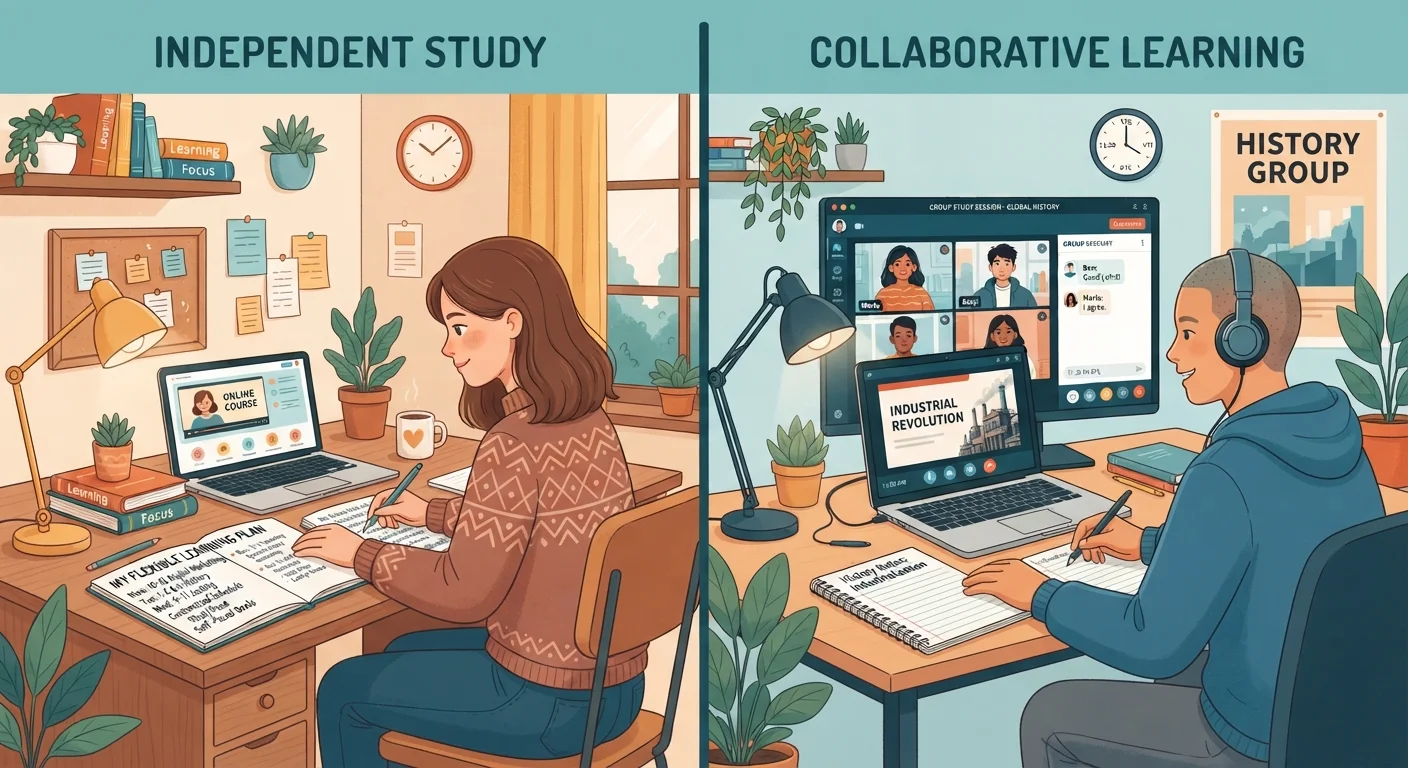
It's also worth understanding how course structure affects your success. Self-paced vs. cohort-based formats carry different motivational dynamics regardless of whether you're paying.
~3-6%
Typical MOOC completion rate (free audit)
Multiple academic studies have reported average completion rates for free open online courses in the low single digits, contrasting with meaningfully higher rates among paying learners.
57%
Learners reporting career benefit from online certificates
A Coursera learner outcomes report found that a majority of certificate earners reported tangible career benefits, though self-reported outcomes should be interpreted with appropriate context.
Building a Smarter Learning Strategy
The most effective approach for many learners is not a binary choice. Free resources work well for exploration - testing whether a subject genuinely interests you before investing money or time. Once you've confirmed a direction, a structured paid program or a recognized certification pathway can deepen your skills and add credibility to your resume.
Think of it as a funnel: sample widely with free content, invest deliberately in paid courses aligned to clear goals. Understanding how learning paths work can help you sequence courses intentionally rather than accumulating disconnected certificates.
Finally, no course - free or paid - replaces the discipline of tracking your own progress. Measuring what you've actually learned matters more than the number of courses you complete.
This article is for general informational and educational purposes only. Specific course costs, platform terms, and credential recognition vary widely. Readers should independently verify program details before enrolling or making financial commitments.