
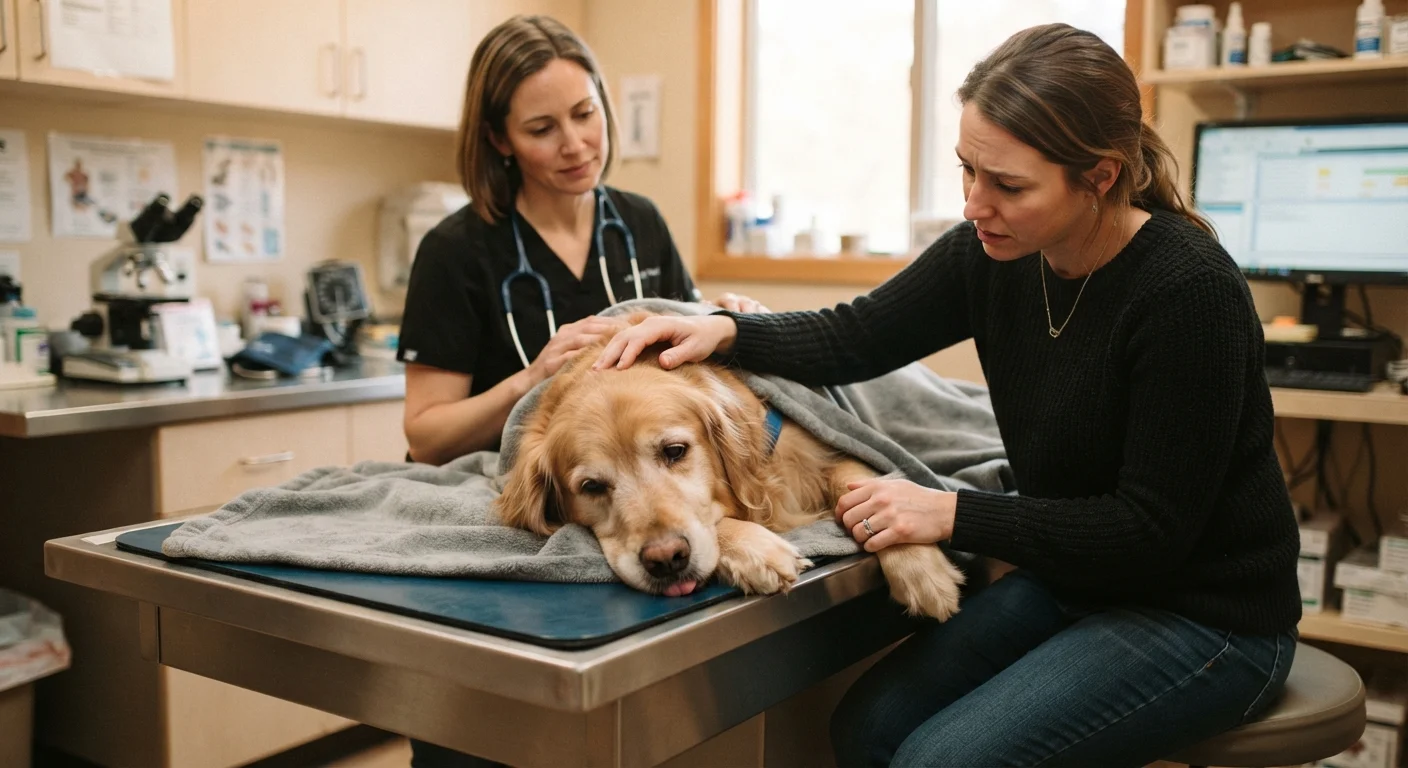
Why Pet Health Myths Are Genuinely Dangerous
Most pet health myths aren't born from carelessness — they come from well-meaning observations passed down through generations of owners. The problem is that these shortcuts can create a false sense of security, causing owners to delay veterinary care until a condition has progressed well beyond its early, more treatable stage.
Understanding what the evidence actually shows — rather than what popular wisdom suggests — is one of the most practical things you can do as a responsible pet owner. The myth-and-fact pairs below address the misconceptions that veterinarians encounter most often when owners arrive saying, "I didn't think it was serious."
For a broader look at early illness signals, see our guide on subtle behavioral shifts that often mean a pet is unwell.
Myth
A cold, wet nose means my dog is healthy. A warm or dry nose signals illness.
Fact
Nose temperature and moisture fluctuate constantly and are not reliable health indicators on their own.
A dog's nose can be warm after sleep, dry on a hot day, or wet after drinking water — none of these states reliably indicate health or sickness. Veterinarians assess wellness through a full physical examination: mucous membrane color, heart and lung sounds, body condition, and behavioral responsiveness. A dog with a perfectly wet nose can be seriously ill, while a dog with a dry nose may be entirely fine. If you're concerned, look at the whole picture — appetite, energy, posture — not one data point.
Myth
Cats always land on their feet, so falls from height aren't really dangerous.
Fact
Cats have a righting reflex, but falls from moderate heights can still cause severe internal injuries, fractures, and organ damage.
The "righting reflex" allows cats to rotate their bodies during a fall, but this does not make them immune to impact trauma. Falls from medium heights — roughly two to six stories — can actually cause more severe injuries than very high falls because the cat may not have enough time to fully decelerate. Internal bleeding, pneumothorax (collapsed lung), and jaw or limb fractures are all documented outcomes of high-rise falls in cats. Any fall from a significant height warrants an immediate veterinary evaluation, even if the cat walks away and appears normal.
Myth
If my pet is eating normally, they can't be seriously ill.
Fact
Many serious conditions — including kidney disease, early cancer, and dental pain — progress significantly before affecting appetite.
Appetite is one of the last things to change in many disease processes. Cats in particular are known to mask discomfort and continue eating even when experiencing considerable pain or organ dysfunction. Maintained appetite is reassuring in context, but it should never be used as the sole indicator of health. Weight loss despite normal eating, changes in thirst or urination, altered coat condition, or shifts in behavior are all worth reporting to your veterinarian regardless of whether your pet's food bowl is being emptied. Our guide on early warning signs pet owners most commonly overlook covers these subtler signals in detail.
Myth
Vomiting once means my pet just ate too fast — no need to worry.
Fact
Isolated vomiting can be benign, but vomiting paired with lethargy, blood, repeated episodes, or a distended abdomen requires prompt veterinary attention.
Single-episode vomiting in an otherwise alert, playful pet who continues eating and drinking normally is often not cause for alarm. However, vomiting that recurs over several hours, contains blood, is accompanied by abdominal bloating, or occurs alongside weakness can indicate conditions ranging from dietary indiscretion to a gastric obstruction or, in dogs, the life-threatening condition called gastric dilatation-volvulus (GDV). The pattern, frequency, and accompanying signs matter far more than the act of vomiting itself. When in doubt, contact your veterinarian rather than adopting a wait-and-see approach.
Myth
Cats are naturally low-maintenance and can handle themselves — they'll show you when something is really wrong.
Fact
Cats are instinctively driven to hide signs of illness, a survival behavior that can mask serious conditions until they become critical.
As prey animals in the wild, cats that appeared vulnerable were at greater risk of predation. Domestication has not erased this instinct. A cat may continue grooming, socializing, and moving around even when experiencing significant pain or internal illness. By the time a cat shows overt, unmistakable signs of distress, the condition has often been developing for some time. Proactive observation — noting changes in litter box habits, water intake, grooming patterns, or social behavior — is essential. Our article on why cats hide their symptoms provides a deeper look at this behavior and how to work around it.
What to Do When Something Feels Off
Even after learning what the myths get wrong, the harder skill is trusting your instincts when your pet seems subtly different. Veterinarians consistently note that owners who know their pet's baseline — normal energy, eating habits, bathroom patterns, and interaction style — are far better positioned to notice meaningful deviations early.
Never Wait on These Symptoms
Difficulty breathing, pale or blue-tinged gums, collapse or inability to stand, seizures, suspected poisoning, uncontrolled bleeding, and a distended or painful abdomen are all emergency-level signs. Do not monitor these at home — contact an emergency veterinary clinic immediately. Minutes matter in these scenarios.
A useful rule of thumb: if a symptom is severe, involves breathing difficulty, collapse, or uncontrolled bleeding, treat it as an emergency immediately. For milder concerns, tracking changes over 24–48 hours and then calling your vet — rather than waiting to see if things resolve on their own — is a reasonable approach that avoids both panic and dangerous delay.
Species differences matter enormously here. Dogs and cats do not express illness the same way, and knowing those distinctions sharpens your ability to respond appropriately. Our article on how illness presents differently between dogs and cats is a practical companion to the myths covered here.
~70%
Cats showing late-stage kidney disease at diagnosis
Veterinary estimates suggest the majority of cats with chronic kidney disease are not identified until significant kidney function has already been lost, largely because early symptoms are subtle.
1 in 4
Dogs affected by dental disease by age 3
According to the American Veterinary Medical Association, dental disease is among the most common — and most silently progressive — conditions seen in companion animals.
Finally, wellness visits aren't just for sick pets. Routine exams allow veterinarians to establish your pet's individual baseline and screen for conditions — dental disease, weight gain, organ changes — that rarely announce themselves loudly. Consistent care is the single most effective tool for catching problems early, before myths have a chance to delay the help your pet needs. You can find related principles in our Responsible Ownership hub.
This article is for general informational and educational purposes only and is not a substitute for professional veterinary advice, diagnosis, or treatment. Always consult a licensed veterinarian regarding your pet's health.