Why Age Reframes What 'Normal' Looks Like
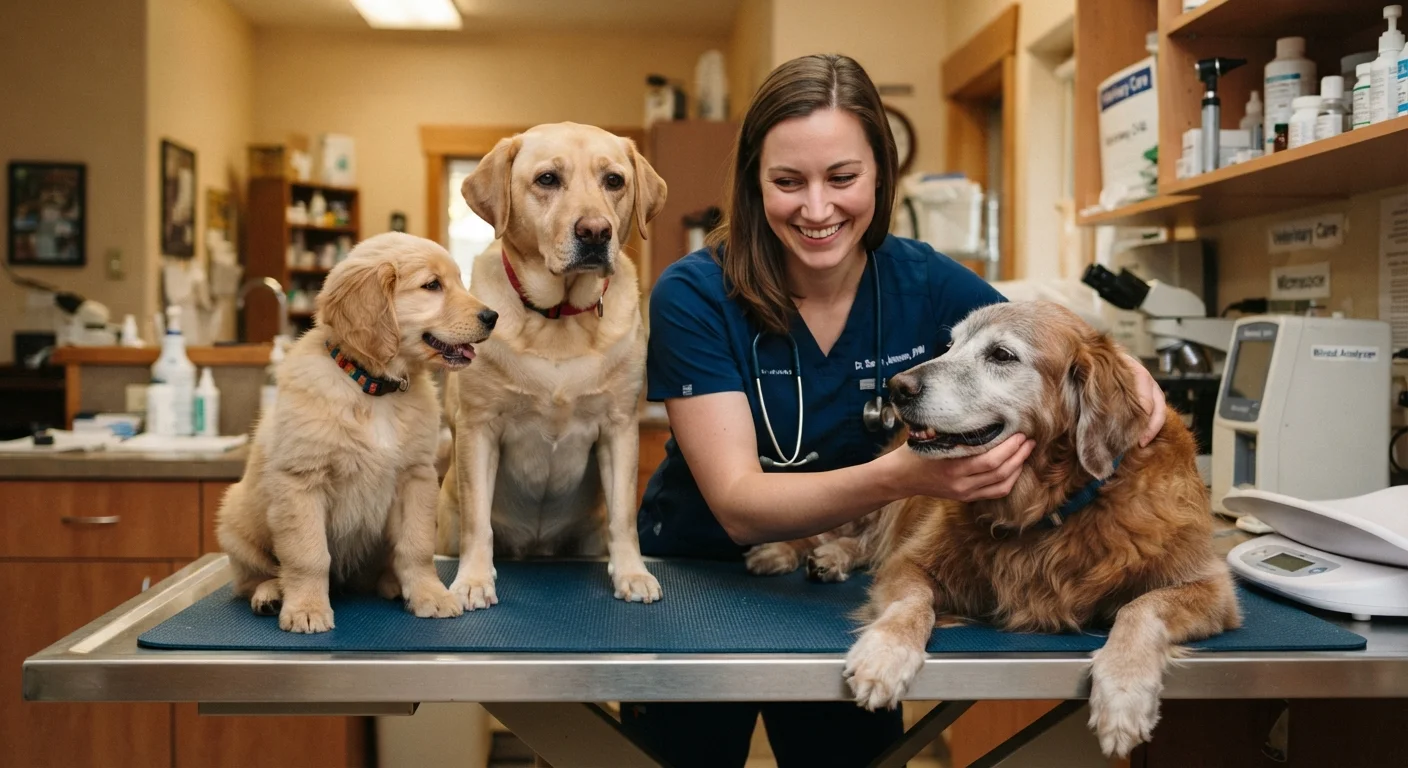
A healthy six-month-old puppy and a healthy ten-year-old dog can look strikingly different in energy, sleep habits, and appetite — and both can be perfectly well. This is precisely why age context matters when evaluating your pet's health signals. A behavior that's a red flag in a young animal may be unremarkable in a senior, and vice versa.
Building a reliable sense of your pet's age-specific normal is the first step toward meaningful health monitoring. Our guide on establishing a health baseline walks through the specific metrics — weight, gum color, resting respiratory rate — that make deviations detectable. The comparison below outlines how the most important health signals shift across three broad life stages.
Life Stage Comparison: What to Watch and When
The table below covers the key health signals across three stages: the juvenile period (roughly under one year for dogs and cats), adulthood (approximately one to seven years), and the senior phase (seven-plus years, though this varies significantly by species and breed size).
| Young Pets (Under 1 Year) | Adult Pets (1–7 Years) | Senior Pets (7+ Years) | |
|---|---|---|---|
| Primary risk pattern | Acute, fast-moving illness | Gradual baseline deviations | Slow, cumulative decline |
| Appetite changes | Any refusal warrants prompt attention | Sustained changes over days are significant | Subtle reduction may signal pain or disease |
| Energy level signals | Sudden lethargy is a red flag | Persistent low energy worth investigating | Reduced activity often mistaken for normal aging |
| Thirst and urination | Monitor for dehydration risk | Noticeable shifts suggest metabolic change | Increased intake is a key disease indicator |
| Recommended vet visit frequency | Every 3–4 months initially | Once or twice yearly | Twice yearly minimum |
| Common masking risk | Appears well until suddenly critical | Stable resilience can delay owner concern | Illness attributed to normal aging |
| Weight monitoring priority | Growth trajectory tracking | Unexplained gain or loss | Any unintended loss is significant |
A few clarifications on the table are worth making. "Masking illness" refers to the fact that young animals have vigorous immune responses and high physiological reserves — they can appear well until a problem becomes acute. Senior pets, conversely, may show illness through gradual, cumulative changes that owners mistake for normal aging. Neither pattern should lead to delayed care.
Young Pets: Watch for Sudden, Acute Changes
In puppies and kittens, health problems tend to escalate quickly. Vomiting or diarrhea that persists beyond 24 hours, sudden lethargy in a normally energetic animal, or loss of interest in food are signals that warrant same-day veterinary contact — not a wait-and-see approach. Young animals can become dehydrated or develop hypoglycemia (low blood sugar) rapidly.
Other signals worth tracking in juveniles include:
- Failure to gain expected weight over weeks
- Persistent coughing or nasal discharge after the first week home
- Unusual swelling around joints or the abdomen
- Any neurological signs — stumbling, head tilt, or seizures
Take Photos to Track Subtle Changes
For young pets especially, a brief weekly smartphone photo or video can help you compare energy, posture, and coat condition over time. Visual records are also useful when describing changes to your veterinarian — showing is often clearer than telling.
Because young pets interact intensely with their environment (chewing, exploring, playing with other animals), toxic ingestion and infectious disease are also more common at this stage. See our article on early warning signs owners commonly miss for a broader list of overlooked signals.
Adult Pets: Use Routine to Detect Baseline Shifts
Healthy adult pets are, in many ways, the easiest to monitor — they have established, predictable patterns, and deviations stand out clearly. The challenge is maintaining consistent enough daily observation to notice when something drifts. Our companion piece on daily health observation habits offers a practical framework for building this into your routine.
In adult pets, pay particular attention to:
- Unexplained weight changes in either direction over two to four weeks
- Shifts in thirst or urination frequency
- Changes in coat quality — dullness, excess shedding, or new skin lesions
- Behavioral changes such as increased irritability, reduced playfulness, or altered sleep patterns
These are often the first signals of conditions like thyroid dysfunction, diabetes, or early dental disease — all of which are highly manageable when caught in this stage.
Senior Pets: Gradual Changes Deserve Serious Attention
The greatest risk with senior pets is normalization — owners (and sometimes even clinicians) attributing genuine illness signals to "just aging." While some slowing down is expected, pain, cognitive decline, organ disease, and cancer are not inevitable facts of age. They are conditions that can be addressed when identified.
Key signals in senior pets that deserve prompt evaluation include:
- Increased thirst and urination, which can indicate kidney disease, diabetes, or Cushing's disease
- Difficulty rising, reluctance to climb stairs, or stiffness after rest — potential signs of osteoarthritis
- Unexplained weight loss, even with maintained or increased appetite
- New lumps or bumps anywhere on the body
- Confusion, disorientation, or changes in sleep-wake cycles, which may indicate cognitive dysfunction
Subtle behavioral shifts are especially important to recognize at this stage. For senior pets, twice-yearly veterinary visits are generally recommended so that internal organ function can be assessed through bloodwork, not just visual examination. See also our guide on adapting your pet's routine as they age for practical daily care adjustments.
This article is for general informational purposes only and does not constitute veterinary medical advice. Always consult a licensed veterinarian regarding your individual pet's health needs.