
Why Budgeting Myths Do Real Damage
Budgeting is one of the most reliably effective personal finance habits available - yet millions of people never start one. The barrier isn't usually math. It's a collection of deeply embedded myths that make budgeting feel punishing, pointless, or simply out of reach.
These misconceptions aren't harmless. Each one delays the moment a person takes control of their spending, often by months or years. Below, we break down the most common ones and replace them with what the evidence actually shows. If you'd like a full foundation after reading, see our complete budgeting resource covering everything from income categories to long-term goal planning.
Myth
You need a high income to make budgeting worthwhile. Budgeting is really only for people who have extra money to manage.
Fact
Budgeting is most valuable at lower income levels, where each dollar carries greater weight and unplanned expenses cause the most disruption.
The purpose of a budget isn't to manage a surplus - it's to direct every dollar you have with intention. On a tight income, knowing exactly where money goes can mean the difference between making rent and not. Approaches like zero-based budgeting, where every dollar is assigned a job, are specifically designed for situations where there is little to no leftover income. Starting a savings habit - even a small one - while on a modest income builds a financial cushion that grows over time.
Myth
Budgeting means giving up everything fun. Once you start tracking spending, you have to cut out coffee, dining out, and any kind of treat.
Fact
A sustainable budget includes room for enjoyment. Intentional spending on things that matter to you is a feature, not a flaw.
The most effective budgets are ones you can actually follow long-term, and a budget that eliminates all discretionary spending is rarely sustainable. Many personal finance frameworks explicitly carve out a category for fun - sometimes called 'wants' or 'lifestyle' spending. The goal is awareness and intentionality, not deprivation. When you know you've set aside money for dining out, you can enjoy it without guilt, rather than feeling it's draining your finances invisibly.
Myth
Budgeting is too complicated. You need accounting skills, special software, or a lot of time to do it properly.
Fact
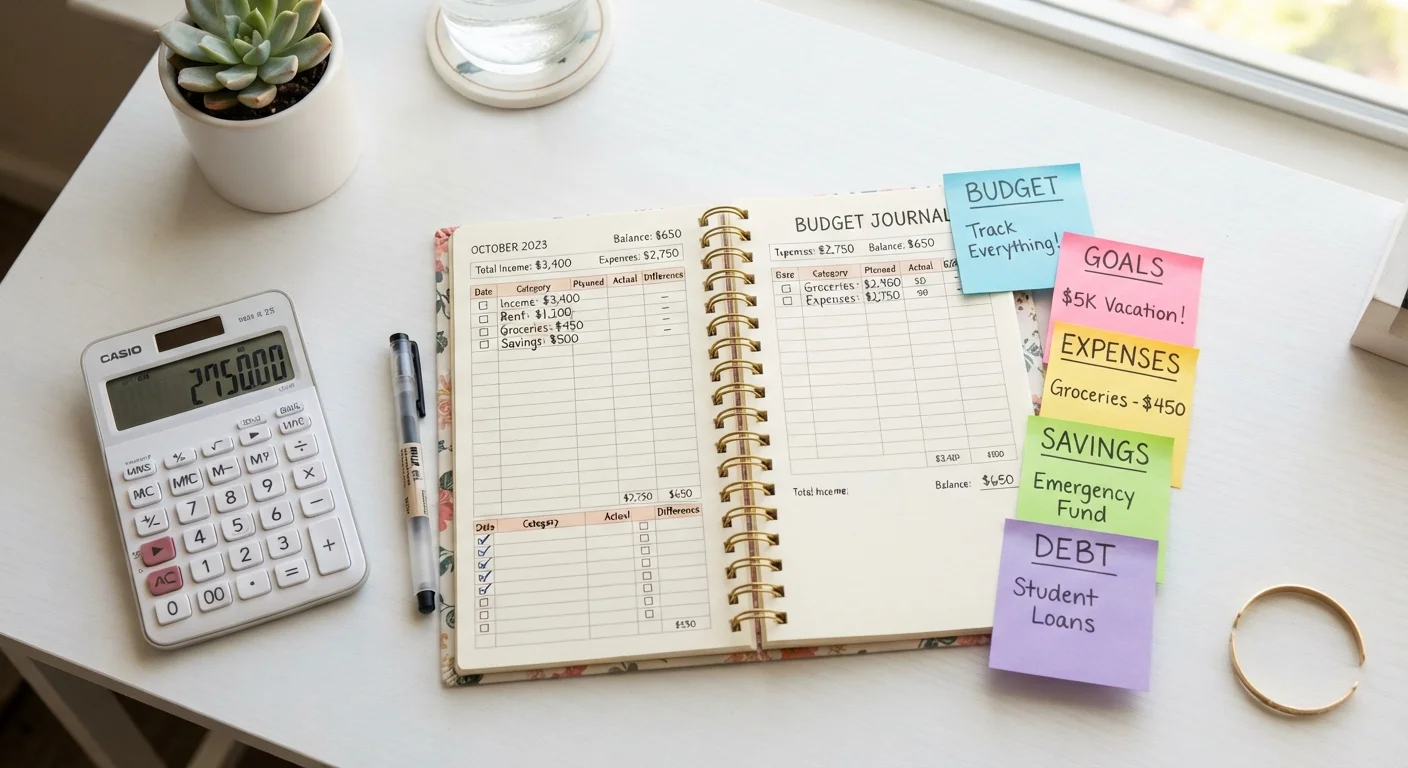
The simplest budget you'll actually use is better than the most sophisticated one you won't. A pen, paper, and a few categories are enough to start.
Complexity is one of the most common reasons people delay starting. But research into habit formation consistently shows that lowering the barrier to entry improves follow-through. A three-category budget - needs, wants, savings - gives you the essential structure without overwhelming detail. Digital tools can add convenience, but they aren't prerequisites. Many people successfully manage their finances with a basic notes app or a single spreadsheet. You can always add complexity once the habit is established.
Myth
Irregular income makes budgeting impossible. If your paycheck changes month to month, there's no way to plan.
Fact
Irregular income requires a different budgeting approach, not the abandonment of budgeting altogether.
Freelancers, gig workers, and anyone with variable pay can still budget effectively by anchoring their plan to their lowest expected monthly income. Any amount earned above that floor can then be directed toward savings or debt repayment in a predetermined order. Another approach is to pay yourself a consistent 'salary' from a buffer account that smooths out the peaks and valleys. Irregular income makes budgeting more important, not less, because it removes the false safety net of an assumed steady paycheck.
Myth
You have to plan every expense in advance. A budget only counts if you forecast spending before the month begins.
Fact
Tracking what you actually spend - even after the fact - is a legitimate and often more accurate starting point than pre-planning.
Many beginners find it easier to start by recording spending for 30 days rather than guessing future amounts. This produces real data about your habits, which makes forward-looking plans far more realistic. Knowing that you typically spend a certain amount on groceries is more useful than estimating blindly. Once you have a month or two of tracked data, creating a forward-looking plan becomes much more grounded - and far less likely to collapse when real life doesn't match the projection. Our article on why budgets fail in month two explores exactly this dynamic.
Myth
If you go over budget once, you've failed and should start over. Any deviation means the budget isn't working.
Fact
Going over budget is normal and expected, especially early on. It's a signal to adjust your plan, not abandon it.
Treating a single overspend as a total failure is one of the most common reasons people quit budgeting. In behavioral finance, this is sometimes called the 'what-the-hell effect' - the tendency to abandon a goal entirely after a minor setback. A healthier framing: a budget is a living document. If you consistently overspend in one category, that category needs a larger allocation, not more willpower. Adjusting your numbers to reflect reality is a sign your budget is working, not breaking down.
Building a Budget That Actually Lasts
Dispelling myths is only half the work. The other half is designing a budget you'll realistically maintain. A few principles hold up across most personal finance research:
- Start simple. A rough categorization of needs, wants, and savings beats a 40-line spreadsheet you abandon after a week.
- Expect imperfection. Months where you go over budget aren't failures - they're data. Adjust the following month rather than quitting.
- Automate where possible. Transfers to savings or bill payments that happen automatically reduce the mental load that causes budgets to stall.
- Review regularly, but briefly. A 10-minute monthly check-in is more sustainable than a weekend deep-dive you dread.
Understanding the difference between a budget that's tight by design and one that's appropriately flexible is also important. Our article on the honest trade-offs of strict budgeting takes a balanced look at what rigorous budgeting gains you - and what it costs. And if any terms here felt unfamiliar, the budget glossary for beginners defines 25 key concepts in plain language.
Don't Confuse Starting With Perfecting
Many people delay building a budget because they want to do it 'correctly' from day one. This perfectionism is a trap. An imperfect budget that you actually use will outperform a perfect budget that stays on your to-do list. Start with what you know today and improve as you learn more about your own spending patterns.
This article is for general informational and educational purposes only and does not constitute personalized financial advice. For guidance tailored to your specific situation, consult a qualified financial professional.