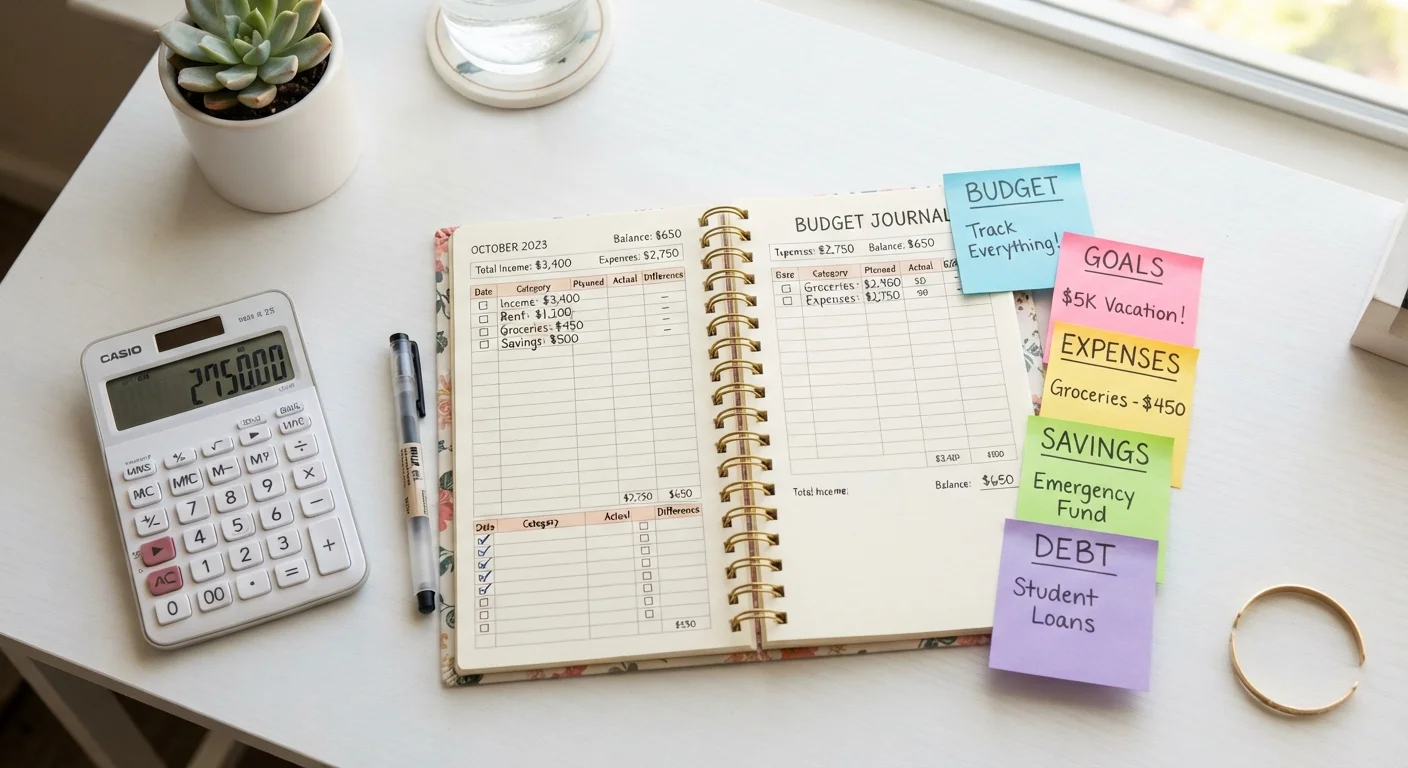

Why Budgeting Matters for Homeowners
Owning a home introduces financial complexity that renting rarely does. Property taxes, HOA fees, maintenance surprises, and insurance renewals all compete for the same dollars that cover groceries and car payments. Without a budget, these competing demands make it easy to feel like you're always one unexpected bill away from stress.
A budget doesn't restrict your life - it describes it. When you know exactly what's coming in and going out, you make deliberate choices instead of reactive ones. For young homeowners especially, building that habit early can mean the difference between financial confidence and chronic money anxiety.
This guide walks you through every stage: understanding income, categorizing expenses, picking a method, protecting yourself with an emergency fund, and planning for goals that matter. If you'd like a practical month-by-month companion, our Monthly Budget Setup Checklist for First-Time Homeowners runs alongside this guide well.
Understanding Your Income
The first rule of budgeting: always start with net income - the amount deposited into your account after taxes, Social Security, and any benefit deductions. Using your gross (pre-tax) salary overstates what you actually have and leads to shortfalls.
List every income source you reliably receive:
- Primary employment: regular paycheck, salary, or hourly wages
- Secondary income: freelance work, side gigs, rental income
- Periodic income: tax refunds, bonuses, gifts - treat these as irregular and budget them separately
If your income varies month to month, use a conservative average - base your fixed spending plan on a lower-income month so that higher-earning months create a buffer rather than a dependency. Unfamiliar with some of the terminology here? Our Budget Glossary for Beginners defines terms like gross income, net income, and discretionary spending in plain language.
When income is irregular, build your baseline budget around your lowest recent month - not your average. Any month that comes in higher becomes automatic breathing room.
Basing a budget on an optimistic income estimate is one of the most common reasons people overspend. A conservative floor prevents shortfalls from feeling like failures.
Before cutting spending categories, audit three months of actual bank statements. Most people are surprised by where money actually goes versus where they think it goes.
Perception and reality often diverge significantly in personal spending. Data from real statements eliminates guesswork and reveals genuine problem areas.
Categorizing Your Expenses
Expenses fall into two broad types, and distinguishing them unlocks real budget control.
Fixed Expenses
These stay the same every month: mortgage payment, homeowner's insurance, car loan, internet service. You can't easily change these in the short term, so they form the non-negotiable floor of your budget.
Variable Expenses
These fluctuate: groceries, utilities, dining out, entertainment, clothing. Variable costs are where most budget flexibility lives - and where most overspending happens.
A third category worth tracking separately is irregular expenses - annual costs like property taxes, car registration, or holiday spending. Divide their annual total by 12 and set aside that amount monthly so you're never caught off-guard.
~33%
Americans with a written monthly budget
Gallup polling has consistently found that only about one-third of U.S. adults maintain a detailed household budget.
$1,000+
Median cost of a home emergency repair
Industry surveys from home warranty and repair services regularly place common emergency repairs - such as HVAC or plumbing failures - above the $1,000 mark.
Once you have a full picture, compare total expenses to net income. A gap on either side tells you something important: a surplus means you have room to save more aggressively; a deficit means cuts or income growth are necessary.
Choosing a Budgeting Method
There's no universally superior budgeting system - the right one is whichever you'll actually maintain. Here are three approaches suited to different personalities:
50/30/20 Rule
Allocate 50% of net income to needs (housing, utilities, groceries), 30% to wants (dining out, hobbies, streaming), and 20% to savings and debt repayment. It's broad and forgiving - a good starting framework for beginners.
Zero-Based Budgeting
Every dollar is assigned a job: income minus all planned expenses and savings equals zero. It requires more tracking effort but leaves no money unaccounted for, which can be powerful for people who tend to overspend on variable categories.
Pay-Yourself-First
Before paying any bill, transfer a set amount to savings. Spending is whatever remains. This method prioritizes goals automatically and reduces the temptation to spend savings.
Whichever method you choose, track spending at least weekly at first. Apps, spreadsheets, or a simple notebook all work - consistency matters more than the tool.
Building Your Emergency Fund Within the Budget
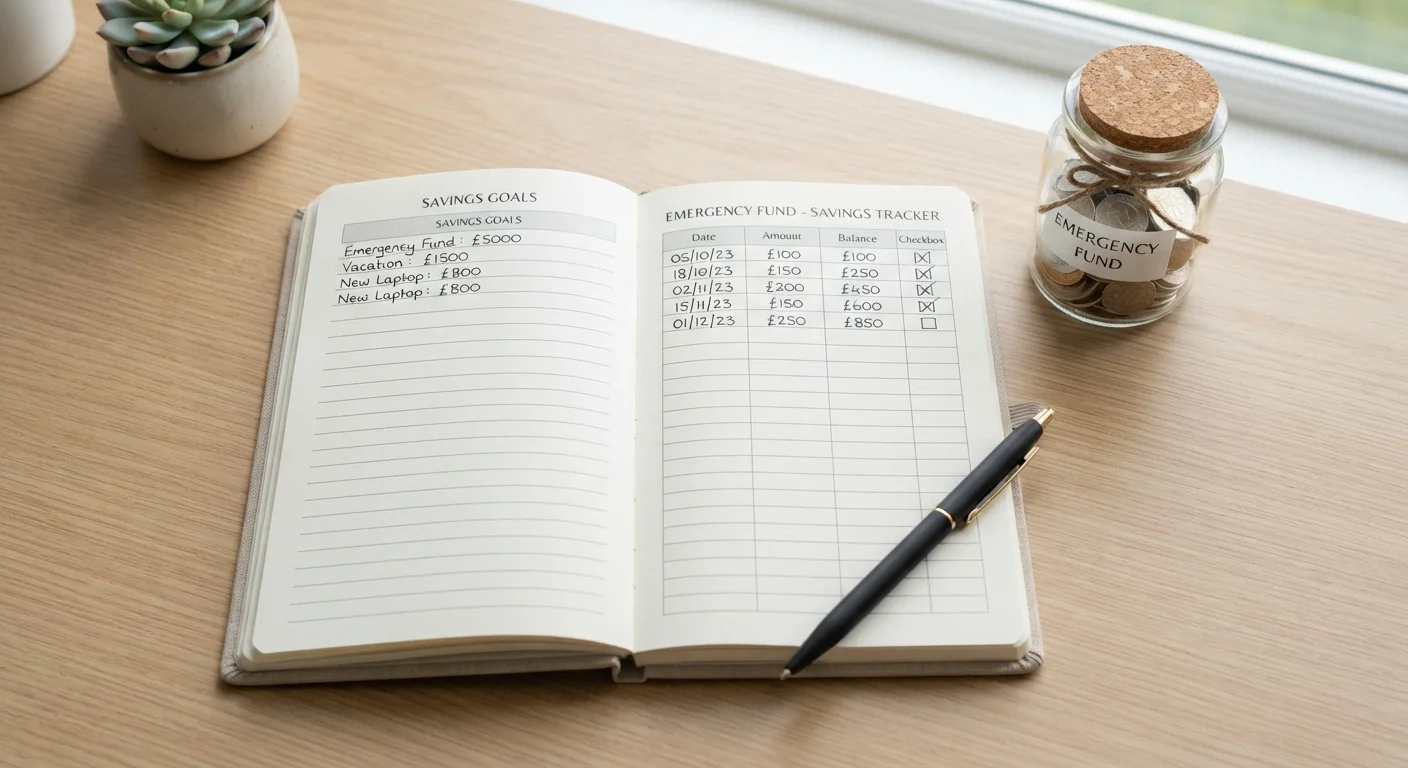
An emergency fund is a dedicated pool of liquid savings - typically covering three to six months of essential expenses - kept separate from your everyday checking account. For homeowners, whose emergencies can include a failed furnace or roof repair, this fund is especially critical.
Within your budget, treat emergency fund contributions like a fixed expense: a non-negotiable monthly line item. Even $50 a month adds up. Once the fund reaches your target, redirect those contributions toward other goals.
The relationship between a budget and an emergency fund is deeply interconnected - each makes the other stronger. Our article on how emergency funds and budgets work together explains this dynamic in depth. For broader saving strategies beyond the emergency fund, the Saving & Goals hub is a useful next stop.
Automate Your Emergency Fund Contributions
Set up an automatic transfer to a separate savings account on the same day your paycheck arrives. When the money moves before you see it, you're far less likely to spend it. Even a small recurring transfer builds meaningful reserves over time.
Setting and Tracking Long-Term Goals
A budget without goals is just bookkeeping. Goals give your spending plan purpose - and they make it easier to say no to impulse purchases because you know what you're saying yes to instead.
Translate each goal into a monthly savings number:
- Name the goal and its estimated cost (e.g., kitchen renovation: $12,000)
- Set a realistic target date (e.g., 3 years = 36 months)
- Divide: $12,000 ÷ 36 = $333/month to save
- Add that line item to your budget
Use separate savings accounts for separate goals when possible. Keeping funds visually distinct reduces the temptation to borrow from one goal to fund another. Revisit goal amounts annually - costs change, priorities shift, and your income may grow.
For goals that involve travel, structured planning is equally important. The travel budgeting guide for first-time planners covers how to estimate and allocate travel costs before you book anything.
Adjusting Your Budget as Life Changes
A budget is a living document, not a one-time exercise. Major life events - a new job, a baby, a home refinance, a health change - all shift the numbers. Plan to do a full budget review at least once a year, and after any significant change.
Signs your budget needs revision:
- You're consistently over budget in the same categories
- Your income has changed by more than 10%
- A new fixed expense has appeared (or an old one disappeared)
- You've achieved a goal and want to reallocate those funds
Adjusting doesn't mean starting over - it means refining. Small, regular tweaks keep the budget realistic and prevent the all-or-nothing thinking that causes people to abandon budgeting altogether after a rough month.
This article is for general informational and educational purposes only and does not constitute personalized financial advice. For guidance tailored to your specific situation, consult a qualified financial professional.