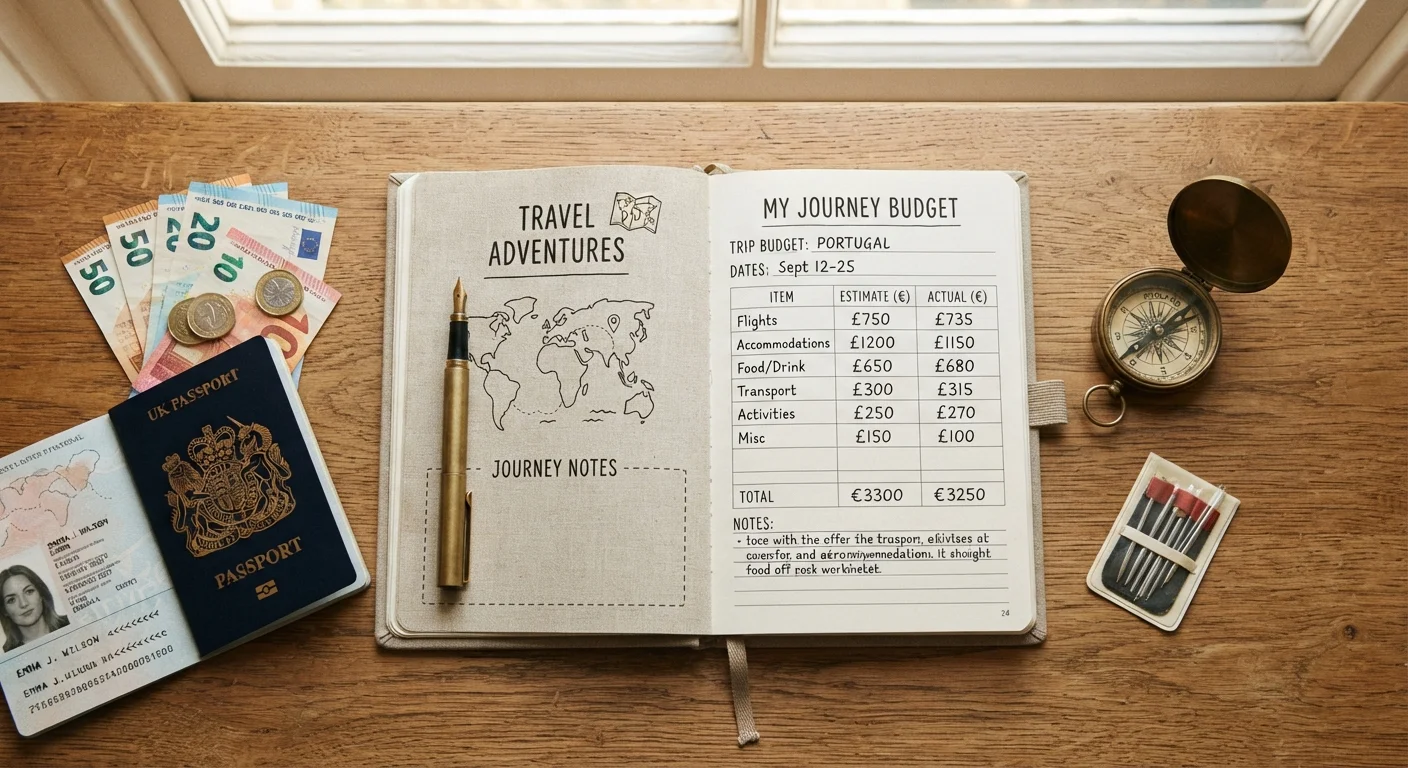

Why a Travel Budget Is Different From Your Everyday Budget
Most people who manage a monthly household budget assume the same logic applies to travel — track what you spend, don't exceed it. That instinct is right, but travel introduces a layer of complexity that catches first-timers off guard.
Unlike monthly expenses, travel costs are lumpy and front-loaded. You may pay for flights weeks before departure, settle a hotel deposit in advance, and then face daily variable costs once you arrive. Your everyday budgeting frameworks provide a useful foundation, but travel requires a parallel structure built around trip phases: pre-departure, in-destination, and post-trip.
Understanding this structure before you start spending is the single most valuable thing a first-time planner can do. It prevents the common pattern of carefully saving for a trip only to underestimate what that trip actually costs.
Per-day budget
The estimated amount of money you expect to spend on a typical day of travel, covering food, local transport, activities, and incidentals. It is used to project total trip cost.
Fixed pre-departure costs
Expenses you pay before your trip begins — such as flights, visas, travel insurance, and gear — that do not change based on how many days you travel.
Contingency buffer
A reserved portion of your travel budget, typically 10–15% of the total, set aside to cover unexpected costs without derailing your overall plan.
Variable daily expenses
Costs that fluctuate day to day while traveling, such as meals, local transportation, and activity fees. These are distinct from fixed costs you pay in advance.
Travel insurance
A type of insurance policy that can cover trip cancellations, medical emergencies, lost baggage, and other unexpected travel-related losses. Coverage terms vary by policy.
Budget reconciliation
The process of comparing what you actually spent against what you planned to spend, typically done after the trip to understand where your budget held and where it didn't.
The Core Building Blocks of Any Travel Budget
A travel budget is not one number — it is a set of buckets. Getting clear on each bucket before you book anything is how you build a budget that holds up in reality.
- Transportation: Flights, trains, or driving costs, plus local transit at your destination (buses, metro, taxis).
- Accommodation: Your nightly lodging cost multiplied by the number of nights — the largest variable for most trips.
- Food and drink: Daily meal costs vary enormously by destination and eating style. Budget separately for groceries versus restaurants if applicable.
- Activities and entrance fees: Museums, tours, excursions, or experiences you plan to book. These are easy to forget until you are at the gate.
- Travel insurance: A frequently skipped line item that can become critical. Verify coverage options with your insurer or a licensed insurance professional.
- Pre-departure costs: Visas, vaccinations (consult official health authorities and your doctor), gear, and airport parking or transfers.
- Contingency buffer: Reserve 10–15% of your total budget for unplanned expenses.
For a detailed walkthrough of each category, see our spending categories reference guide.
How to Set a Realistic Total Number
The most practical starting point is your per-day spending estimate — a realistic figure for what one day in your destination will cost at your chosen travel style. Multiply that by your trip length, then add your fixed pre-departure costs to get a working total.
Destination research matters more here than any rule of thumb. Costs differ dramatically between a week in a major European capital and a week in rural Southeast Asia. Look at recent traveler reports in forums and destination guides, keeping in mind that individual costs vary widely.
Our companion article on calculating a realistic daily travel budget walks through this estimation method step by step. Once you have a working total, cross-check it against what you have saved — or can realistically save before your target departure date.
Research Costs in the Same Currency You'll Spend
When estimating per-day costs, look up prices in the local currency of your destination, then convert using a current exchange rate. This helps you avoid surprises caused by currency fluctuations. Check exchange rates closer to your departure date for a more accurate picture, and be aware that rates at airports and tourist areas are often less favorable than those from banks or ATMs.
Tracking Spending While You Travel
A budget you build but never monitor is only half the job. Tracking your actual spending while on the road is what keeps the plan functional.
The mechanics do not need to be sophisticated. Many travelers log expenses in a notes app or a simple spreadsheet at the end of each day. What matters is consistency: recording purchases before you forget them and comparing your running total against your daily target every day or two.
If you notice you are consistently over budget in one category — say, food — you can consciously adjust in another, like choosing a free activity instead of a paid one. This kind of real-time awareness is what separates travelers who return within budget from those who face an unpleasant surprise on their credit card statement.
For a complete view of the budgeting process from pre-trip planning all the way through post-trip review, see our end-to-end travel budgeting framework.
Common First-Timer Mistakes to Avoid
Even careful planners fall into predictable traps on their first trip. Knowing where budgets typically break down puts you ahead of the curve.
Forgetting pre-departure costs. Gear, visas, airport parking, travel-sized supplies — these accumulate quickly and are often paid weeks before the trip feels real. Our guide to why trip budgets fall apart covers the most commonly missed line items.
Treating the budget as a ceiling, not a target. A budget is a plan, not a legal cap. If you hit your food budget on day four of a ten-day trip, you need to adjust — not ignore it.
Skipping the buffer. Unexpected costs are not exceptional; they are standard. A missed connection, a pharmacy run, or a rainy day that changes your plans can all add real cost. Build the buffer in before you feel like you need it.
Not connecting travel planning to your broader financial picture. A trip budget doesn't exist in isolation. Reviewing your personal budget fundamentals before committing to a trip cost helps you ensure the expense fits your larger financial goals.
Don't Rely Solely on Credit Card Rewards as a Buffer
Some first-time travelers assume that credit card points or cashback will cover overages. Points programs and redemption values vary significantly and are subject to change — they are not a reliable financial safety net. Your contingency buffer should be funded with actual saved money, not anticipated rewards. Consult your card's current terms for accurate information on how rewards work.