Where Basement Moisture Actually Comes From
Before you can fix a damp basement, you need to understand what's causing it. Most homeowners assume water must be entering through a crack, but moisture can arrive three different ways - and each requires a different response.
Exterior water intrusion occurs when rainwater or snowmelt saturates the soil around your foundation and migrates through walls or floor joints. This is especially common after heavy rainfall or rapid spring thaws. Condensation forms when warm, humid air contacts cooler concrete surfaces - a frequent culprit in summer months. Rising groundwater, also called hydrostatic pressure, pushes water up through the floor slab or wall footings from below, typically in homes with high water tables.
Understanding which source is affecting your basement shapes every decision that follows. A simple test: tape a small piece of plastic sheeting tightly to a damp wall and seal all edges. Check it after 24-48 hours. If moisture appears on the room-facing side, you're dealing with condensation. If it's on the wall side, water is coming through from outside.
For a quick reference on terminology used in moisture and foundation discussions, see our home maintenance glossary for plain-language definitions.
Warning Signs You Shouldn't Ignore
Basement moisture rarely announces itself with a visible puddle. More often, it reveals itself through subtle signs that accumulate over weeks or months. Knowing what to look for lets you intervene before the damage compounds.
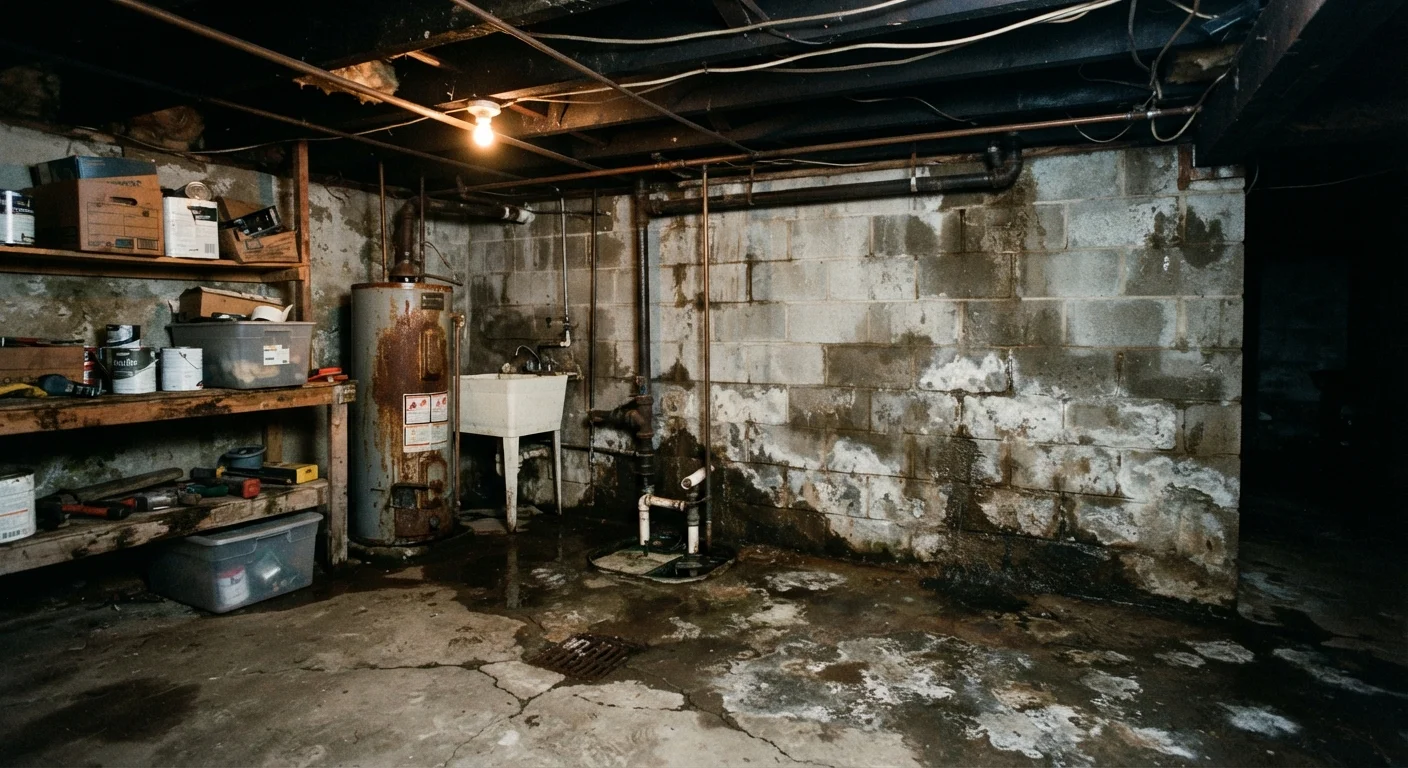
Look for efflorescence on walls and floors as an early moisture indicator.
Efflorescence - the white, chalky mineral deposits left behind when water moves through concrete - is a reliable sign that water has been migrating through your walls, even if the surface feels dry now. It doesn't cause damage on its own, but it confirms active or past water movement that warrants investigation.
Take musty odors seriously as a sign of hidden moisture or mold.
Mold can grow behind drywall, under flooring, and in insulation - all out of sight. A persistent musty smell often indicates active mold growth before any visible evidence appears. Ignoring it allows colonies to spread and degrade air quality throughout the home.
Inspect for peeling paint, rust stains, and bubbling drywall regularly.
These surface changes indicate sustained moisture exposure. Rust streaks on walls point to corroding rebar or metal anchors inside the concrete - a sign water has penetrated deep enough to reach structural elements. Paint failure on masonry is a reliable marker of ongoing moisture cycling.
Check window wells, utility penetrations, and pipe areas for moisture entry points.
Water often enters not through the wall face itself but through gaps around pipe penetrations, window frames, or cracks at cold joints (where the floor meets the wall). These localized entry points are often overlooked during inspections but are frequently the actual source.
Pay particular attention after the first heavy rain of the season and during high-humidity summer stretches - those are the periods when hidden moisture problems tend to surface most visibly.
Prevention: Controlling Moisture from the Outside In
The most effective moisture management starts at the perimeter of your home, well before water ever reaches your foundation.
Soil grading is your first line of defense. The ground around your home should slope away from the foundation at a rate of roughly 6 inches over the first 10 horizontal feet. Flat or inward-sloping soil funnels water directly toward your walls. Regrading problem areas with compacted fill soil is a manageable DIY task in most cases.
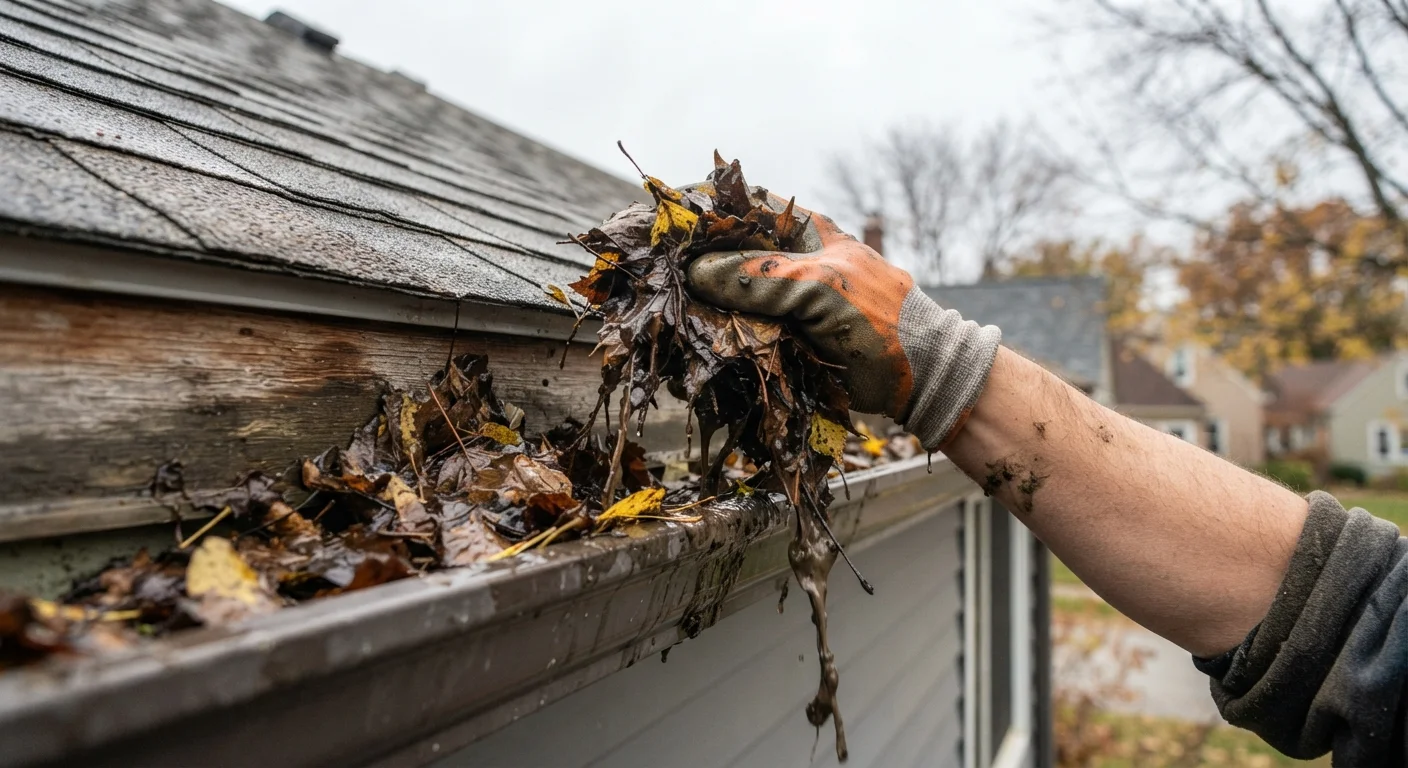
Gutter and downspout performance is closely tied to basement dryness. Clogged gutters overflow at the fascia line, saturating the soil directly alongside your foundation. Downspout extensions should carry water at least 4-6 feet away from the house. Our guide on gutter cleaning and inspection walks through exactly what to check each season.
Window well drainage matters if your basement has egress windows. Wells that fill with debris or lack gravel at the bottom can hold standing water against the foundation wall.
Interior Controls and When to Call a Pro
Once you've addressed exterior contributors, interior moisture control becomes the next priority.
A dehumidifier rated for basement use can significantly reduce condensation in warmer months. Aim to keep relative humidity below 60% - ideally between 30% and 50%. Pair this with adequate ventilation: if your basement has operable windows, opening them on dry, low-humidity days helps air circulate.
Interior drainage systems - including sump pumps and interior French drains - are designed to manage water that does get in, not to stop it at the source. A sump pump is only effective if it's maintained: test yours by slowly pouring water into the pit and confirming the float triggers the pump. Test before the rainy season, not during it.
Some moisture problems require professional intervention. Signs that warrant calling a licensed waterproofing contractor include: bowing or cracking foundation walls, persistent water pooling despite exterior corrections, and evidence of mold beyond surface-level spots. Structural wall repairs and exterior waterproofing membrane installation involve excavation or load-bearing concerns - these are not DIY projects.
This article is for general informational purposes only. For concerns involving structural integrity or significant water intrusion, consult a licensed contractor or structural engineer familiar with your local building codes.