Why the DIY vs. Contractor Decision Matters More Than You Think
For most first-time homeowners, the instinct to tackle repairs yourself is completely reasonable. DIY can save money, build confidence, and give you a real understanding of how your home works. But not every repair is created equal. Some jobs carry risks that go well beyond a bad paint job - we're talking electrical fires, structural failures, voided insurance claims, or permits that come back to haunt you at resale.
Understanding the difference isn't about gatekeeping. It's about matching the right approach to the actual stakes of the job. If you're still getting your footing with home vocabulary, the Home Maintenance Terms Every New Homeowner Should Know is a useful starting point before diving into any project.
What DIY Typically Handles Well
Surface-level and cosmetic repairs are the natural home of the capable DIYer. These are jobs where a mistake is inconvenient but rarely dangerous, and where countless tutorials and clearly defined steps make success realistic.
- Painting interior walls and trim - low stakes, high visual payoff
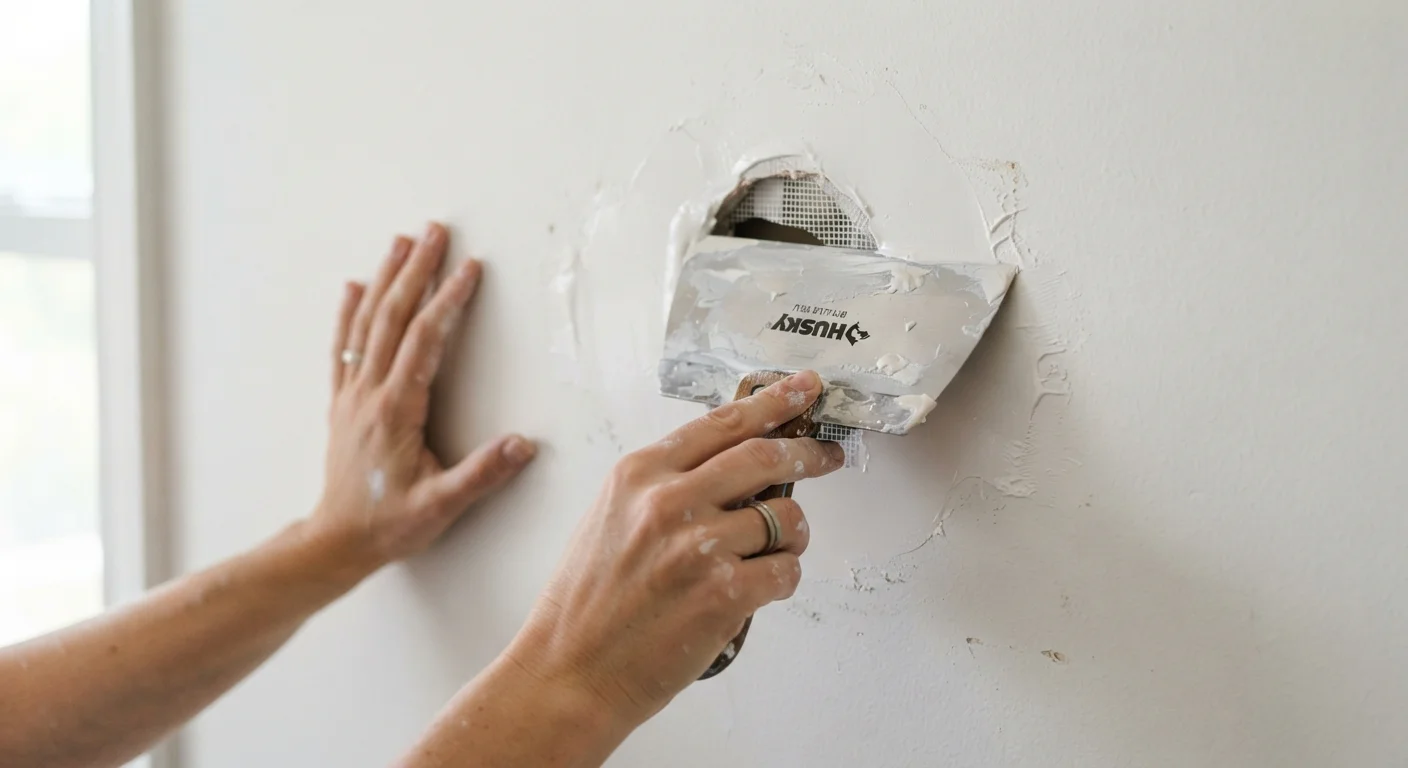
- Patching drywall - nail holes to moderate-sized damage are very learnable. See our drywall patching guide for a step-by-step walkthrough.
- Caulking windows, tubs, and sinks - straightforward with the right prep
- Replacing fixtures - swapping a faucet, showerhead, or light fixture (on an existing, properly wired circuit) is often manageable
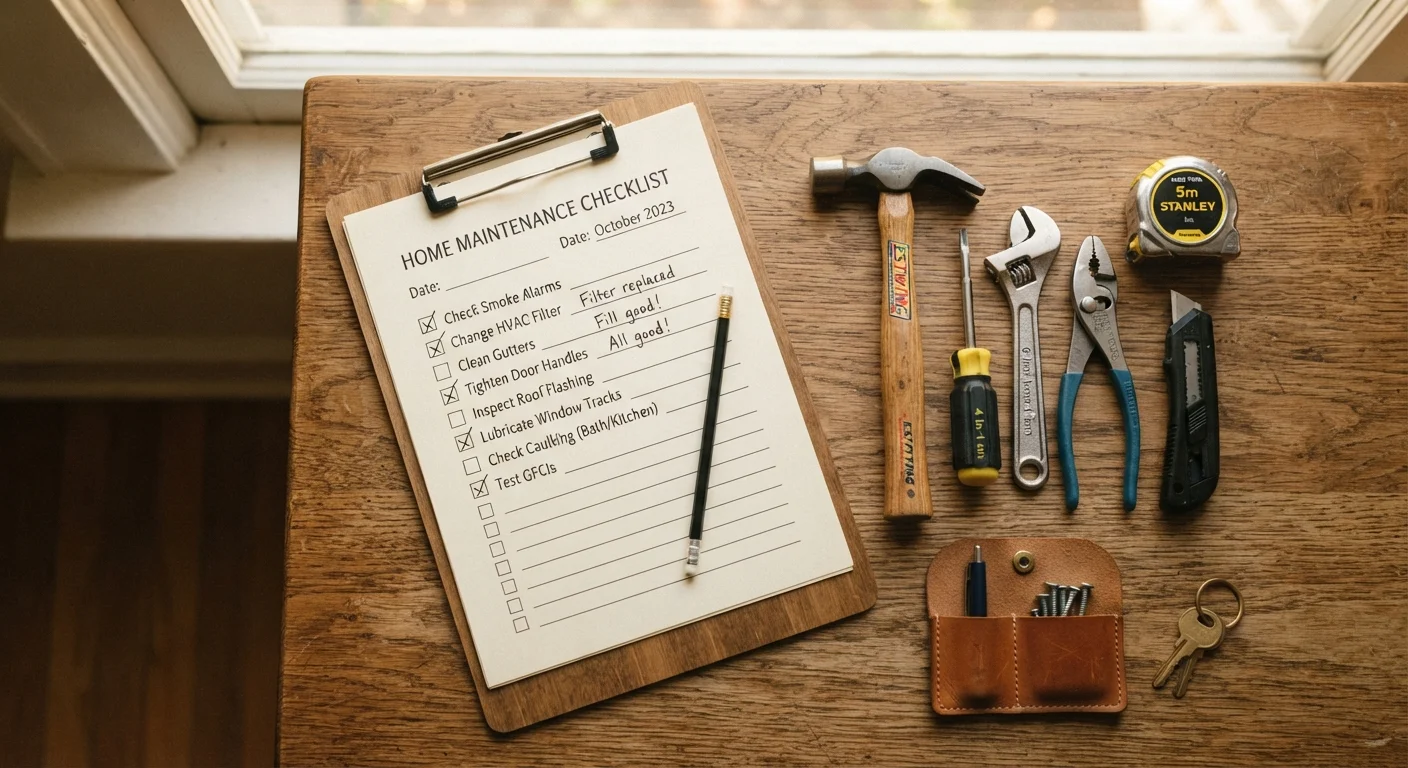
- Routine maintenance - cleaning gutters, replacing HVAC filters, sealing driveways, and similar seasonal upkeep
These tasks share something important: they don't touch the systems in your home that carry serious risk when mishandled - electricity, gas, water supply lines, and load-bearing structure.
Start Small to Build Confidence
If you're new to home repair, choose one low-stakes project - like patching a small drywall hole or caulking a tub - and complete it fully before tackling anything more complex. Success on simple jobs builds the judgment and tool familiarity that make harder tasks safer. Overreaching too early is one of the most common first-timer mistakes.
Where Licensed Contractors Are the Right Call
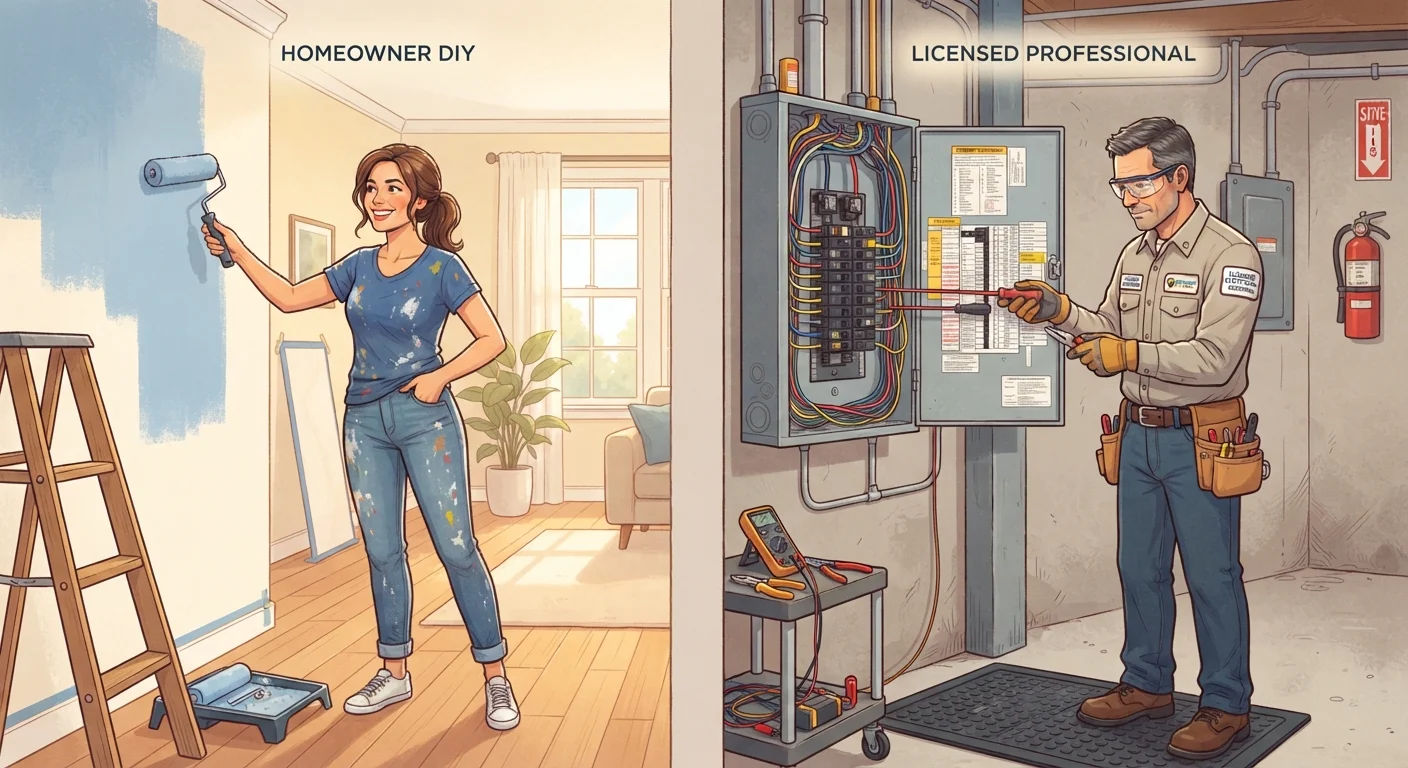
Certain categories of work are regulated for good reason. Errors in these systems can cause fires, floods, structural collapse, or carbon monoxide exposure - outcomes no amount of YouTube research fully prepares you to prevent.
| DIY | Licensed Contractor | |
|---|---|---|
| Typical cost | Lower upfront (materials only) | Higher (labor + materials) |
| Safety risk if done incorrectly | Low to moderate (cosmetic work) | Low - professionals are trained and insured |
| Permit requirement | Rarely required for cosmetic tasks | Often required for regulated systems |
| Insurance implications | Generally unaffected for minor work | Required for covered/regulated work |
| Time investment | Variable - often longer than expected | Typically faster with experienced crew |
| Best suited for | Painting, patching, fixtures, upkeep | Electrical, gas, structural, HVAC, roofing |
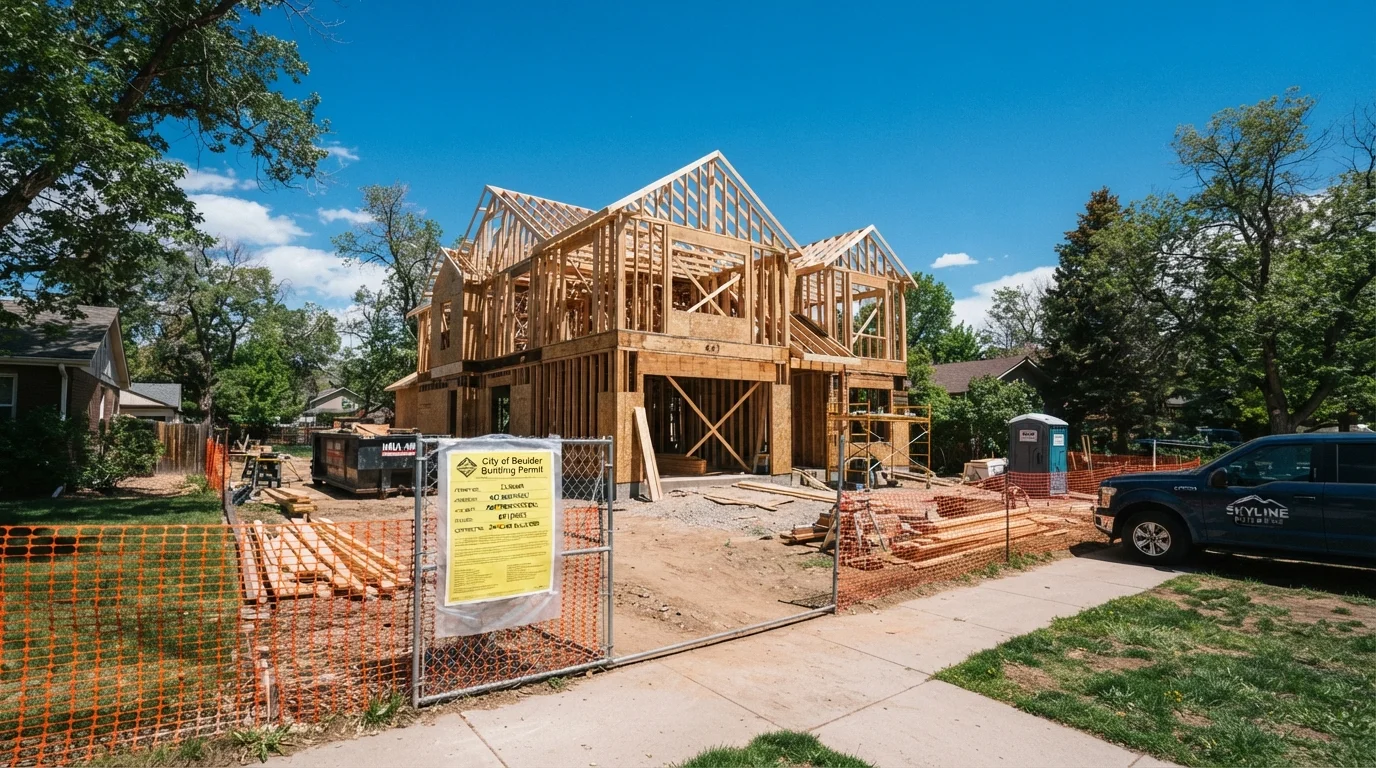
Beyond safety, there's a legal dimension. Many jurisdictions require licensed professionals to pull permits for electrical panel work, HVAC installation, structural modifications, and additions. Work done without required permits can complicate or invalidate your homeowner's insurance and may need to be disclosed - or even torn out - when you sell. For a clear explanation of when permits are legally required, see What a Building Permit Actually Covers.
The jobs that almost always require a licensed contractor include: main electrical panel work or new circuit installation, gas line repairs or appliance connections, plumbing that ties into your main supply or drain stack, load-bearing wall removal, roofing on steep or complex pitches, and HVAC system installation.
The Gray Zone: Judgment Calls and Partial DIY
Not every project falls cleanly on one side. Some homeowners with real electrical experience safely install outlets or ceiling fans. Others confidently re-tile a bathroom floor or replace a toilet. The gray zone is real - and navigating it honestly means asking a few key questions:
- Does this job require a permit in my area? If yes, a licensed contractor typically needs to be involved, or at minimum sign off on the work.
- What's the worst-case outcome if I get it wrong? A lopsided shelf is fixable. A gas leak or failed floor joist is not.
- Am I being realistic about my skill level? First attempts at complex tasks often take three times as long and carry a higher error rate.
It's also worth noting that DIY doesn't always save money once you factor in tools, materials, potential rework, and your time. Renovation Myths That Cost Homeowners Real Money examines this assumption carefully.
Hiring a Contractor: What to Do Before You Sign Anything
When a job crosses into contractor territory, the quality of who you hire matters as much as the decision to hire at all. Verify that any contractor you consider holds a current license in your state, carries general liability insurance, and can provide proof of workers' compensation coverage. Always get a written scope of work and a contract before any work begins.
Don't overlook deferred maintenance either - small issues left unaddressed often become the expensive contractor jobs of the future. Our look at the home maintenance tasks most first-timers put off too long covers what's most often neglected. For a full pre-hire checklist, see Hiring a Contractor: What to Verify.
This article is for general informational purposes only. Home repair regulations and permit requirements vary by location. Always verify local codes and consult a licensed professional before undertaking work that may affect the safety or structural integrity of your home.