Why a Weekly Meal-Planning Audit Works
Most of us don't have nutritional imbalances because we're ignoring health - we simply get busy, fall into food ruts, or underestimate how much variety actually matters. A structured checklist gives you a low-pressure way to scan your week's eating habits and spot gaps before they become patterns.
Unlike rigid diet plans, this approach focuses on broad nutritional principles backed by public health guidance (such as the DGA and USDA recommendations). The goal isn't to micromanage every meal - it's to give yourself a quick, honest audit you can do in under an hour. For a complementary habit, consider pairing this with a structured weekly review to help you notice patterns and adjust intentionally.
Work through the checklist below at the start of each week or after you've drafted your initial plan. A few honest check-marks can make a surprising difference.
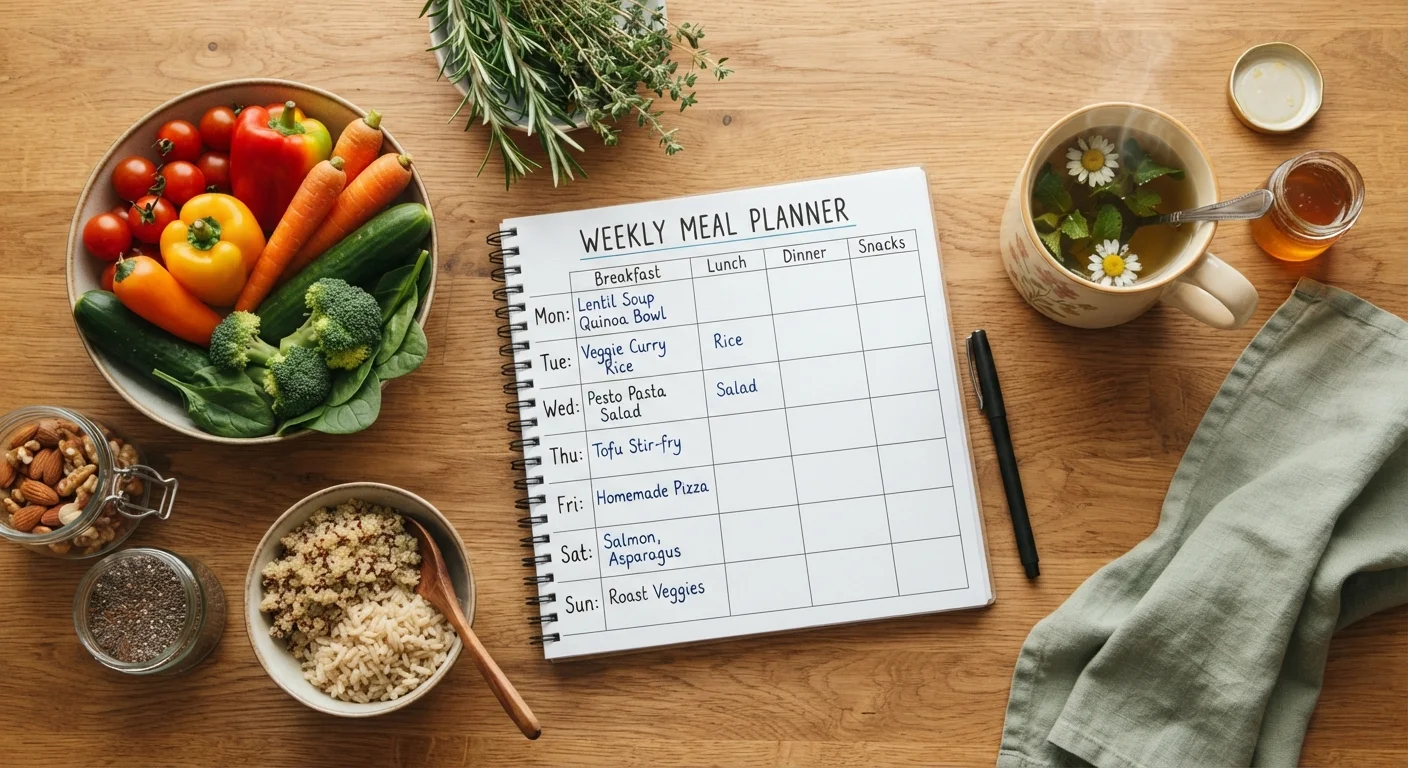
Weekly meal-plan template (paper or digital)
Gives you a structured grid to map out meals by day and meal type before running through the checklist.
Grocery list app or notebook
Helps you translate your finalised plan into a shopping list so nothing gets missed.
Kitchen scale or measuring cups
Useful for loosely estimating portions when trying new recipes, without obsessive precision.
Food storage containers
Essential for batch-cooking and storing prepped ingredients so healthy food is grab-and-go during the week.
The Weekly Meal-Planning Checklist
Run through each group in sequence. You don't need to achieve every item every week - but consistently hitting the must items will put you well ahead of a random approach to eating.
Food Group Coverage
Key Nutrient Checks
Hydration & Beverages
Preparation & Practicality
This checklist is not medical nutrition therapy
The items here reflect general public health guidance for healthy adults and are intended as educational support - not a personalised plan. If you manage a chronic condition such as diabetes, cardiovascular disease, or kidney disease, or have specific dietary requirements due to pregnancy, age, or food allergies, please consult a registered dietitian or your healthcare provider before making significant changes to your diet.
If you're unsure how to proportion vegetables, proteins, and grains across individual meals, our guide on building a balanced plate offers a practical framework without rigid rules. And when you're reading packaged foods, decoding a nutrition facts label can help you make faster, clearer choices.
Making This Checklist a Sustainable Habit
The most nutritionally sound plan is one you'll actually follow. A few strategies help this checklist stick:
- Batch it with another routine. Review your meal plan on the same day you do your grocery order. Keeping tasks together reduces friction.
- Start with gaps, not overhauls. If vegetables are consistently light in your plan, add one extra serving to two or three meals rather than redesigning everything at once.
- Acknowledge your actual week. A week with travel, late nights, or a packed work schedule calls for simpler meals, not elaborate ones. Planning for reality beats planning for an ideal that won't happen.
- Physical activity and nutrition reinforce each other. If you're also building movement into your week, see our guide on structuring a weekly exercise routine around a homeowner's schedule.
Finally, this checklist addresses general nutritional balance for healthy adults. If you have a chronic condition, are pregnant, or have specific dietary needs, please work with a registered dietitian or your healthcare provider to tailor guidance to your circumstances.
This article is for general informational and educational purposes only and is not a substitute for professional medical or nutritional advice. Always consult a qualified healthcare professional for guidance specific to your health situation.