Why Nutrition Labels Can Feel Confusing
The Nutrition Facts label has been a fixture on U.S. packaged foods since 1994, and the FDA updated its format in 2020 to better reflect how people actually eat. Despite those improvements, many shoppers still find labels overwhelming - too many numbers, too many unfamiliar terms, and not enough time in the grocery aisle to work through it all.
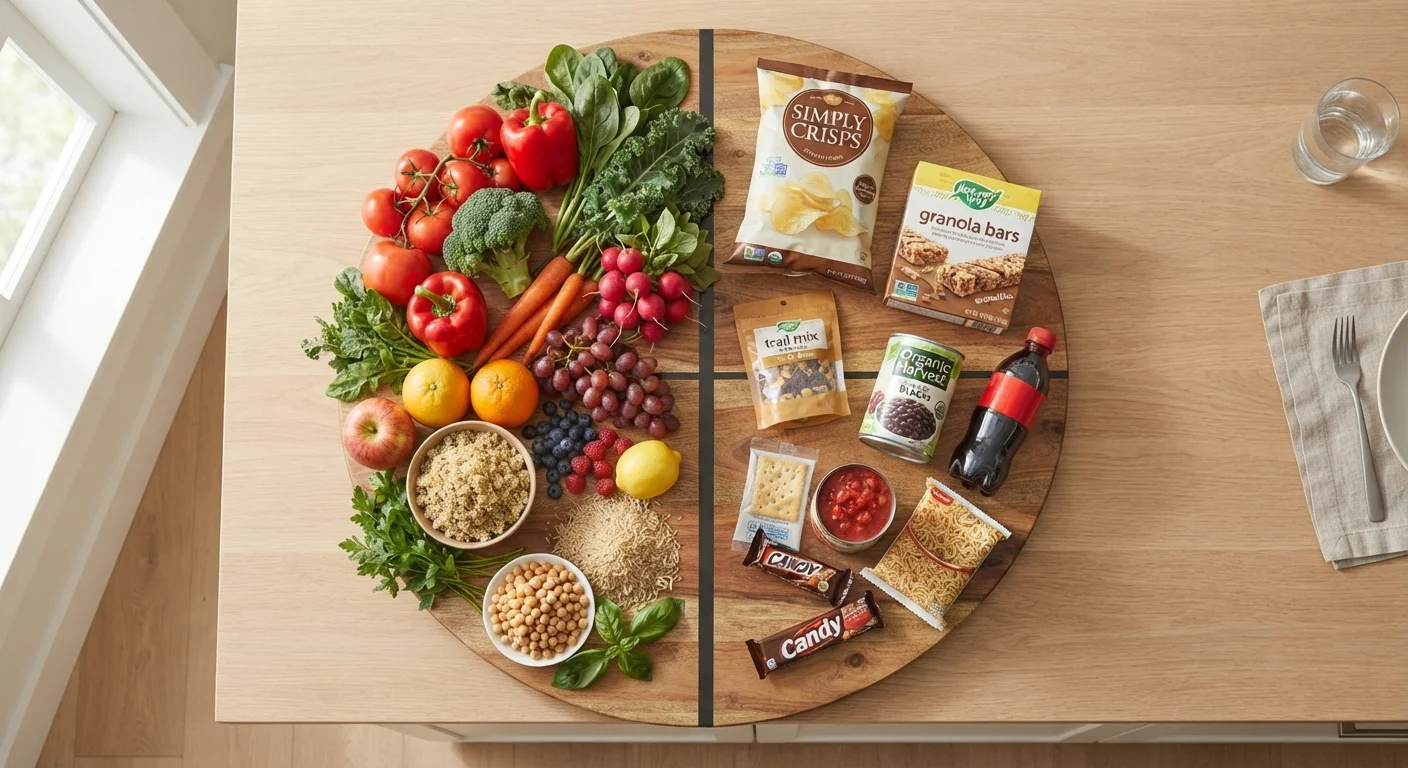
The good news is that you don't need to memorize every line. Understanding a handful of key sections gives you a reliable picture of what's in your food. This guide walks you through each part of the label in the order it appears, so you can move from top to bottom with confidence. If you're also curious about how broader food categories compare, our guide to whole vs. processed foods adds helpful context.
What you will need
How to Read a Nutrition Facts Label, Step by Step
Work through the label in order - each section builds on the one before it. Rushing to a single number (like calories) without checking serving size first is one of the most common ways label-reading goes wrong.
Start with serving size
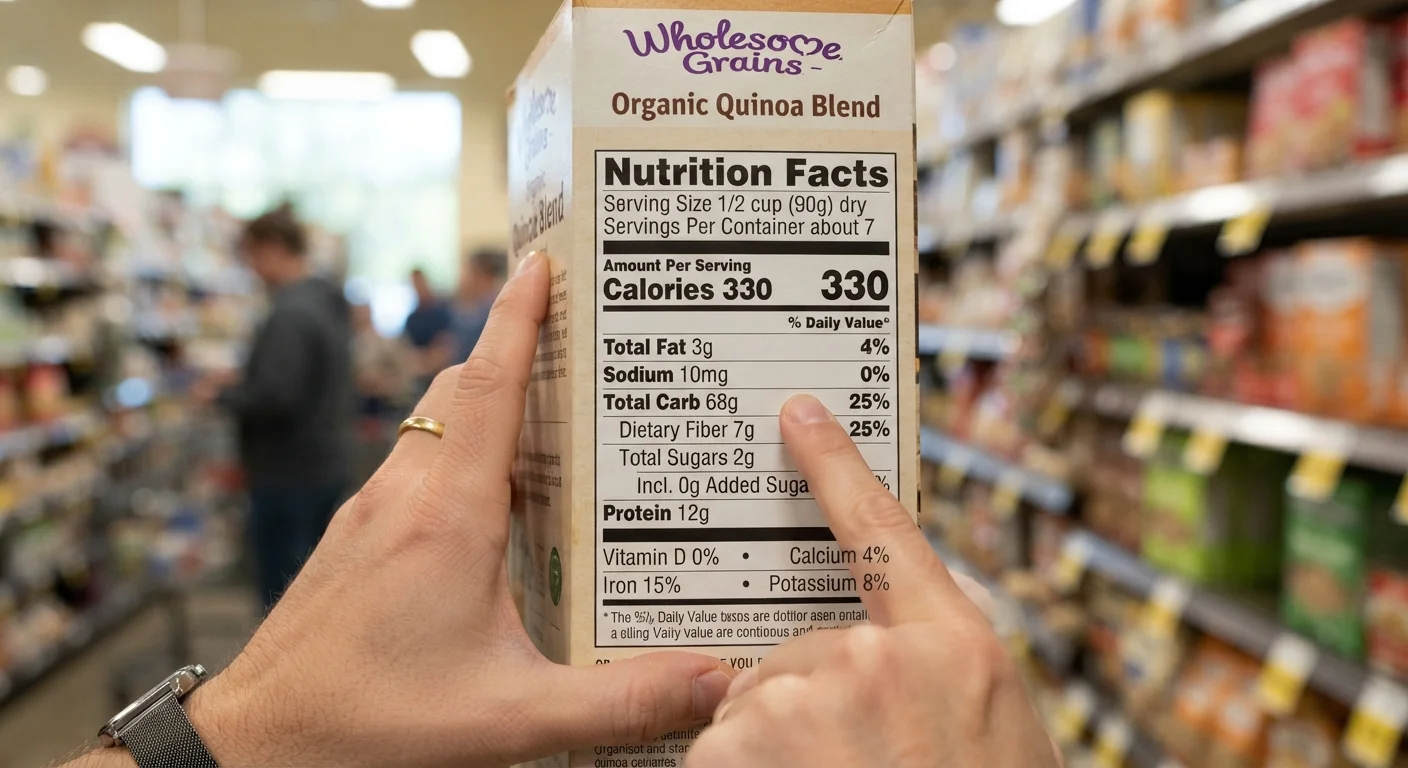
The very first line under "Nutrition Facts" shows the serving size and the number of servings per container. Every single number on the label - calories, fat, sodium, everything - applies to one serving, not the whole package. If a bag of chips lists 150 calories per serving but contains three servings, eating the whole bag means consuming 450 calories.
Serving sizes are standardized by the FDA to reflect amounts people typically eat, but they may not match the amount you actually consume. Adjust accordingly.
Note the calories
Calories appear in large, bold print just below the serving size. This number reflects the total energy provided by one serving. For context on what calorie counts actually mean in everyday eating, understanding energy balance explains the concept in plain terms.
Calories alone don't capture nutritional quality - 200 calories from almonds and 200 calories from a candy bar come with very different nutrient profiles - but the number is still a useful reference point when comparing similar products.
Check the % Daily Value column
The % Daily Value (%DV) column on the right side of the label is one of the most practical tools available. It tells you how much of a specific nutrient one serving contributes toward a standard 2,000-calorie daily diet. The FDA's general guidance: 5% DV or less is considered low, and 20% DV or more is considered high.
Use %DV to quickly compare products or decide whether a food is a meaningful source of a nutrient you're trying to get more - or less - of.
Look at saturated fat, sodium, and added sugars
These three nutrients are worth paying particular attention to because many Americans consume them above recommended levels, according to the Dietary Guidelines for Americans. Look for foods where these are lower (%DV closer to 5% or below) if you're trying to moderate intake.
- Saturated fat: Found primarily in animal products and some tropical oils; linked to cardiovascular health when consumed in excess.
- Sodium: Used widely in packaged and processed foods as a preservative and flavor enhancer. The 2020 label update made sodium easier to spot.
- Added sugars: This line, introduced in the updated label, distinguishes sugars added during processing from naturally occurring sugars in fruit or dairy. The two figures aren't interchangeable.
Look for nutrients to get more of
The lower portion of the label highlights nutrients many Americans fall short on: dietary fiber, vitamin D, calcium, iron, and potassium. Choosing foods with higher %DV for these nutrients is an easy way to nudge your diet in a positive direction without overhauling everything at once.
Fiber in particular deserves attention - most Americans get well below recommended amounts. Learn more about why fiber matters and which everyday foods are reliable sources.
Compare Products Using %DV
When choosing between two similar products, use the %DV column as a quick scoring tool rather than reading every line. Higher %DV for fiber, potassium, and vitamins is generally better; lower %DV for saturated fat, sodium, and added sugars is generally better. This approach takes seconds and works well in a busy grocery aisle.
Putting the Label in Context
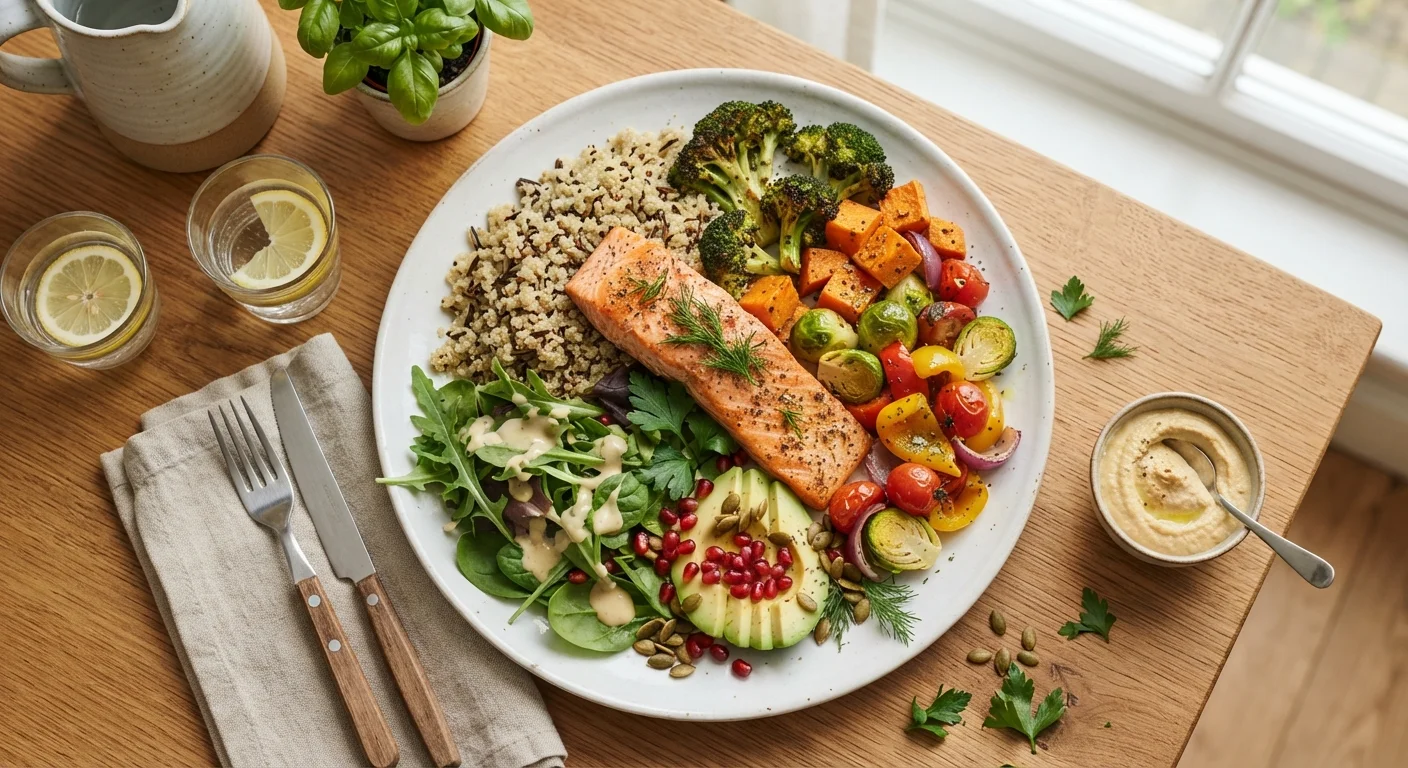
A nutrition label tells you what's in a food, but it doesn't tell you where that food fits in your overall diet - and that's an important distinction. A snack high in sodium isn't automatically off-limits; what matters is the pattern across your whole day and week. For a practical framework on how to think about that bigger picture, see building a balanced plate.
It's also worth knowing that labels reflect a standardized 2,000-calorie reference diet, which won't match everyone's actual needs. Children, older adults, pregnant individuals, and people managing chronic conditions may have different nutrient targets - a registered dietitian can help translate label information into personalized guidance. Labels are a starting point, not a prescription.
Finally, don't overlook the ingredients list. Ingredients appear in descending order by weight, meaning the first few items make up the bulk of the product. If a sweetener appears in the top three, the product is likely high in sugar regardless of what the front of the package claims. For more on how common food marketing claims can mislead, this breakdown of nutrition myths is a useful companion read.
This article is for general informational and educational purposes only and is not a substitute for professional medical or dietary advice. Consult a qualified healthcare provider or registered dietitian for guidance specific to your health needs.