Why a Framework Beats a Diet Plan
Most people don't abandon healthy eating because they lack willpower - they abandon it because the rules got too complicated. Specific diets often come loaded with restrictions, food lists, and strict timelines that are hard to maintain alongside a full life. A framework, by contrast, gives you a flexible structure you can return to again and again, regardless of what's in the fridge or where you're eating.
The plate method is one of the most evidence-informed visual tools available for everyday nutrition. Rather than prescribing exact grams or calories, it uses proportions you can estimate at a glance. Compared to trendy eating patterns - each with their own trade-offs (see the nutritional trade-offs of popular eating patterns) - this approach is deliberately non-dogmatic. It supports variety, works across cuisines, and doesn't require you to start over when life gets busy.
You Don't Need to Count Calories
The plate framework is intentionally visual - no food scale or nutrition app required. Most people can maintain reasonable nutritional balance by simply adjusting what takes up space on the plate. If you want more structure, try applying the framework consistently for one week and notice how your meals naturally shift.
The Basic Plate Proportions Explained
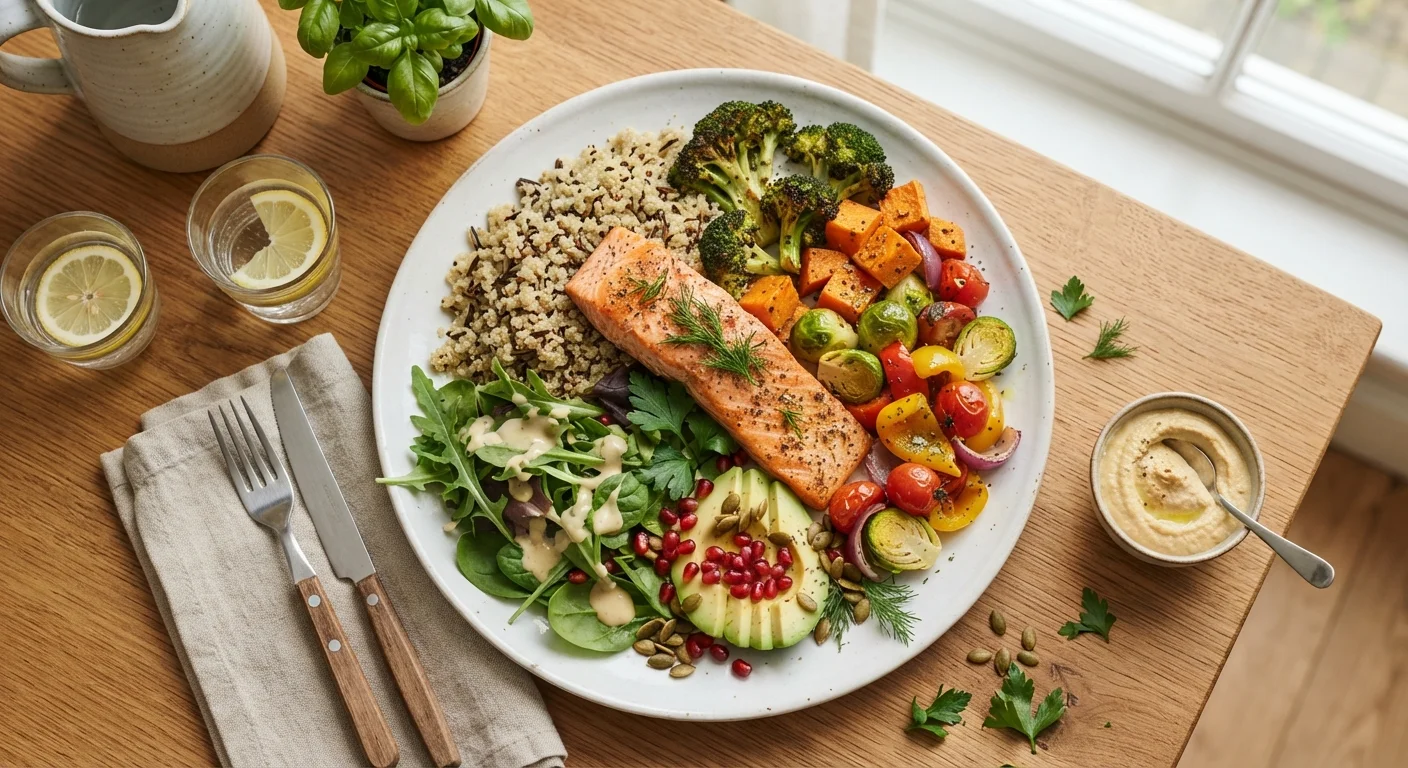
The core idea is straightforward: imagine your plate divided into sections. Fill roughly half with non-starchy vegetables and fruit. Dedicate about a quarter to a quality protein source. Use the remaining quarter for whole grains or other complex carbohydrates. Add a small amount of healthy fat - such as olive oil used in cooking or avocado on the side - and a low-calorie beverage like water.
This general structure is consistent with guidance from respected public health institutions, including the U.S. Department of Agriculture's MyPlate and Harvard T.H. Chan School of Public Health's Healthy Eating Plate. The exact proportions can shift depending on your activity level, health goals, and personal preferences - but the visual logic remains useful as a daily default.
Plate method
A visual tool for portioning meals that divides a plate into sections for vegetables, protein, and grains - making balanced eating easier to estimate without measuring.
Non-starchy vegetables
Vegetables low in carbohydrates and calories, such as leafy greens, broccoli, and peppers. They form the foundation of the vegetable section in the plate framework.
Whole grains
Grains that retain all three parts of the grain kernel - bran, germ, and endosperm. Examples include oats, brown rice, and quinoa. They tend to offer more fiber and nutrients than refined grains.
Unsaturated fats
A type of dietary fat considered beneficial in moderate amounts, found in foods like olive oil, avocado, nuts, and seeds. They differ from saturated and trans fats in their chemical structure and health associations.
Macronutrients
The three main nutrient categories the body uses for energy: carbohydrates, proteins, and fats. Each plays a different role, and the plate framework addresses all three in rough proportion.
Choosing Foods for Each Section
Knowing the proportions is step one; knowing what to put in each section is equally important.
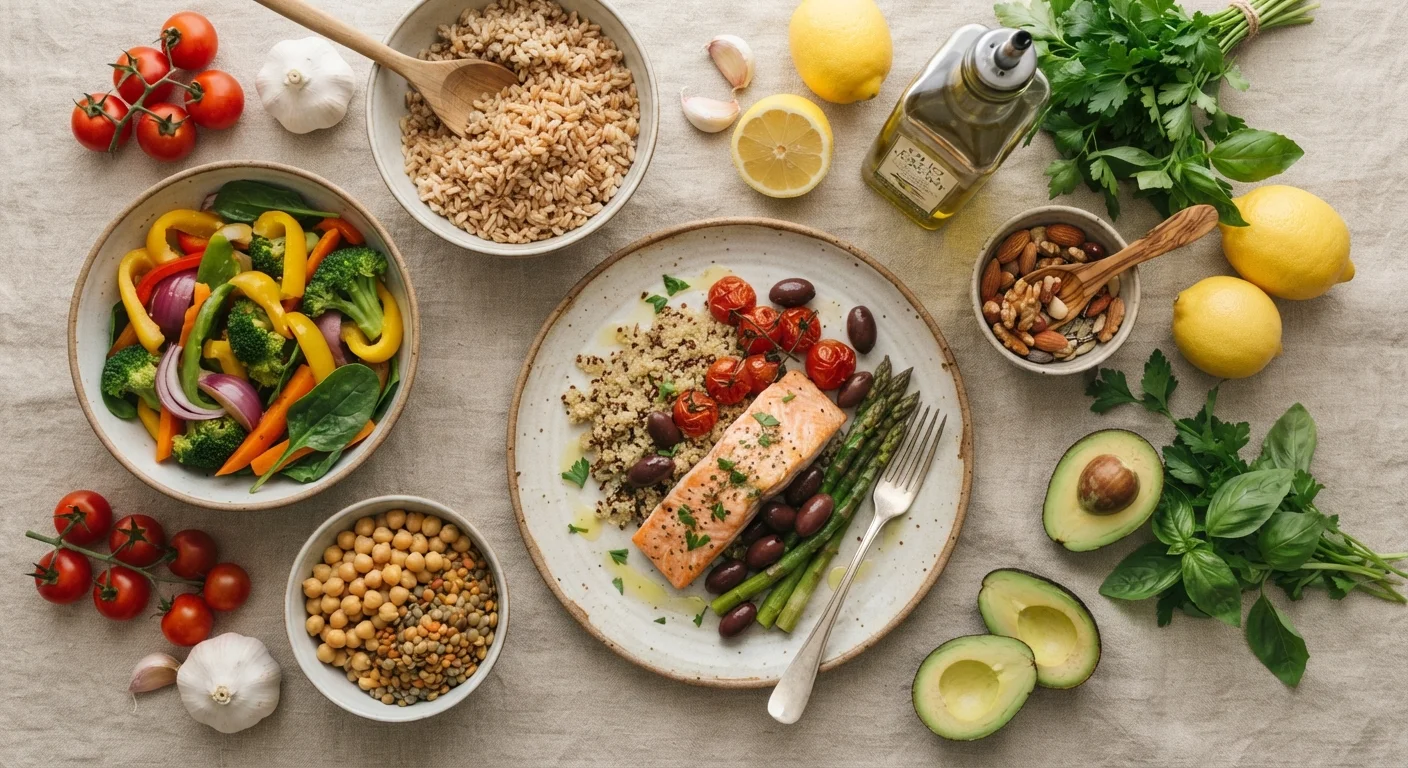
- Vegetables and fruit (half the plate): Prioritize non-starchy vegetables like leafy greens, broccoli, peppers, and tomatoes. Fruit is a nutritious addition, though it contributes natural sugars - variety here is your friend.
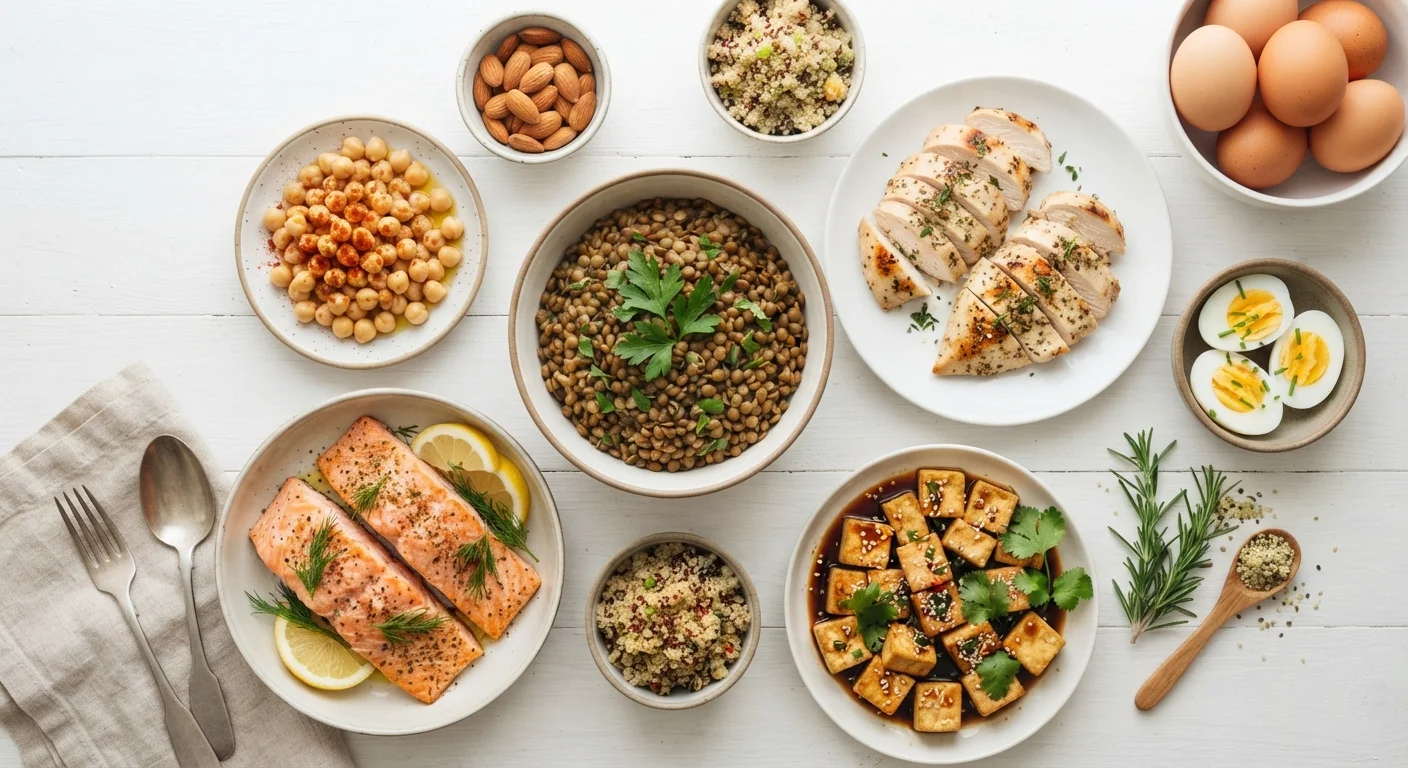
- Protein (one quarter): Options span a wide range - chicken, fish, eggs, legumes, tofu, and low-fat dairy all qualify. For a deeper look at how these compare, our protein sources comparison breaks it down clearly.
- Grains and starches (one quarter): Whole grains like brown rice, quinoa, whole-wheat bread, and oats offer more fiber and nutrients than their refined counterparts. Starchy vegetables like sweet potatoes can also fill this section effectively.
- Fats and beverages: Small amounts of unsaturated fats - found in nuts, seeds, olive oil, and avocado - support nutrient absorption. Water, plain sparkling water, or unsweetened tea are good default beverages.
If budget is a factor, many of these choices are very affordable. Our article on healthy eating on a budget offers practical strategies to eat well without overspending.
Adapting the Framework to Real Life
Real meals rarely look like a textbook diagram, and that's completely fine. The plate method is meant to be a mental model, not a rigid measurement tool. Here are some ways to apply it flexibly:
- Mixed dishes: For stews, stir-fries, or grain bowls, estimate the proportions by ingredient volume. A vegetable-forward stir-fry with a modest grain base and some protein aligns well with the framework even when everything is combined.
- Eating out: At restaurants, scan the menu for dishes that naturally include a protein, a vegetable, and a starch - then consider what adjustments, like swapping sides, might shift proportions closer to the framework.
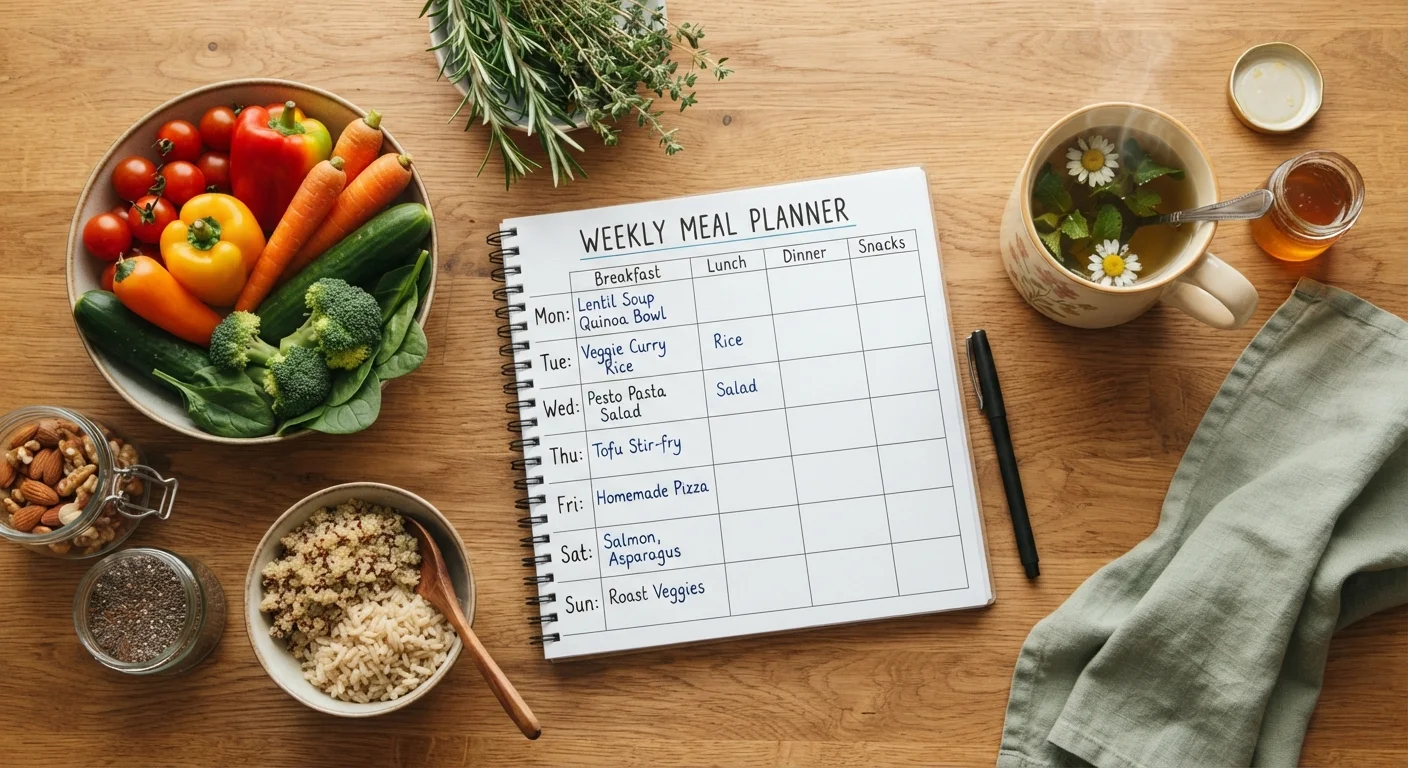
- Meal planning: Thinking ahead makes balanced eating far more consistent. Our weekly meal-planning checklist is a useful companion for auditing your meals across the week without obsessing over individual servings.
Pairing good nutrition habits with regular physical activity compounds the benefits. If you're also working on your fitness routine, the Fitness & Movement hub has practical resources for building sustainable exercise habits around a homeowner's schedule.
Common Pitfalls and How to Sidestep Them
Even a simple framework can get derailed by a few predictable patterns. Being aware of them makes it much easier to course-correct without guilt.
- Treating the protein section as the main event: Many people default to protein-heavy plates with small side vegetables. Flipping that ratio - more vegetables, moderate protein - often requires no extra effort once you're aware of it.
- Underestimating grain portions: Grain portions have a way of expanding. Using a smaller bowl or portioning rice before plating can help maintain the intended quarter-plate proportion.
- Confusing healthy foods with unlimited foods: Nutritious options like nuts, olive oil, and whole grains are genuinely beneficial, but proportion still matters across the whole meal pattern.
- Skipping vegetables at breakfast: Breakfast is a missed opportunity for many people. Adding spinach to eggs, sliced tomatoes alongside toast, or fruit to oatmeal is a low-effort way to get ahead on your vegetable and fruit target early in the day.
Understanding what's in your food also helps you apply this framework more confidently. Learning to read a nutrition facts label is a genuinely useful skill that takes the guesswork out of packaged ingredients.
One Framework Doesn't Fit Every Situation
General plate proportions are a helpful starting point for healthy adults, but they aren't a prescription for everyone. People managing diabetes, kidney disease, eating disorders, or other health conditions may need significantly different guidance. Always work with a healthcare provider or registered dietitian when managing a medical condition through diet.
This article is for general informational and educational purposes only and is not a substitute for professional medical or dietary advice. Individual nutritional needs vary. Please consult a qualified healthcare provider or registered dietitian for guidance specific to your health circumstances.