
What 'Strict Budgeting' Actually Means
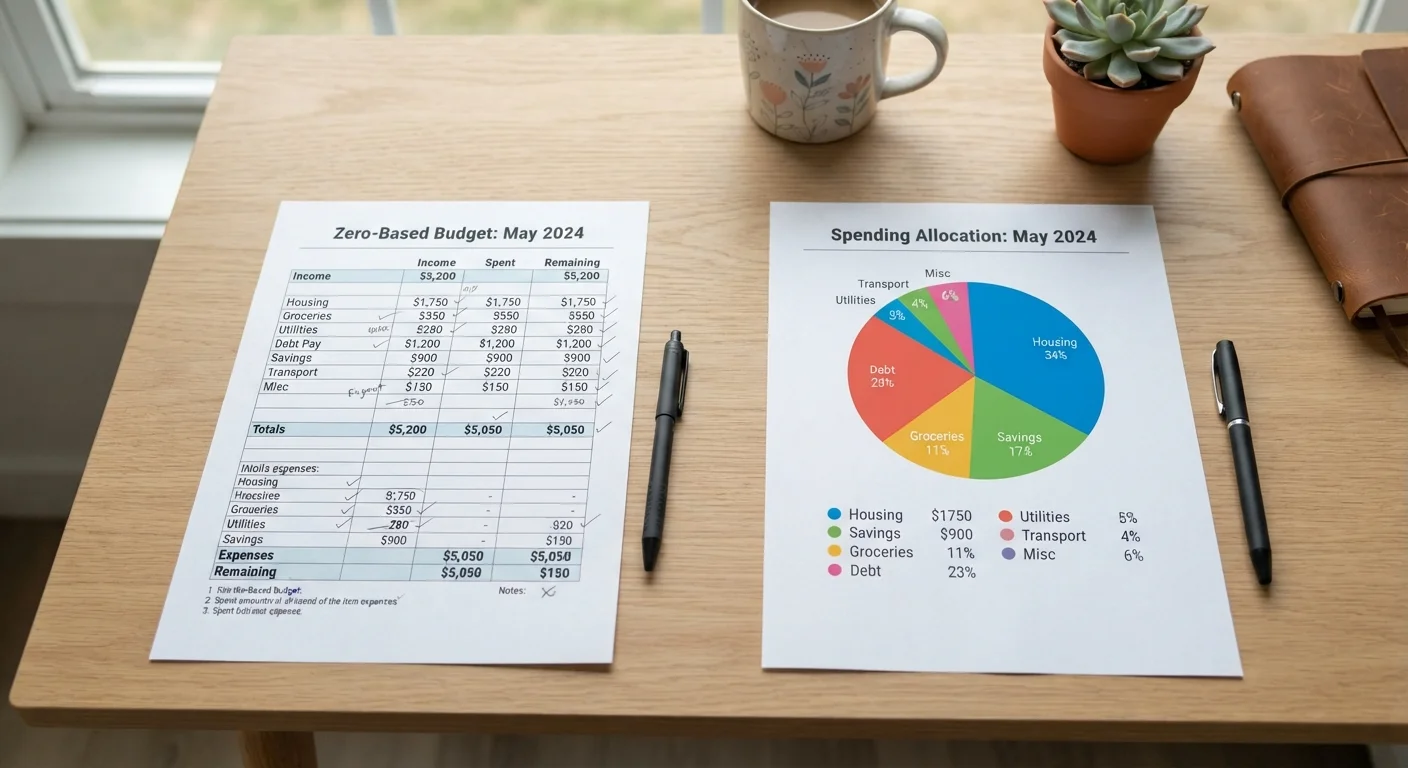
A strict budget assigns every dollar of your income to a specific category before the month begins. Unlike loose spending awareness, it enforces hard limits on discretionary spending — dining out, entertainment, clothing, and similar categories are capped at fixed amounts, often uncomfortably low ones.
This approach sits at the more rigid end of the budgeting spectrum. Methods like zero-based budgeting, where every dollar has a job, are common examples. To understand how these compare with more flexible frameworks, see Zero-Based Budgeting vs. Percentage-Based Budgeting.
Strict budgeting isn't inherently wrong — but it does come with real advantages and real costs. Knowing both sides honestly is the starting point for building something that lasts.
The Genuine Advantages
There are concrete, well-documented reasons why strict budgeting works for many people, especially those in a financial recovery phase or chasing a specific goal.
Accelerates debt repayment significantly
By capping discretionary spending, more of each paycheck goes toward principal balances. Even modest reductions in monthly spending can shorten a repayment timeline by months or years.
Builds a strong savings habit quickly
Treating savings as a non-negotiable line item — not an afterthought — creates a consistent accumulation pattern that compounds over time.
Creates clear financial visibility
Strict tracking surfaces spending patterns that are otherwise invisible, like recurring subscriptions or gradual lifestyle creep that slowly erodes available income.
Reduces financial anxiety through control
Many people report lower money-related stress once they have a concrete plan, even if the plan is tight — uncertainty is often more stressful than constraint.
Speeds progress toward specific goals
Whether it's a home emergency fund or a down payment top-up, strict budgeting compresses timelines by concentrating resources toward a defined target.
65%
Americans living paycheck to paycheck
According to a 2023 LendingClub report, roughly 65% of U.S. consumers reported living paycheck to paycheck, underscoring how impactful even modest budget discipline can be.
3–6 months
Recommended emergency fund size
Financial planning guidelines widely recommend maintaining three to six months of essential expenses in reserve — a target strict budgeting can help reach faster.
The structure removes ambiguity. When you know your grocery limit is $300 for the month, there's no guessing or rationalizing — and that clarity tends to reduce impulse spending. For anyone trying to break out of a paycheck-to-paycheck cycle, that friction matters enormously.
The Honest Downsides
The disadvantages of strict budgeting are just as real — and often underreported, because acknowledging them doesn't fit neatly into motivational financial content.
High risk of burnout and abandonment
Overly restrictive budgets often fail not from lack of intent but from cumulative depletion — months of constant trade-offs erode motivation and lead to complete abandonment.
Leaves no buffer for real life
Car repairs, medical co-pays, and irregular bills don't fit neatly into fixed categories. A budget with no flexibility can collapse the moment an unplanned cost appears.
Can strain relationships and social life
Consistent refusal to participate in meals, events, or casual spending with friends and family can create friction and isolation over time.
May ignore income growth as a lever
Strict budgeting focuses almost entirely on cutting expenses, sometimes at the expense of time and energy that could be used to increase earning capacity instead.
Difficult to maintain during irregular income
Freelancers, seasonal workers, and those with variable pay find fixed categorical limits frustrating and often inapplicable when monthly income fluctuates widely.
One of the most common failure points is what behavioral researchers sometimes call "budget fatigue" — the cumulative mental load of tracking, restricting, and second-guessing every purchase. Many beginners assume they lack willpower when the budget itself was simply too severe from the start.
It's worth separating fact from fiction here. Many people avoid budgeting altogether due to misconceptions about what it requires. See common myths about budgeting for a closer look at which fears are unfounded.
Strict Doesn't Have to Mean Permanent
Many financial planners suggest using a strict budget as a temporary, goal-specific tool rather than a permanent lifestyle. Once high-interest debt is eliminated or a savings target is met, loosening restrictions strategically can make the overall system more durable. Think of it as a phase, not a fixed identity.
Finding the Right Level of Restriction for You
The goal isn't maximum restriction — it's maximum sustainability. A budget that pushes you hard but doesn't break you will outperform a perfect budget abandoned in week three.
A practical middle ground: apply strict limits to the categories with the most waste (often dining and subscriptions), while keeping a small, guilt-free discretionary pool. This design captures most of the financial benefit without the psychological cost of total rigidity.
For a broader framework on building toward financial milestones, the Saving & Goals hub covers emergency funds and goal-based saving in practical terms.
If you're also rethinking how you allocate money more broadly — including how much cash to hold versus invest — the trade-offs of keeping too much in savings offers a useful counterpoint. And for anyone applying budget discipline to travel spending, trade-offs behind budget travel decisions explores how the same principles play out differently on the road.
This article is for general informational purposes only and does not constitute personalized financial advice. Consult a licensed financial professional for guidance tailored to your specific situation.