
What 'Too Much Cash' Actually Means
Most financial educators define an appropriate emergency fund as three to six months of essential living expenses — mortgage, utilities, groceries, insurance, and minimum debt payments. For a homeowner, some advisers suggest leaning toward the higher end of that range, given that unexpected repairs can arrive without warning.
"Too much cash" isn't a moral failing or a sign of poor discipline. It simply describes a situation where money sitting in a savings account exceeds what you've designated for near-term goals and emergencies. Once you've crossed that threshold, every extra dollar in savings has an opportunity cost — meaning it could, in principle, be doing more work elsewhere.
Understanding where your own threshold sits requires mapping out your goals clearly. See our guide to structuring savings by time horizon for a framework that helps separate short-term reserves from longer-term goals.
The Real Advantages of a Larger Cash Reserve
Before examining the downsides, it's worth acknowledging what a generous cash cushion genuinely provides. These aren't imagined benefits — they're real, and they matter especially for homeowners.
Immediate liquidity for emergencies or repairs
Cash in a savings account is accessible within one to two business days with no penalties, making it ideal for urgent homeowner expenses like plumbing failures or appliance replacements.
Psychological security and reduced financial anxiety
Research consistently finds that financial stress is closely tied to perceived lack of cushion. A visible cash reserve can support better decision-making by reducing reactive, fear-driven financial choices.
Flexibility to act on time-sensitive opportunities
Whether it's a neighborhood property selling below market or a home improvement deal with a contractor, liquid cash allows you to move quickly without borrowing.
No market risk or volatility exposure
Unlike stocks or bonds, cash in an FDIC-insured account doesn't lose nominal value due to market fluctuations — a meaningful comfort during economic uncertainty.
Liquidity — the ability to access money without penalty or delay — is particularly valuable when a roof leak or HVAC failure demands immediate payment. Investment accounts, by contrast, can take days to liquidate and may impose tax consequences or early-withdrawal penalties depending on account type.
The Hidden Costs of Sitting on Too Much Cash
The risks of holding too much cash are less visible than, say, losing money in a market downturn. But they're real — they just accumulate quietly.
Inflation steadily erodes purchasing power
When a savings account's interest rate falls below the inflation rate, the real value of your cash declines each year. Over a decade, this gap can be substantial.
Missed compounding growth in investment accounts
Money left in savings rather than invested in tax-advantaged accounts forfeits years of potential compound growth — a cost that grows larger the earlier it occurs in your financial life.
Low yields in standard savings accounts
Traditional savings accounts at major banks have historically offered rates well below inflation, meaning idle cash may be losing ground even when interest is being credited.
Foregone tax advantages from retirement contributions
Funds sitting in a taxable savings account don't benefit from the pre-tax or tax-free growth available in accounts like a 401(k) or Roth IRA, resulting in a higher lifetime tax burden.
Creates a false sense of financial progress
A large savings balance can feel like financial success even when retirement accounts are underfunded or high-interest debt remains unpaid — masking a suboptimal overall picture.
3–6 months
Recommended emergency fund coverage
Most mainstream financial guidance, including that from the Consumer Financial Protection Bureau, suggests covering three to six months of essential expenses in liquid savings.
~0.5%
Average traditional savings account APY
The FDIC has reported that national average savings account rates at traditional banks have historically hovered well below 1%, often lagging significantly behind inflation.
Inflation erosion is the most significant long-term risk. If a savings account yields less than the current inflation rate — which has been common historically in standard savings accounts — every year you hold that cash, its real purchasing power declines. That's not a hypothetical; it's arithmetic.
There's also the compounding opportunity cost. Money not invested in a tax-advantaged retirement account, for example, misses both market growth potential and the tax benefits of accounts like a 401(k) or Roth IRA. The longer that money sits idle, the larger the gap can grow. This connects to broader questions about financial habits — our look at savings myths that keep people stuck addresses why sitting on cash can feel safer than it actually is.
Finding the Right Balance as a Homeowner
The answer isn't to drain your savings account. It's to give every dollar in that account a purpose — and to redirect dollars that don't have one.
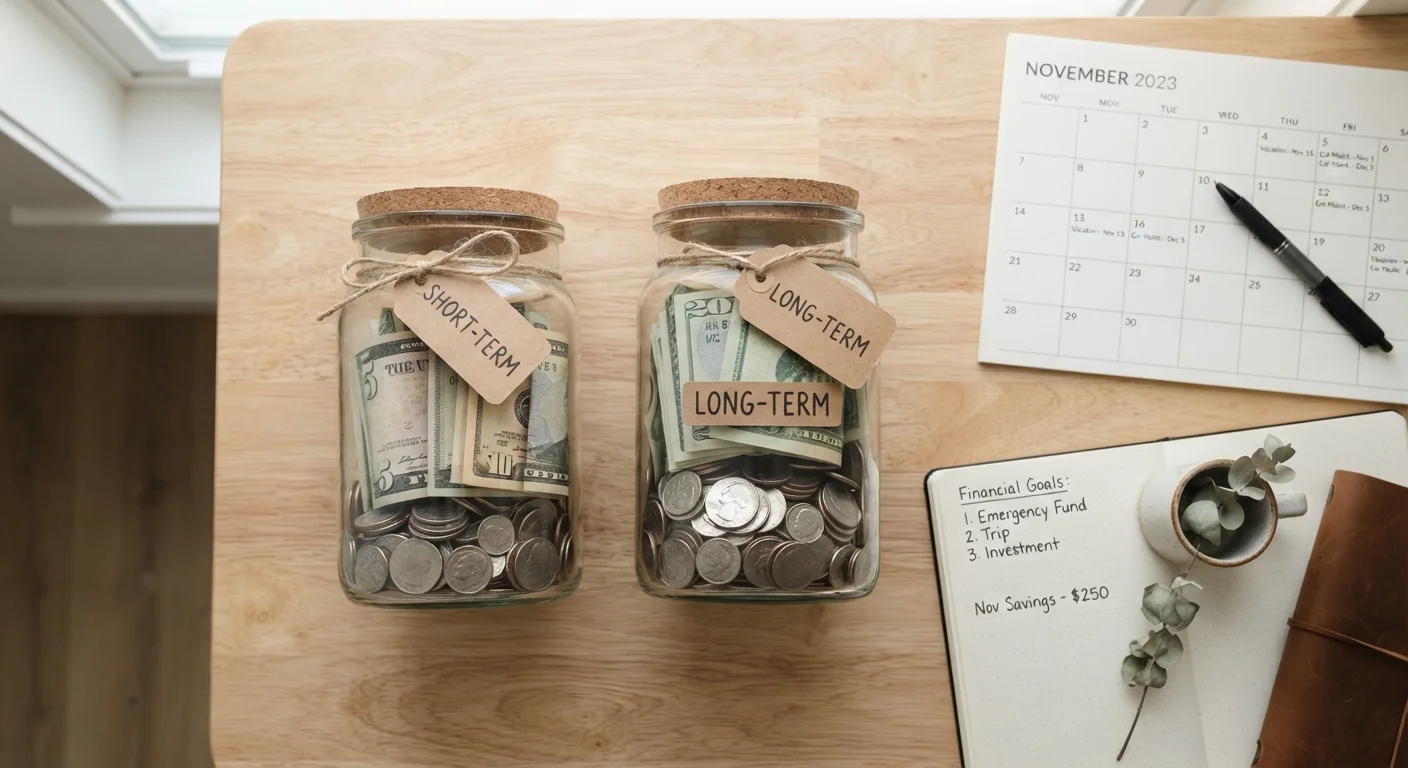
A practical starting point is to separate your savings by function. Your emergency fund has one job: cover income disruption or urgent unplanned expenses. A home repair sinking fund has another job: absorb the predictable-but-unscheduled costs of owning property. Beyond those two buckets, surplus cash may be better served in higher-yield vehicles or invested according to your timeline and risk tolerance.
Your 'Right Amount' Will Change Over Time
The appropriate cash reserve isn't a fixed number — it shifts with your income, mortgage balance, household size, and career stability. A freelancer with variable income reasonably holds more cash than a dual-income household with stable employment. Revisiting your target at least once a year, or after any major life change, keeps your savings strategy aligned with your current reality rather than a situation you've outgrown.
If you're weighing account types for that surplus, our comparison of high-yield and standard savings accounts breaks down where the differences actually matter. And for keeping multiple savings goals organized without losing track, see our guide to goal-based saving.
Automating transfers — moving a set amount each month toward investment or goal accounts the moment your paycheck arrives — is one of the most effective ways to prevent unintentional cash accumulation. It removes the decision from your hands and makes purposeful saving the default.
This article is for general informational and educational purposes only and does not constitute personalized financial, investment, or tax advice. Consult a qualified financial professional before making decisions about your own savings strategy or investments.