How Each Method Works
Understanding the mechanics of each approach is the clearest way to see which one fits your life.
Zero-Based Budgeting
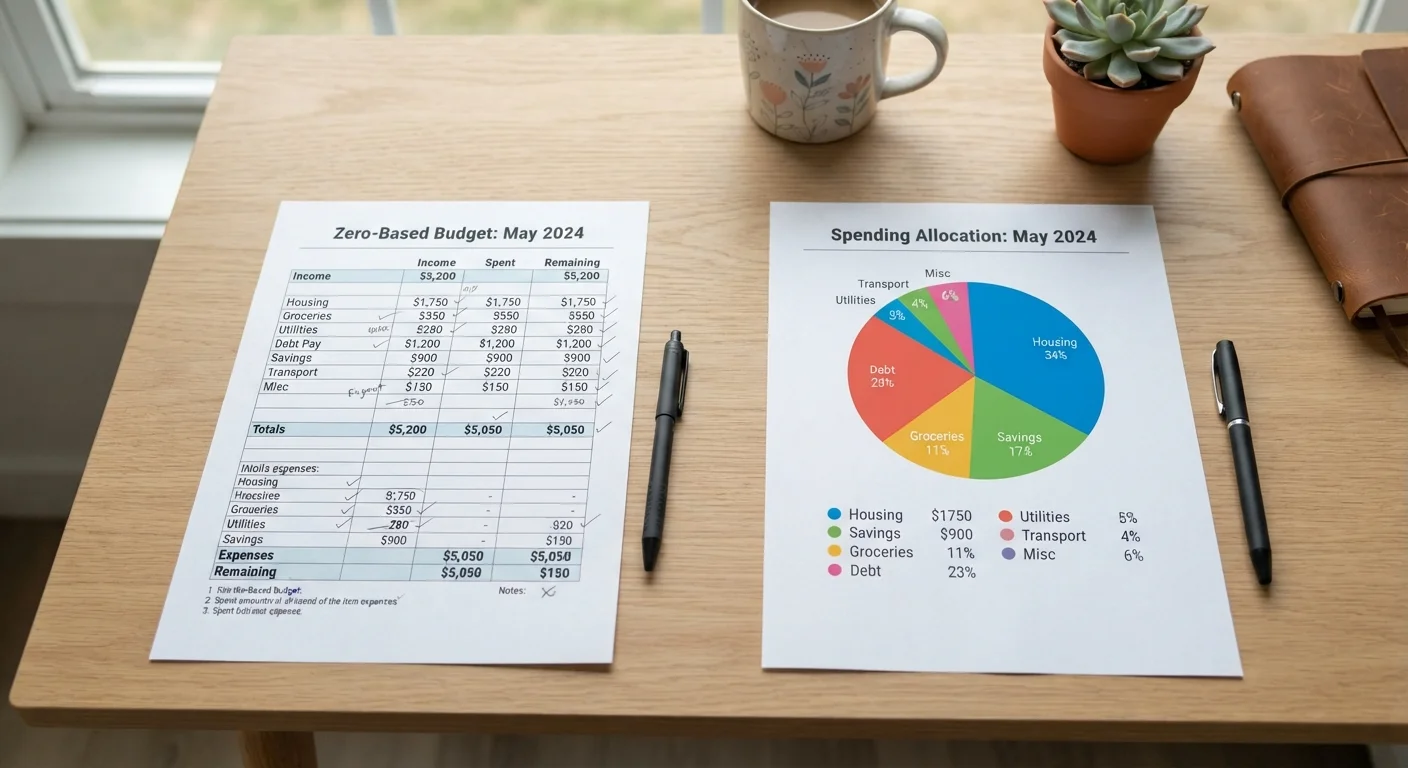
With zero-based budgeting, you start each month by listing your total take-home income, then assign every single dollar to a category — housing, groceries, savings, debt payments, entertainment — until the remaining balance is exactly zero. The goal isn't to spend everything; it's to account for everything. Dollars assigned to savings or an emergency fund are still "spent" in the budget, just purposefully.
This method requires rebuilding or carefully reviewing your budget every month, which takes time but also forces you to confront any shifts in your spending habits head-on. For a deeper dive into which costs are predictable versus unpredictable within that process, see our guide to fixed vs. variable expenses.
Percentage-Based Budgeting
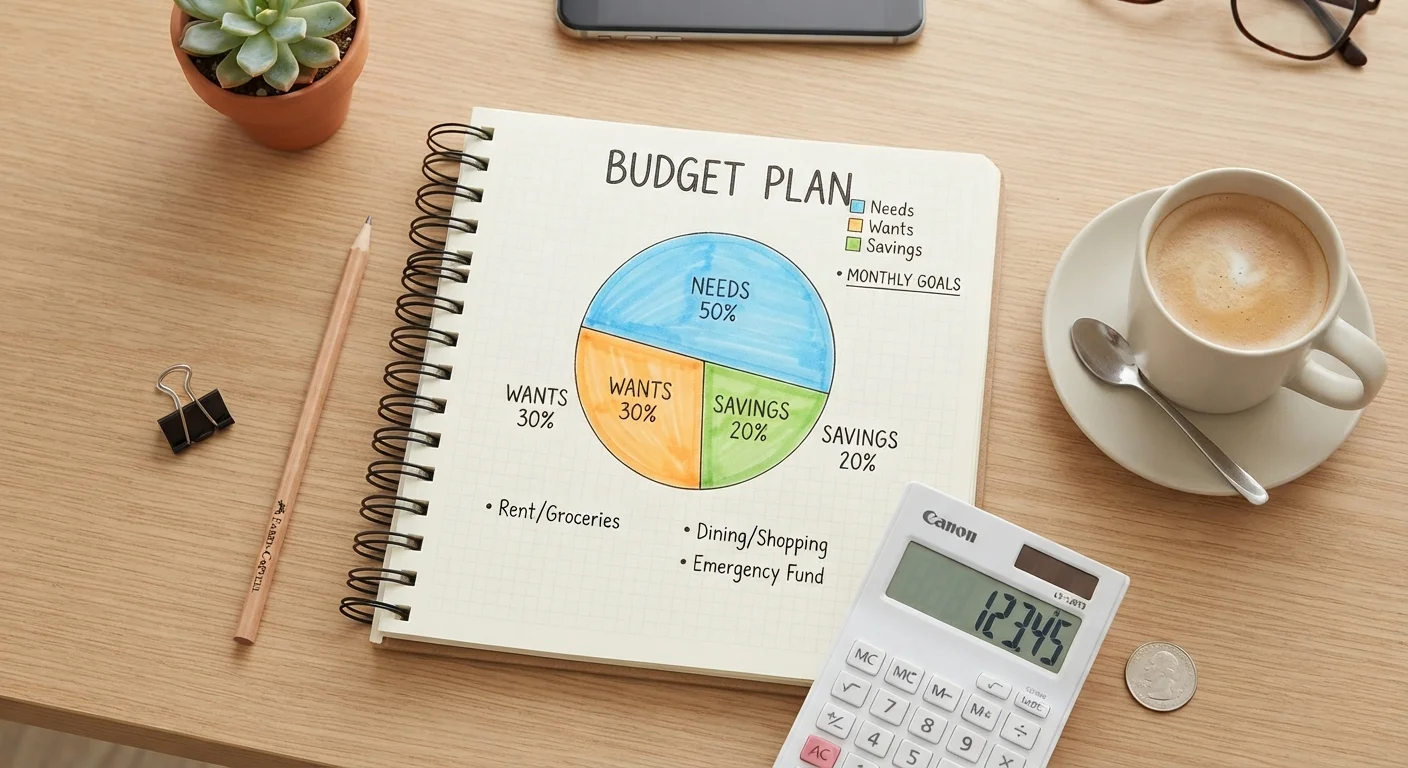
Percentage-based budgeting divides income into broad categories using preset ratios. The most widely referenced framework is the 50/30/20 rule — 50% toward needs, 30% toward wants, and 20% toward savings and debt repayment. Other percentage splits exist, but the principle is the same: categories are defined by proportion, not exact dollar amounts.
If your income rises or falls, each category adjusts automatically. You don't need to re-examine every line item — just verify that your spending still falls within each target band. The 50/30/20 rule explained offers a thorough look at when this specific framework works well and when a different split may serve you better.
| Criterion | Zero-Based Budgeting | Percentage-Based Budgeting |
|---|---|---|
| Core principle | Every dollar assigned; balance = zero | Income split by fixed percentage ratios |
| Monthly setup time | 30–60 minutes per month | Minimal once targets are set |
| Works with variable income | Harder; requires full rebuild each month | Easier; ratios scale automatically |
| Spending visibility | Very high — line-item detail | Moderate — category-level view |
| Best financial phase | Active debt payoff or savings sprint | Stable maintenance or beginners |
| Risk of burnout | Higher due to ongoing detail required | Lower due to simplicity |
| Flexibility | Low — every dollar is pre-assigned | High — broad categories allow variation |
Trade-Offs, Time Commitment, and Who Thrives With Each
Neither method is objectively superior — the right choice depends on your situation, habits, and goals.
~33%
Americans with a formal household budget
Gallup polling has consistently found that fewer than one in three U.S. adults maintain a detailed household budget.
50/30/20
Most recognized percentage budgeting split
The 50/30/20 framework — needs, wants, savings — is among the most widely cited personal finance guidelines in mainstream financial education.
The Case for Zero-Based Budgeting
ZBB creates a level of intentionality that's hard to replicate with broader categories. Because you must justify each allocation, it often surfaces expenses you'd forgotten about — subscriptions, recurring fees, or spending patterns that quietly erode savings. This makes it a strong tool when you're in an active financial sprint, such as paying off a car loan or building a down payment fund.
The trade-off is maintenance. You'll typically spend 30–60 minutes at the start of each month setting up the budget, plus regular check-ins throughout. If that feels unsustainable, burnout is a real risk — and an abandoned budget helps no one. The honest trade-offs of strict budgeting offers a candid look at this tension.
The Case for Percentage-Based Budgeting
Percentage-based budgeting is durable precisely because it's low-friction. You set your targets once, check in periodically, and adjust only when something major changes — a new job, a move, a major new expense. For homeowners whose monthly costs include mortgage payments, insurance, and maintenance, the stability of a percentage framework can reduce financial decision fatigue considerably.
The risk is that broad categories can mask problem areas. If your "needs" category consistently hits 65% instead of 50%, you won't catch it as quickly as you would under a ZBB system. Pairing percentage targets with a simple tracking tool can close this gap. See our comparison of budgeting tracking methods to find an approach that matches your style.
Both methods fit within a broader personal finance plan. For a complete overview of how budgeting connects to saving, debt management, and long-term goals, the personal budgeting complete resource is a useful reference.
You Can Combine Both Approaches
Some people start with percentage-based budgeting to establish broad targets, then apply zero-based thinking within a single challenging category — like discretionary spending — for tighter control. Hybrid approaches are valid and often more sustainable than rigid adherence to one method. The goal is a budget you'll actually maintain, not a theoretically perfect one you abandon after two months. Consider exploring envelope budgeting as another complementary tool for controlling specific spending categories.