Why Your Budgeting Tool Actually Matters
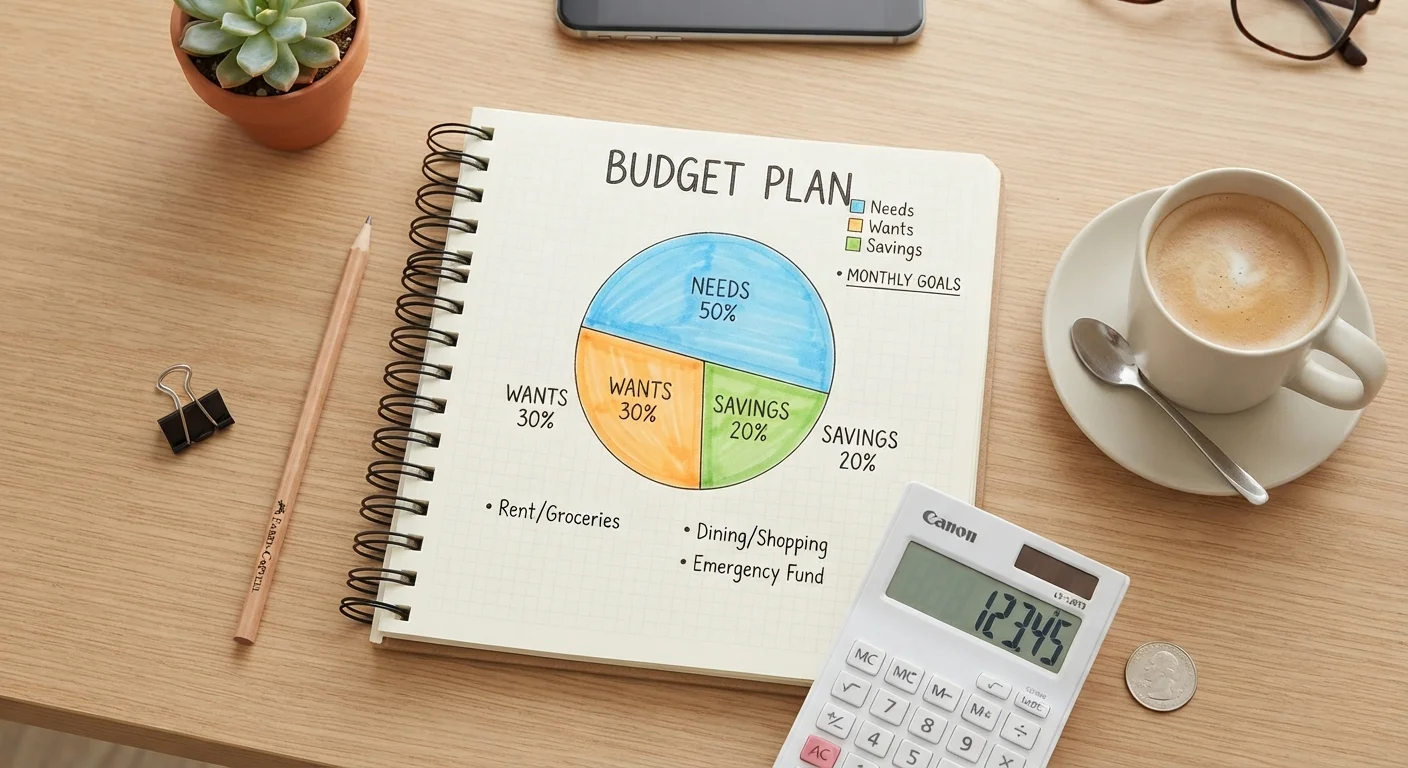
Before choosing a framework like the 50/30/20 rule or zero-based budgeting, you need to settle on a medium - how you'll physically record, track, and review your numbers. The wrong format creates friction, and friction leads to abandonment. Research in behavioral economics consistently shows that implementation ease is one of the strongest predictors of whether a financial habit sticks. This article lays out the honest trade-offs of each method so you can match a tool to your real life, not an idealized version of it.
For a broader foundation, see our complete personal budgeting resource before diving into specific tools.
Pen-and-Paper Budgeting
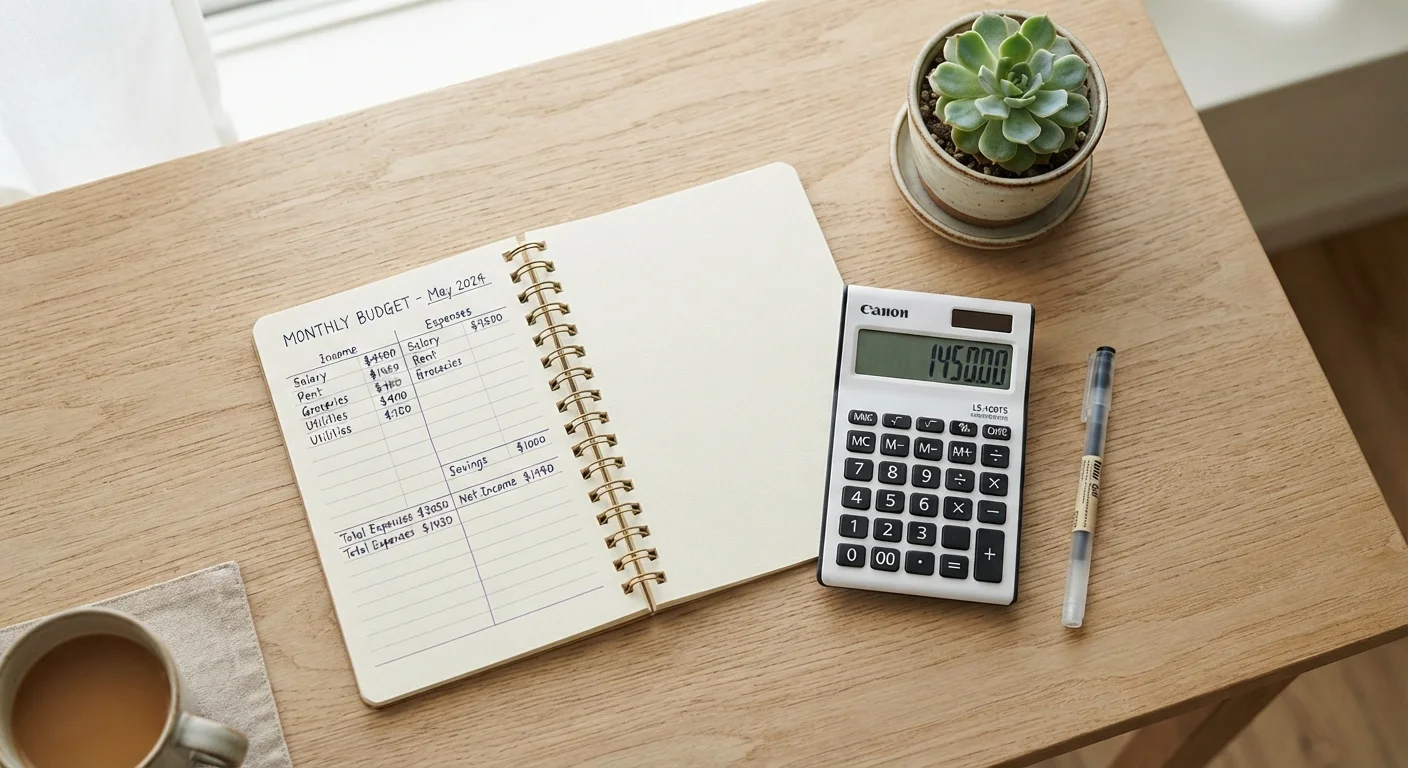
Writing your budget by hand is the oldest method - and for good reason. The physical act of recording numbers reinforces awareness in a way that clicking through digital interfaces often doesn't. Studies on learning and memory suggest that handwriting engages the brain more deeply than typing, which can translate into a stronger grasp of where your money is actually going.
Advantages
- Zero cost. A notebook and pen are all you need.
- No internet, no app updates, no account linking. It simply works.
- High intentionality. Manually logging every expense forces engagement.
Limitations
- Calculations are error-prone and time-consuming without automation.
- Hard to run totals across categories or months quickly.
- Difficult to scale if your budget has many income streams or expense categories.
- Not ideal if you're budgeting on an irregular income that requires frequent recalculation.
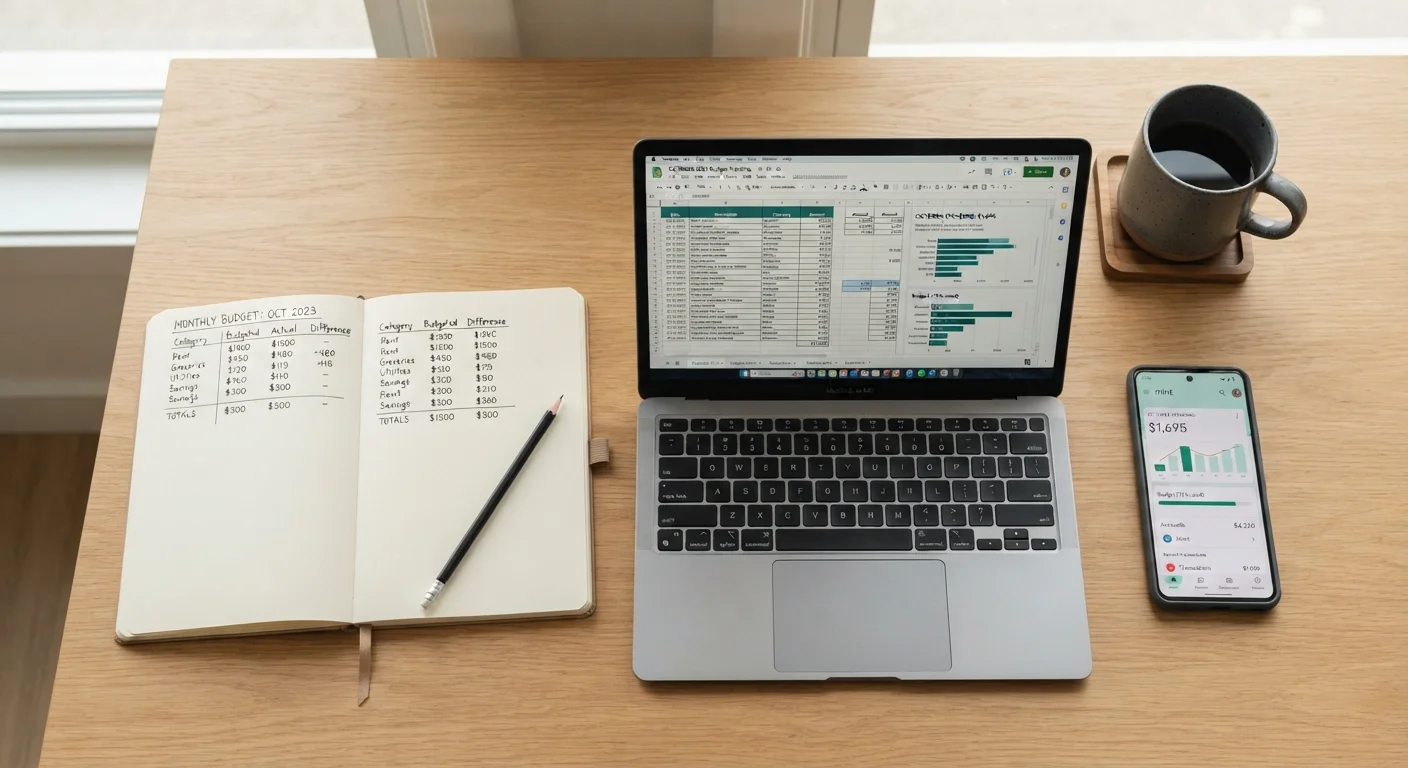
Pen-and-paper works well as a starting point or alongside another method - for example, using a notebook for daily spending and a spreadsheet for monthly reconciliation.
Spreadsheet Budgeting
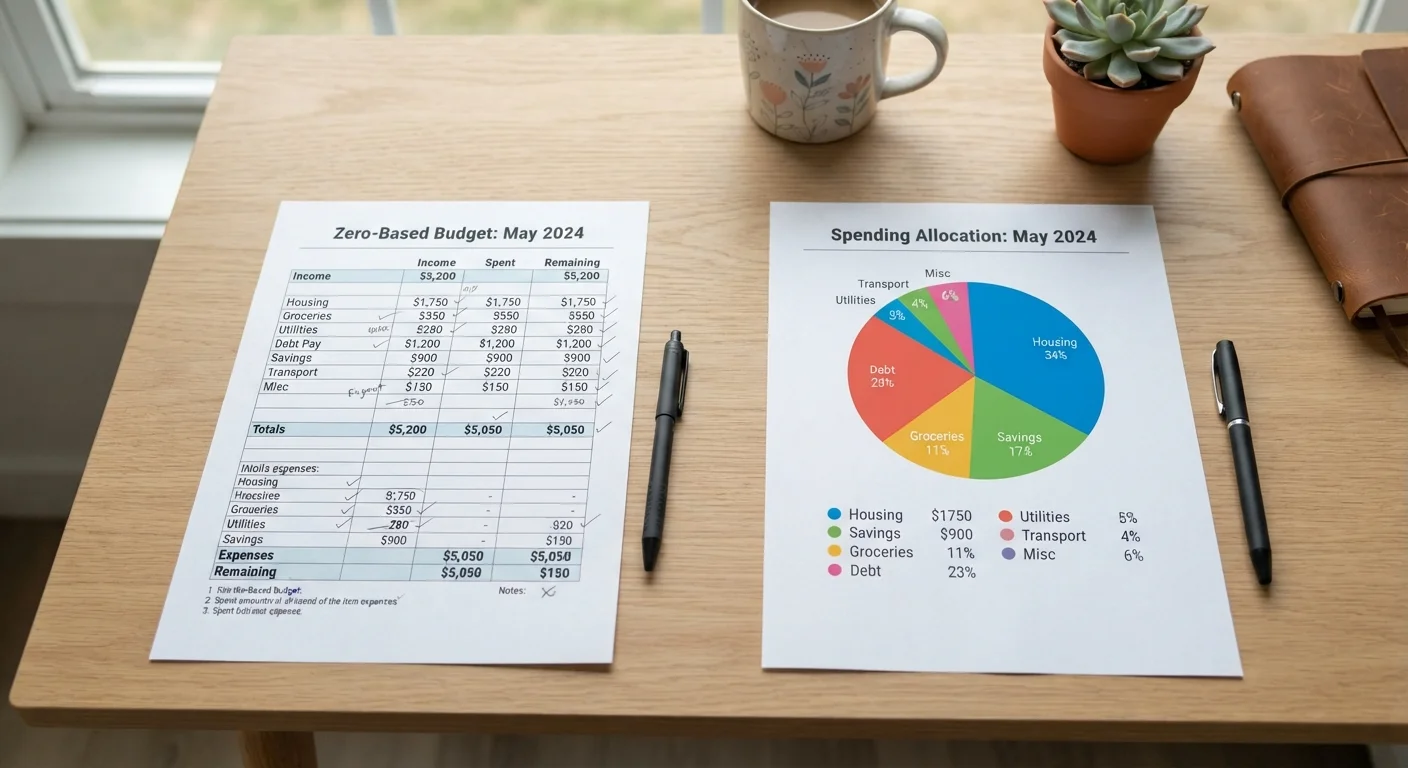
A spreadsheet - whether in Google Sheets (free) or a desktop program - sits between analog simplicity and full app automation. You build the structure yourself, meaning it can mirror your exact financial life rather than a template someone else designed.
Advantages
- Fully customizable. Add categories, sub-categories, or conditional formatting to suit your needs.
- Automated math. Formulas eliminate manual addition errors.
- Historical records. Multiple tabs let you compare months or years side by side.
- No account linking required. Your data stays local or in your private cloud storage.
Limitations
- Requires initial setup time and at least basic formula knowledge.
- You must enter transactions manually - there's no automatic import from bank accounts.
- Mobile usability is often clunky compared to purpose-built apps.
Start Simple, Then Upgrade
If you've never tracked a budget before, resist the urge to build a complex spreadsheet on day one. Spend one month logging expenses in a notebook to learn your actual spending patterns first. Once you know which categories matter most to your life, migrating to a spreadsheet or app will be far faster and more accurate.
Spreadsheets are especially useful for travel planning. If you're preparing for a trip, the same budgeting logic applies - see tracking spending while traveling for method-specific guidance in that context.
Budgeting App
Budgeting apps connect directly to your bank and credit card accounts, pulling in transactions automatically and categorizing them - often using machine learning. For someone managing multiple accounts or who finds manual entry tedious, an app dramatically lowers the barrier to staying on top of finances.
Advantages
- Automation. Transactions are imported and categorized with minimal manual input.
- Real-time visibility. See your spending position at any moment from your phone.
- Alerts and goals. Many apps notify you when you're nearing a category limit.
Limitations
- Most full-featured apps carry a monthly or annual subscription fee.
- Requires linking financial accounts, which raises valid privacy and security questions.
- Automatic categorization is imperfect - you'll still need to review and correct entries.
- App dependency means if a service shuts down, you lose your history unless you export it.
Watch for App Privacy Trade-Offs
Budgeting apps that connect to your bank accounts require you to share login credentials or grant access through open-banking protocols. Before signing up, review the app's privacy policy and understand how your data may be used or shared. If an app is breached or shuts down, linked account data could be exposed - always use a strong, unique password and enable two-factor authentication wherever possible.
Whatever tool you choose, pairing it with a savings strategy strengthens your long-term position. The Saving & Goals hub covers building an emergency fund and working toward financial milestones once your budget is stable.
Side-by-Side Comparison
The table below summarizes how each method performs across the criteria most relevant to budgeting beginners.
| Pen-and-Paper | Spreadsheet | Budgeting App | |
|---|---|---|---|
| Setup cost | None | Free to low | Free to ~$15/month |
| Setup time | Minutes | 1-3 hours | 15-30 minutes |
| Ongoing time per week | High (manual logging) | Moderate (manual entry) | Low (auto-import) |
| Customization | Full, but tedious | Full and scalable | Limited to app structure |
| Data privacy | Complete | Complete | Requires account linking |
| Best for beginners | Yes - simple start | Yes - with some effort | Yes - lowest friction |
| Works for irregular income | Possible, but cumbersome | Strong - easily reconfigured | Varies by app |
How to Pick the Right Method for You
Ask yourself three questions before deciding:
- How comfortable am I with technology? If setting up a spreadsheet formula feels intimidating, start with paper and graduate later.
- How much time will I realistically spend each week? Apps require the least ongoing effort; paper requires the most.
- How sensitive am I about data privacy? If linking bank accounts feels uncomfortable, paper or a spreadsheet gives you full control.
There's no shame in starting with a simple notebook. The goal is a budget you actually maintain - not a sophisticated system you abandon after two weeks. You can always migrate your categories to a spreadsheet or app once you understand your spending patterns. If you're also managing a travel budget, the same principles apply; see the travel budgeting framework for a parallel approach. And if you're curious about cash-based strategies, envelope budgeting in the digital age explores how that tactile method translates into modern formats.
This article is for general informational purposes only and does not constitute personalized financial advice. Consult a qualified financial professional for guidance tailored to your individual circumstances.