
Why Tracking On the Road Is Different From Tracking at Home
At home, most of your spending runs through predictable channels — rent, groceries, subscriptions — and your bank app catches the rest. Travel breaks every one of those routines. You're paying in unfamiliar currencies, splitting costs with travel companions, tipping in cash, and making quick decisions at street stalls with no receipt in sight.
The result: small purchases stack up invisibly until you check your account and realize you've blown past your daily target. The fix isn't willpower — it's a lightweight system that matches how you actually behave when you're tired, distracted, and excited all at once. Before choosing a method, it helps to have a firm daily target in hand. See our guide to calculating a realistic daily travel budget if you haven't set one yet.
Comparing the Three Core Approaches
There are three practical frameworks travelers use to monitor spending in real time. Each has a distinct trade-off profile worth understanding before you commit.
| Spreadsheet | Budgeting App | Envelope Method | |
|---|---|---|---|
| Setup time | Moderate (build template) | Low (download and configure) | Low to moderate |
| Real-time visibility | Only after manual entry | Near-real-time with syncing | Instant (cash on hand) |
| Works offline | Yes, fully | Partially (syncing may require data) | Yes, fully (physical version) |
| Handles cash purchases | Yes, manually | Requires manual entry | Native — cash is the method |
| Multi-currency support | Manual conversion needed | Often built-in | Complicated across currencies |
| Hard spending limit | None — informational only | Alerts only, no hard stop | Yes — cash runs out |
| Best for trip type | Long trips, detail planners | Card-heavy, tech-comfortable travelers | Cash-heavy or single-currency trips |
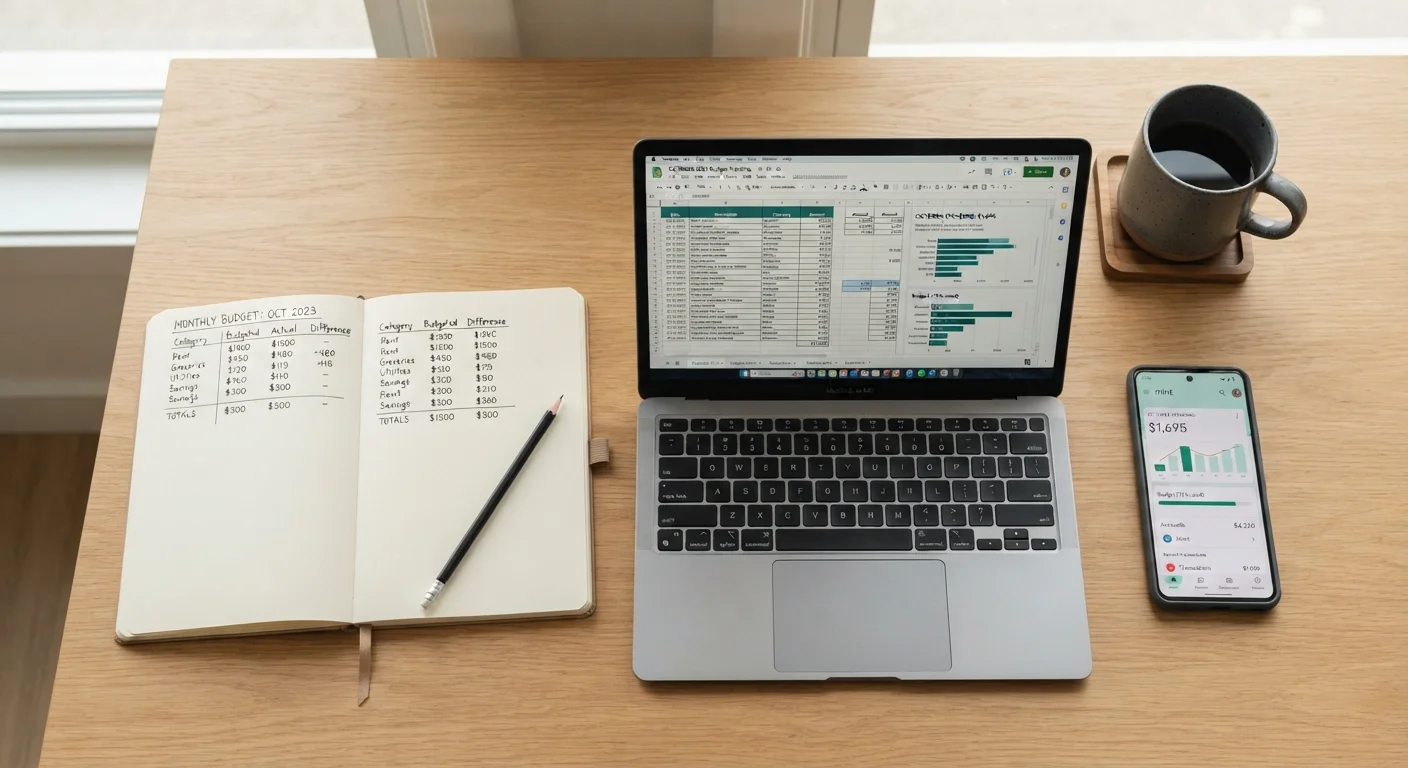
Understanding those trade-offs upfront saves you from abandoning a system mid-trip. For a deeper look at how these same methods apply to everyday home budgeting, the comparison of pen-and-paper, spreadsheet, and app budgeting is worth reviewing alongside this article.
Spreadsheet Tracking: Maximum Control, Maximum Commitment
A travel spreadsheet typically has columns for date, category (food, transport, lodging, activities), amount in local currency, and a converted total. You update it manually — usually at the end of each day — and it gives you a precise, exportable record you own entirely.
What works well: Spreadsheets let you define your own categories, apply your own currency conversion rates, and produce a clean post-trip reconciliation. They're free, offline-capable, and reveal patterns that app summaries sometimes bury.
Where they break down: The manual entry requirement is both a strength and a vulnerability. Miss two or three days during a busy stretch and you're reconstructing from memory — the least accurate form of budgeting. Spreadsheets also offer no alerts, no running-total visibility at the point of purchase, and no cash-flow guardrails.
Make Your Spreadsheet Trip-Ready Before You Leave
Build your template at home, not at the airport. Pre-fill your budget targets for each category, add formulas that auto-convert from local currency to USD using a fixed rate you set at departure, and save it somewhere accessible offline. A five-minute setup before your trip prevents a frustrating rebuild on day one.
Budgeting Apps: Speed and Automation With Some Blind Spots
Travel-focused expense apps let you log a purchase in seconds — tap the amount, choose a category, done. Many sync with bank accounts or card networks to pull transactions automatically, reducing manual entry to just cash purchases.
What works well: Real-time dashboards show you exactly how much you've spent against your daily or trip budget without any math. Category breakdowns surface where money is actually going. Shared-trip features can split costs between travel partners automatically.
Where they break down: Automatic bank syncing can lag by 24–48 hours, which is a meaningful gap when you're spending $80–$150 a day. Cash transactions still require manual entry. Some apps require a subscription or internet connectivity to function fully — both potential friction points abroad. If you'd rather not obsess over every transaction, the low-friction spending awareness approach offers useful context.
The Envelope Method: Built-In Spending Limits
The envelope method — traditionally used with physical cash divided into labeled envelopes by category — translates naturally to travel. You allocate a fixed cash amount per day (or per category: food, activities, transport) and stop spending when it's gone. Digital versions use virtual "envelopes" within an app. Learn more about how this framework has evolved in our envelope budgeting in the digital age overview.
What works well: The constraint is structural, not motivational — you literally cannot overspend a category once the cash is gone. This makes it uniquely effective for travelers prone to "treat yourself" drift on vacation.
Where they break down: Many destinations — particularly in Western Europe and urban Asia — are increasingly card-first, making physical cash envelopes impractical or even impossible for some purchases. Managing multiple currencies across a multi-country trip adds significant complexity. Digital envelope apps help, but they still require the same manual discipline as a spreadsheet.
Building a Hybrid That Actually Holds Up
In practice, most experienced travelers don't use one pure method. They combine the strongest element of each: an app or bank notification for card transactions (automatic, instant) and a simple daily cash count or notebook for physical currency. At the end of each day — a 90-second ritual — they compare the running total against their daily target.
The key habit isn't the tool; it's the daily check-in. Catching a $40 overspend on day three lets you adjust on day four. Discovering it on day ten means you're already off-track in ways that are hard to recover from within a fixed trip budget.
For a complete framework that covers budgeting from pre-trip planning through post-trip review, see the end-to-end travel budgeting framework. And if you're building your first travel budget from scratch, start with travel budgeting from zero before layering in a tracking method.
This article is for general informational purposes only and does not constitute personalized financial advice. For guidance specific to your financial situation, consider consulting a qualified financial professional.