
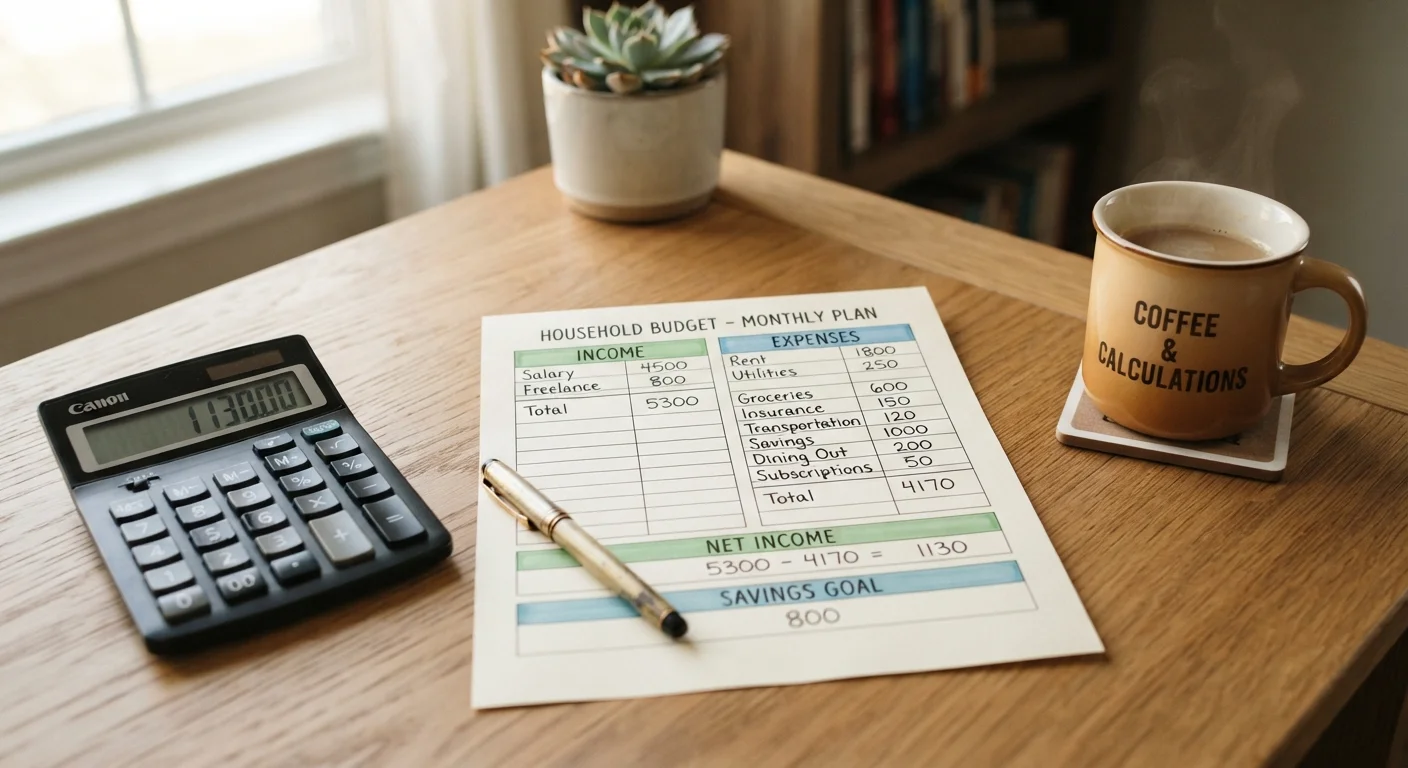
What Are Fixed Expenses?
Fixed expenses are costs that remain the same amount every month, regardless of how you behave or what choices you make. You owe them on a predictable schedule, and missing them typically carries real consequences - a missed mortgage payment, for example, can damage your credit score and trigger late fees.
Common fixed expenses include:
- Mortgage or rent payments
- Car loan or lease payments
- Health, auto, and homeowners insurance premiums
- Subscriptions with fixed monthly billing
- Student loan minimum payments
The defining feature of a fixed expense isn't that it lasts forever - your mortgage will eventually be paid off - but that the amount due doesn't fluctuate based on your monthly decisions. This predictability is actually useful: add up all your fixed expenses and you immediately know the minimum your budget must cover. For a deeper look at how these fit into an overall financial plan, see the complete personal budgeting resource.
| Criterion | Fixed Expenses | Variable Expenses |
|---|---|---|
| Amount each month | Stays the same | Changes month to month |
| Your control over the cost | Little to none (short-term) | Significant influence |
| Examples | Mortgage, car loan, insurance | Groceries, gas, dining out |
| Budgeting approach | Enter the exact known amount | Use a historical average |
| Where savings typically come from | Refinancing or canceling services | Habit changes and daily decisions |
| Risk if underbudgeted | Late fees, credit damage | Overspending, reduced savings |
What Are Variable Expenses?
Variable expenses are costs that shift from month to month based on your usage, habits, and choices. Unlike fixed costs, you have meaningful influence over these amounts - which is both their challenge and their opportunity.
Common variable expenses include:
- Groceries and dining out
- Gas and transportation costs (beyond a fixed car payment)
- Entertainment, hobbies, and clothing
- Utilities (electricity, water, gas - these fluctuate seasonally)
- Medical co-pays and out-of-pocket costs
Variable expenses are where most budget breakdowns happen - not because people are irresponsible, but because these costs are genuinely harder to predict. A useful strategy is to review three to six months of past spending in each variable category to calculate a realistic monthly average, then budget to that number rather than guessing. If you're planning a trip, understanding the difference matters especially for categories like food, transport, and activities - see spending categories every travel budget should include for a practical breakdown.
~33%
Of take-home pay spent on housing
The U.S. Bureau of Labor Statistics Consumer Expenditure Survey consistently shows housing as the largest single spending category for American households.
60%+
Of a typical budget that is fixed or semi-fixed
Financial educators commonly note that housing, insurance, loan payments, and utilities together consume the majority of most households' monthly income before any discretionary spending occurs.
Side-by-Side: Key Differences at a Glance
The table in the first section gives you the core contrast, but understanding why these differences matter is what makes budgeting click. Fixed expenses tell you your floor - the number your income must clear before you can do anything else. Variable expenses tell you your margin - the space where your financial decisions actually happen.
A well-built budget uses both categories deliberately:
- List all fixed expenses and total them.
- Subtract that total from your monthly take-home income.
- What remains is available for variable expenses, savings, and discretionary spending.
This structure keeps you from the common mistake of budgeting optimistically across all categories and then being surprised when fixed obligations leave less room than expected.
Semi-Variable Expenses: The Category in Between
Not every cost fits neatly into one column. Semi-variable expenses - sometimes called mixed costs - have both a fixed component and a portion that changes. Utilities are the classic example: your electricity bill is partly fixed (basic service charges) and partly variable (how much power you actually use).
Other semi-variable examples:
- Phone plans with base fees plus overage or add-on charges
- Internet service at a set rate, but with optional speed upgrades
- Vehicle ownership costs beyond the loan payment, including maintenance and fuel - explore a full picture at vehicle ownership costs
For budgeting purposes, treat semi-variable expenses as variable: estimate a conservative monthly average and revisit the figure each season. If you earn income that already fluctuates, this hybrid approach becomes even more important - the budgeting on an irregular income guide covers frameworks designed for exactly that situation.
This article provides general financial education and is not personalized financial advice. For guidance specific to your circumstances, consider consulting a qualified financial professional.