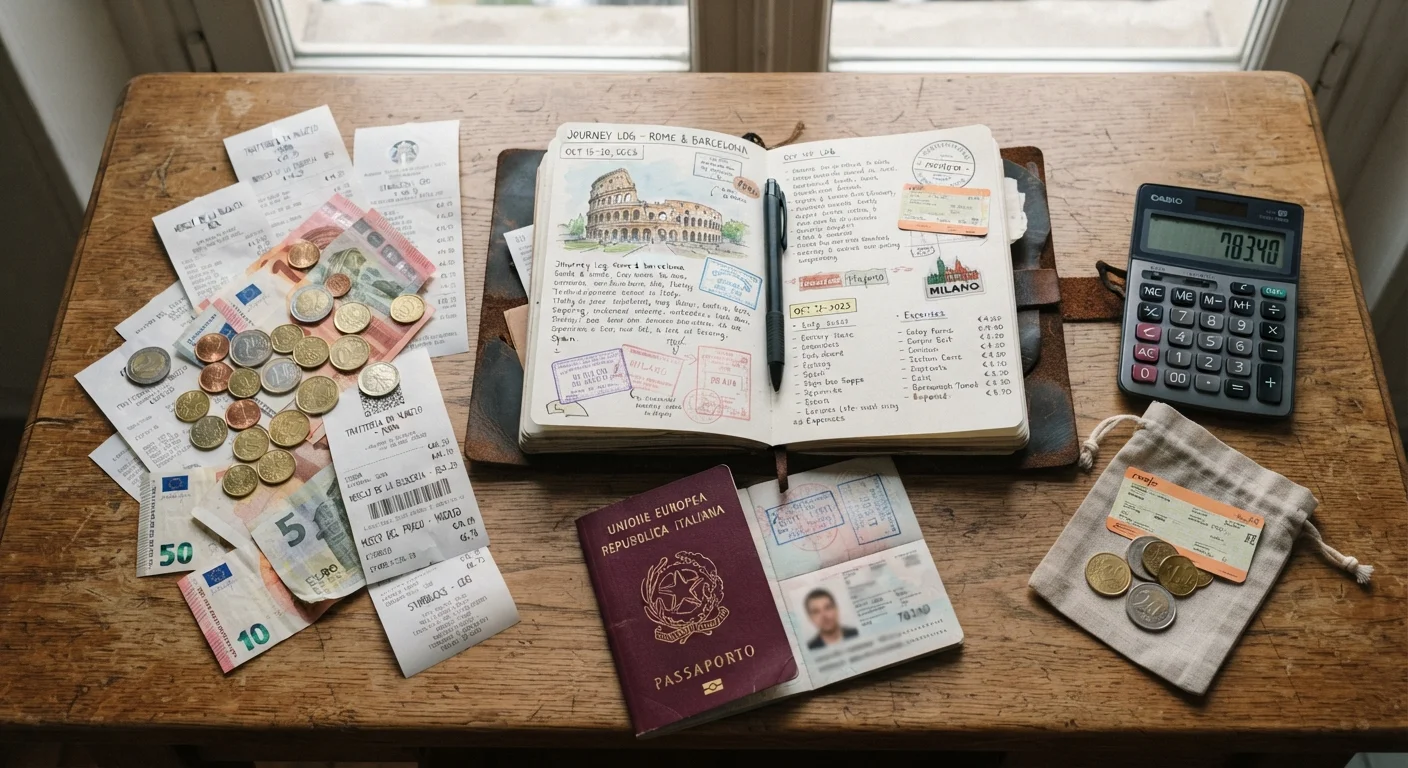

Why Budget Travel Is Always a Series of Exchanges
Every budget travel decision is really a negotiation between cost and something else — time, comfort, convenience, or experience. When you book the cheapest flight available, you're not just saving money; you're agreeing to a set of conditions that come with it. The same is true for lodging, transportation, food, and activities.
This isn't a flaw in budget travel — it's the nature of it. The problem is when travelers treat savings as the only variable worth tracking. Understanding the full picture means asking: what am I actually trading away here, and is that trade worth it to me?
See our guide to what most people forget to factor into trip costs for a broader look at how these exchanges add up before you even board a plane.
The Flight Trade-Off: Price vs. Time and Convenience
Low-cost airfare typically requires flexibility — early morning departures, late-night arrivals, multi-stop itineraries, or flights through smaller regional airports that sit an hour from the city you're actually trying to reach. A $180 round-trip fare can become a $240 round-trip once you factor in ground transportation, airport meals during a six-hour layover, and the lost productivity of a 4 a.m. wake-up call.
That doesn't mean low-cost carriers are a bad choice. It means the math needs to account for the full journey, not just the ticket price. Ask yourself: how much is your time worth on this trip? If you're traveling for seven days and lose a full day to transit, that's roughly 14% of your vacation gone.
For a deeper look at how destination selection affects overall spend, the destination cost tier framework is worth reviewing before you book anything.
Lodging Trade-Offs: Comfort, Location, and Cost
Budget lodging tends to fall into a predictable pattern: the cheaper the room, the further it is from where you want to be, or the more you share with strangers. Both are legitimate trade-offs — but only if you've accounted for them.
A hostel dorm bed in a central neighborhood may cost less in total than a private room in the suburbs once you factor in daily transit costs. Conversely, a well-located mid-range hotel can simplify your mornings enough to squeeze more activities into each day. Our comparison of accommodation types breaks down what each option realistically delivers and where each falls short.
The Slow Travel Alternative
One way to reduce the pain of budget trade-offs is to travel more slowly — spending more time in fewer places. This cuts down on transit costs and the stress of constant packing and unpacking. Our slow travel vs. packed itinerary comparison walks through the real cost differences between the two approaches.
The lodging decision also affects your energy budget. A poor night's sleep in a noisy hostel can flatten the next day's experience — a cost that doesn't appear in any spreadsheet but is very real.
Making Trade-Offs Work for You
The goal isn't to avoid all trade-offs — it's to choose them deliberately. Some travelers are happy to take a red-eye and sleep on the plane; others find it ruins the first two days. Some genuinely enjoy hostel social culture; others find it draining. Neither is wrong. What's wrong is discovering the trade-off after you've already paid for it.
A practical approach: before booking anything, name the trade-off out loud. "This flight saves me $90 but adds four hours of transit." "This rental is $45 a night cheaper but I'll spend $12 a day on buses." Once you see those numbers side by side, the decision becomes clearer.
4–6 hrs
Typical extra transit time on budget flight routes
Budget routing through secondary airports or with extended layovers commonly adds several hours compared to direct options on the same corridor.
$12–$20/day
Average daily transit cost from peripheral lodging
Staying outside a city center to save on accommodation often adds meaningful daily transportation costs that partially offset the nightly savings.
If you're building a broader framework for managing these decisions from planning through return, the complete travel budgeting framework offers an end-to-end structure. And if you're questioning whether budget travel is even realistic for your life, common budget travel myths is worth a read before you talk yourself out of the trip.