Why the Booking Confirmation Is Never the Full Picture
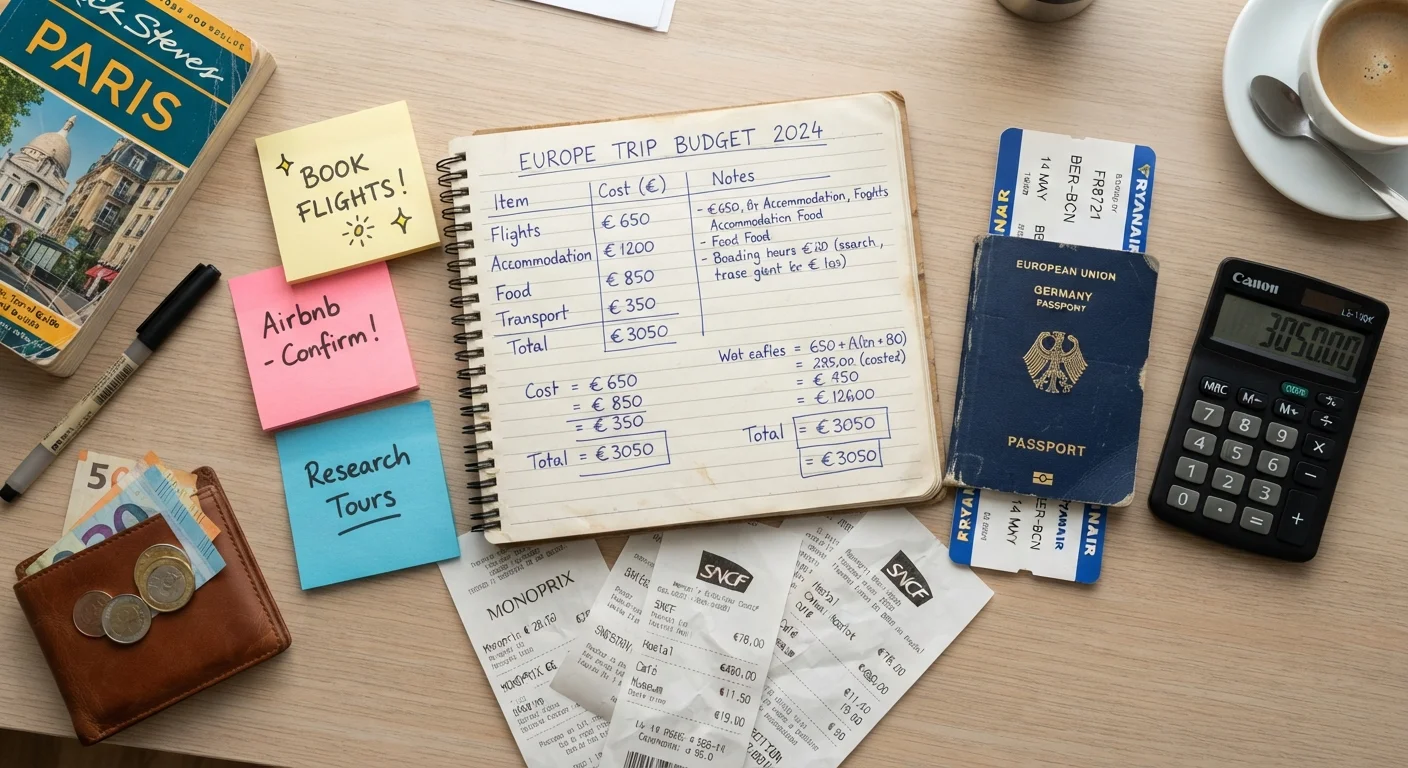
Most people build a travel budget by adding up two numbers: flights and accommodation. It feels logical — those are the biggest costs, the ones that require advance commitment. But experienced travelers know those two line items rarely tell the whole financial story of a trip.
The expenses that quietly expand a travel budget tend to be small individually but substantial in aggregate. A $15 airport taxi here, a $30 checked bag there, $12 in ATM fees, nightly tips — none of these feel like budget events at the time. Together, they can add hundreds of dollars to a trip that appeared affordable on paper.
Understanding which costs first-time planners routinely underestimate is the first step toward building a budget that actually holds. The goal isn't to eliminate spending — it's to make your spending deliberate.
40–50%
Of total trip cost beyond flights and hotels
Travel industry planners and personal finance guides consistently estimate that ground transport, meals, activities, fees, and incidentals account for roughly this share of a trip's real total cost.
1–3%
Typical foreign transaction fee per card purchase
Many standard U.S. credit and debit cards charge this percentage on purchases made in foreign currencies, a cost that compounds across every transaction during an international trip.
10–15%
Recommended contingency buffer above projected spend
A widely cited guideline among budget travel planners for cushioning against unexpected costs, price differences, and spontaneous decisions during a trip.
The Categories Most Budgets Leave Out
There are several expense categories that rarely appear in the initial booking estimate but reliably show up during a trip.
Ground Transportation
Getting to and from the airport — at home and at your destination — is one of the most consistently skipped line items. Depending on the city, a round-trip airport transfer can cost anywhere from $30 to over $100. If you're traveling with others and making multiple stops, that figure climbs. Budget this in both directions before you leave.
Baggage and Airline Fees
Many lower-cost carriers charge separately for checked bags, carry-on bags above a certain size, and even seat selection. These fees are real costs that belong in the travel budget, not surprises at the gate. Review the airline's fee schedule when you book, not when you pack.
Tips and Gratuity
Tipping norms vary significantly by destination. In the U.S., tipping for meals, taxis, hotel housekeeping, and tour guides is standard and expected. Abroad, customs differ — in some countries, tipping is unusual; in others, it is built into service culture. Research the norms for your destination and estimate a daily tipping budget accordingly.
Activities and Entry Fees
Museums, national parks, guided tours, day trips, and cultural experiences all carry costs that rarely appear in initial planning. If you're visiting multiple attractions, these fees add up fast. Build a realistic activity list early and look up current admission prices.
Currency and Card Fees
If you're traveling internationally, currency conversion and foreign transaction fees are easy to overlook. Many standard credit and debit cards charge 1–3% on foreign purchases, and ATM withdrawals abroad often carry flat fees plus exchange markups. See our plain-language guide to exchange rates and travel budgeting for a deeper breakdown of how these costs work.
Build Your Cost Inventory Before You Book
Before confirming any reservation, list every spending category your trip will involve — including transfers, baggage, tips, entry fees, insurance, and a contingency buffer. Doing this before booking gives you an accurate total to evaluate, not just a flight-plus-hotel figure. It also reveals trade-offs early, when you still have flexibility to adjust plans.
The Costs That Feel Optional But Aren't
Some expenses sit in a gray zone — they're technically avoidable, but skipping them often creates larger problems.
Travel insurance is the most significant example. It's a line item many travelers skip when assembling an initial budget, then regret omitting when a flight is cancelled or a medical issue arises abroad. Whether or not you purchase it, it belongs in your cost evaluation from the beginning.
Meals and snacks are another area where budgets slip. Travelers often account for sit-down dinners but forget airport food, coffee runs, and convenience store stops during long travel days. These add up across a multi-day trip. A rough daily food estimate — including incidentals — is more accurate than planning only for restaurant meals.
Destination-specific fees have also become more common. Some hotels add resort fees or amenity fees that are disclosed in fine print but not included in the advertised room rate. Certain cities charge tourist taxes. Always read the full booking summary, not just the headline price.
For a practical method to pull all of these categories into a single usable number, see the daily travel budget calculator approach.
Building in a Buffer — and Why It Matters
No travel budget survives first contact with reality perfectly intact. Prices differ from what you researched. A taxi costs more than expected. You decide to join a spontaneous tour. Something goes wrong and needs fixing.
A contingency buffer — typically 10–15% of your total projected spend — exists precisely for these moments. It is not an invitation to overspend; it's a financial cushion that keeps one surprise from cascading into a larger problem. Travelers who build this buffer in from the start tend to return home with fewer regrets and less financial stress.
Building a complete cost inventory, including a contingency line, also makes budget trade-offs clearer and more intentional. When you know your real total, you can make deliberate decisions — spend less on accommodation to afford a specific experience, or skip an activity to keep the buffer intact.
Some travelers also fall into patterns that erode budgets consistently. It's worth reviewing common travel myths that make trips harder to avoid compounding the problem with planning assumptions that don't hold up.
A trip budget isn't just a number — it's a map of every dollar you plan to spend. The more complete that map is before you leave, the less likely you are to get lost once you arrive.
This article is for general informational and educational purposes only. Travel costs vary widely by destination, timing, and individual circumstances. Always verify fees, entry requirements, and local conditions with official sources before traveling.