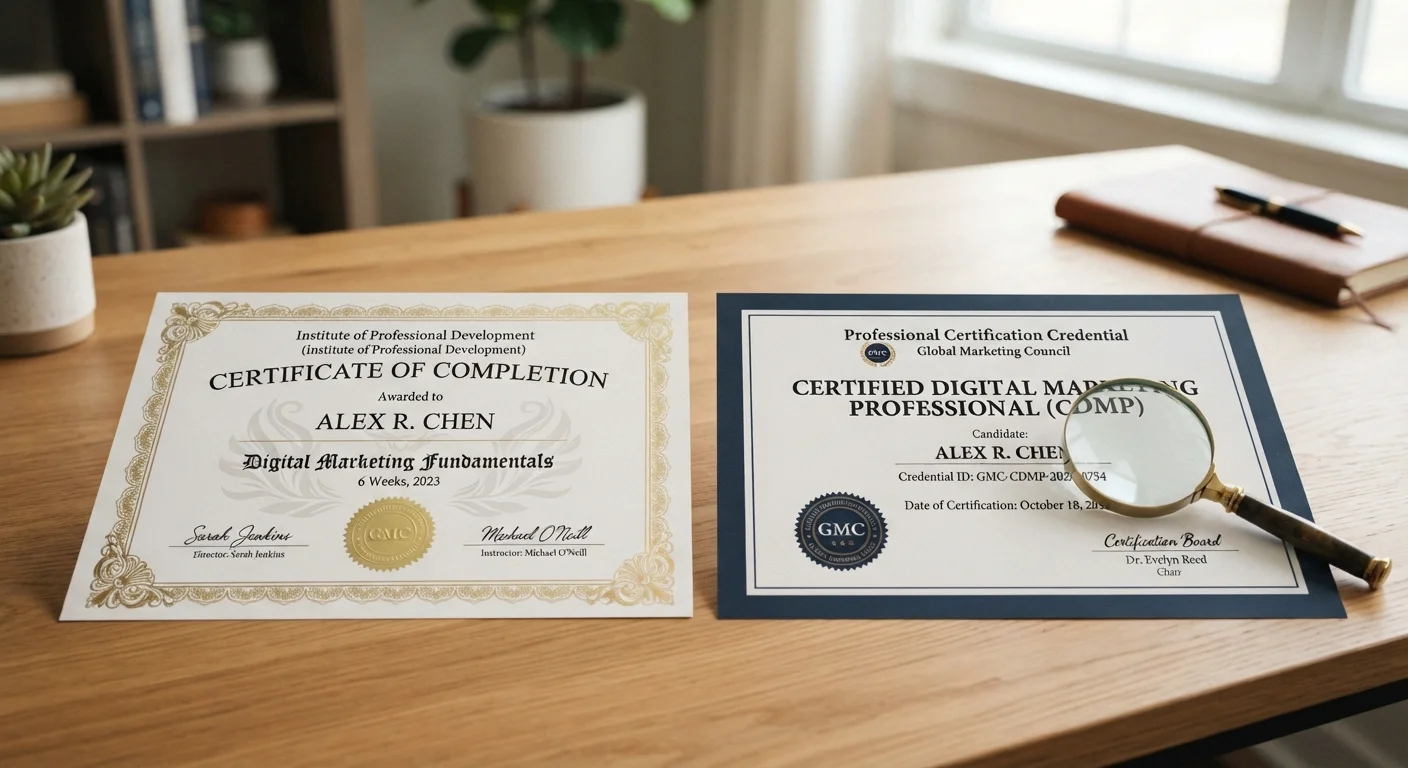

What Professional Certifications Actually Are
A professional certification is a credential issued by a recognized third-party organization - typically an industry association, standards body, or major technology vendor - that confirms you've demonstrated competency in a specific skill or knowledge domain. Unlike a college degree, which covers broad academic territory over several years, certifications are focused and often designed to be earned while you're already working.
It's worth distinguishing certifications from the course completion badges that many online learning platforms award. Finishing a course shows you engaged with material; a certification typically means you passed a standardized, often proctored assessment administered independently of whoever sold you study resources. That independence is a key reason employers treat them differently. For a closer look at this distinction, see how certificates and certifications differ.
How to Choose Your First Certification
The most common mistake first-timers make is selecting a certification based on name recognition alone rather than fit. A smarter approach starts with three questions: Does this credential appear in job postings for roles I want? Is my current experience level close to the eligibility requirements? And is the certifying body recognized in my industry?
For young professionals across fields like IT, project management, finance, or healthcare administration, some well-established starting points include entry-level technology credentials, foundational project management frameworks, and field-specific compliance credentials. The right choice depends on your industry and where you are in your career - not on a generic ranked list.
Your existing online learning path can also signal which certifications align with skills you're already building. If you've been working through coursework in a particular domain, look for credentials that formalize that knowledge rather than pivoting to an entirely different area just because it sounds prestigious.
Ask Employers Before You Commit
If you're pursuing a certification specifically to advance at your current employer, ask your manager or HR team which credentials they recognize or reimburse before you register. Some organizations have approved credential lists, and choosing one on that list can make your investment eligible for tuition assistance.
Understanding the Exam and Credentialing Process
Once you've identified a target certification, the process generally follows a predictable structure. First, review the official candidate handbook published by the certifying body - this document outlines eligibility requirements, exam content domains, scoring methodology, and registration steps. Do not rely solely on third-party summaries for this information; go to the source.
Most exams are delivered either at a testing center or via remote proctoring, where a proctor monitors you through your webcam. Expect a mix of multiple-choice questions and, depending on the credential, performance-based scenarios that test applied knowledge rather than just recall.
After you pass, you'll receive your credential - but earning it is not the end of the process. Many certifications require continuing education credits or periodic renewal exams to stay current. Treat that renewal schedule as part of your professional development calendar from day one. Before you register for anything, our pre-exam checklist walks through the logistics in detail.
Common Pitfalls First-Timers Should Avoid
Underestimating study time is the most frequent reason first-time candidates struggle. Review the full exam content outline - not just the topics you feel confident in - and build a realistic study schedule several weeks before your exam date rather than cramming the week before.
Another common misstep is purchasing unofficial or outdated study materials. Look for prep resources aligned to the current exam version, ideally those recommended or approved by the certifying organization itself. Exam content is periodically updated, and older materials may not reflect current objectives.
Finally, be cautious about certifications from organizations with no verifiable industry standing. If a credential isn't recognized in job postings, listed by professional associations, or acknowledged by practitioners in your field, it may offer little career return regardless of how challenging the program was. Do your due diligence before investing time and money.
Employer Reimbursement Is More Common Than You Think
A significant number of employers offer some form of professional development reimbursement that covers certification exam fees and study materials. Policies vary widely, and some require you to pass before funds are released. Check your employee handbook or speak with HR early - ideally before you register - so you understand what documentation you'll need to submit.