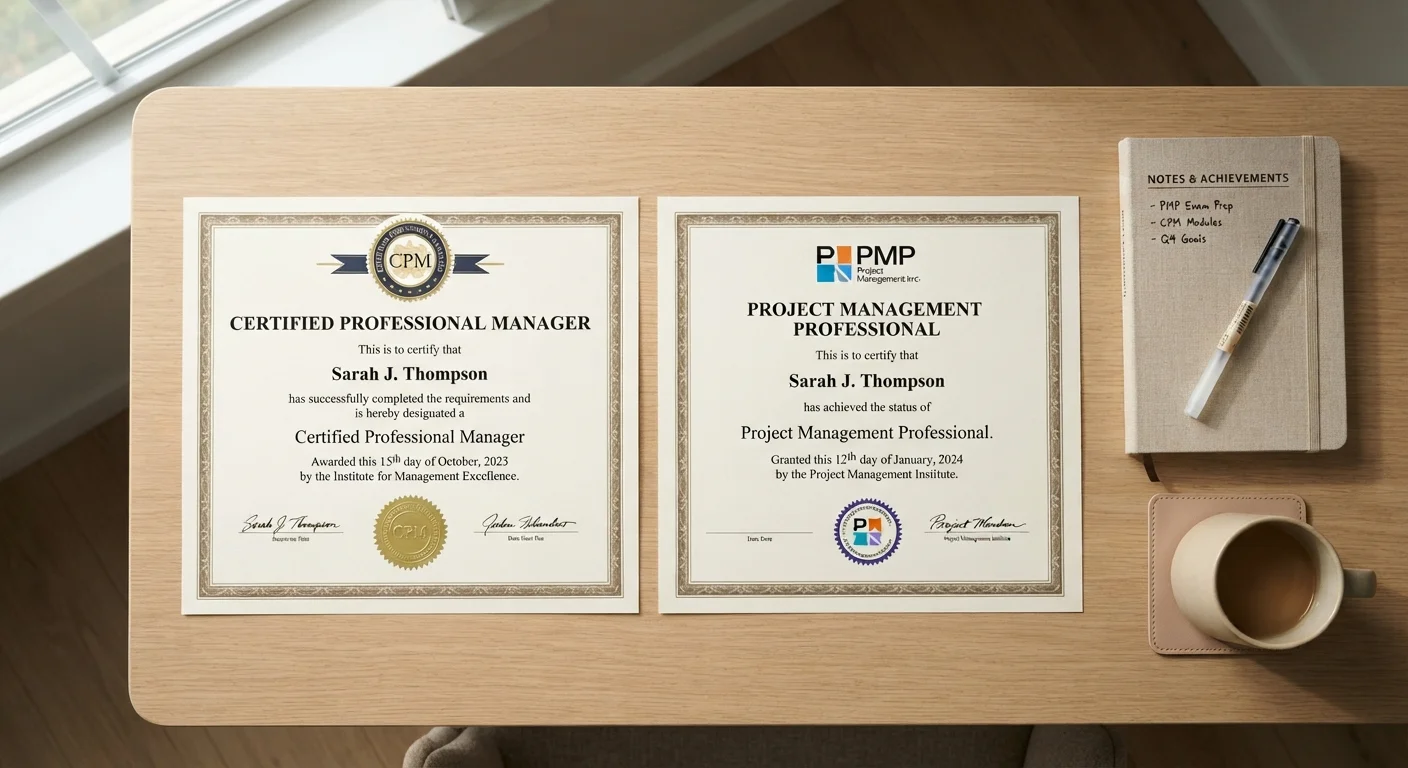
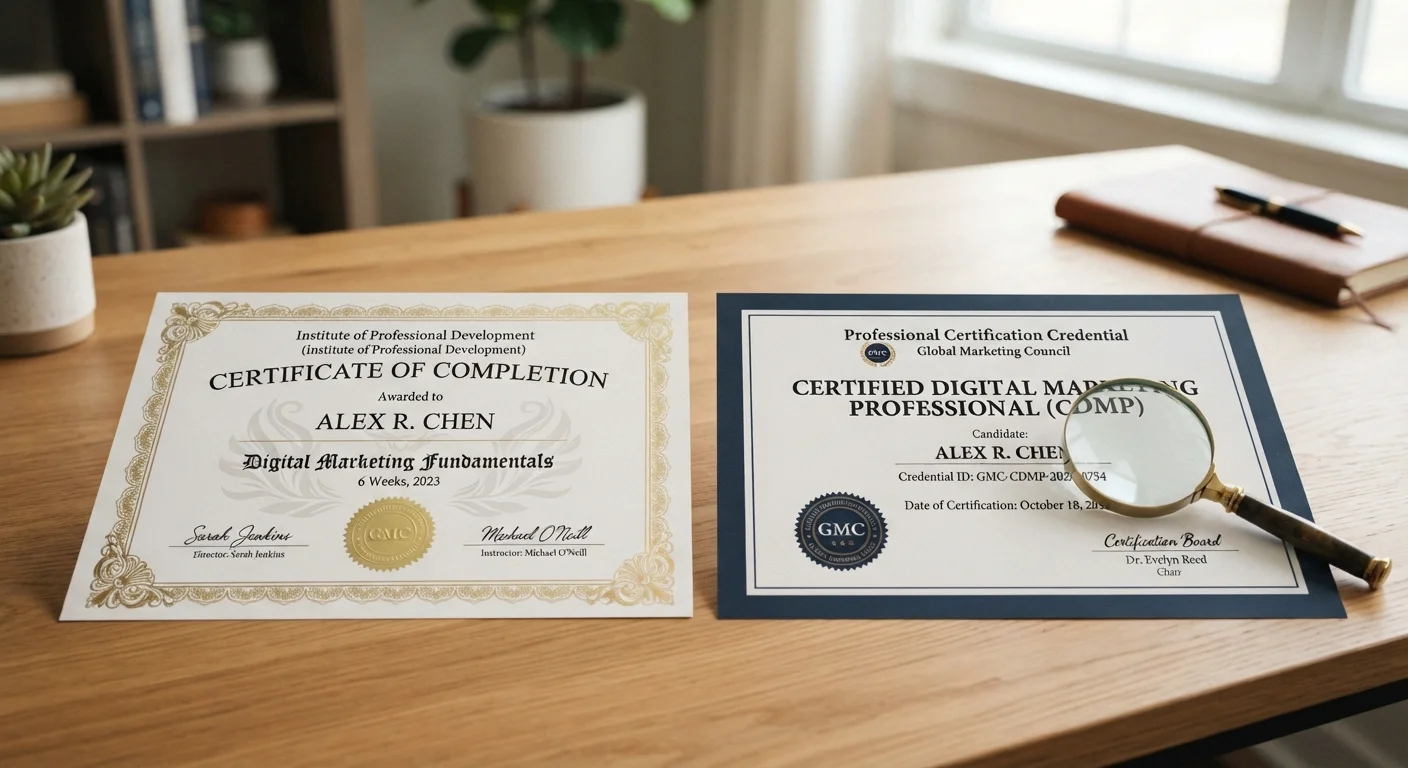
What Each Credential Actually Is
The terminology around credentials has become genuinely muddled. Platforms award "certificates." Professional bodies issue "certifications." Some programs call themselves both. The confusion is understandable - but the distinction matters professionally.
An online certificate is a record of course completion. When you finish a course on a learning platform, the platform confirms you completed the material and, in many cases, passed internal assessments. The certificate reflects engagement with a curriculum. It does not, by itself, indicate that you've been tested against an external, industry-wide standard.
An accredited certification is a credential issued by a recognized credentialing body - typically a professional association, standards organization, or regulatory authority - that has established defined competency requirements. Earning one usually involves meeting eligibility criteria (such as experience or education prerequisites), passing a proctored standardized exam, and in many cases, maintaining the credential through continuing education. See our overview of what professional certifications mean for more context on how these credentials are structured.
| Criterion | Online Certificates | Accredited Certifications |
|---|---|---|
| Issued by | Online learning platform | Professional credentialing body |
| How earned | Course completion, internal quiz | Standardized external exam |
| Prerequisites | Typically none | Often require experience or education |
| Industry recognition | Variable by platform and field | Consistent within recognized fields |
| Renewal required | No | Usually yes, via continuing education |
| Typical cost | Low to free | Moderate to high exam fees |
| Time to earn | Hours to weeks | Weeks to months of preparation |
Why the Difference Shows Up on Your Resume
Hiring managers in many fields have developed a mental map of credentials they trust. Accredited certifications from established bodies appear on that map reliably. Course certificates - depending on the platform, the field, and the role - may or may not register at all.
This isn't a blanket dismissal of certificates. Research suggests that employer perception of online certificates varies significantly by industry and role level. In fast-moving fields like data analytics or digital marketing, a portfolio of certificates from credible platforms can carry real weight, especially early in a career. In fields like cybersecurity, accounting, or clinical healthcare, the hiring conversation often starts with specific accredited credentials as minimum thresholds.
76%
Employers valuing industry certifications in hiring
According to CompTIA's workforce research, a substantial majority of hiring managers consider vendor-neutral or industry certifications meaningful when evaluating candidates in technology roles.
~$300-$500
Typical cost range for a single certification exam
Exam fees for common professional certifications vary widely; this range reflects many entry- to mid-level credentials, excluding study materials and prep courses.
The key question to ask before pursuing either: what does the job description actually require? If postings in your target role consistently list a specific certification, that's a signal worth taking seriously. If they describe desired skills and list coursework as a plus, certificates may serve you well. Our guide to deciding between certifications in the same field can help once you've narrowed your options.
How to Use Both Strategically
Treating these as competing choices misses the point. The most effective credential strategy usually involves both - in the right sequence and proportion.
If you're new to a field, certificates can serve as low-cost exploratory tools. They let you test your interest, build a working vocabulary, and signal initiative before committing to the time and exam fees of a formal certification. Think of them as runway, not destination.
Once you've confirmed a career direction, identify which accredited certifications are genuinely valued in that field. Our resource on high-value certifications across six career fields can help you assess which credentials carry the most professional weight in your area of focus. If you're new to the process, this beginner's guide to professional certifications walks through what to expect step by step.
Accreditation Isn't Universal - Check the Body
Not every organization that issues a "certification" carries equal recognition. Some lesser-known credentialing bodies have limited industry visibility. Before investing time and money, verify that the issuing body is recognized within your specific industry - through a professional association, regulatory body, or employer job postings. Our article on how accreditation works in online education explains how to verify this.
Also keep in mind that accredited certifications are not one-and-done. Most require periodic renewal through continuing education or re-examination. For a full picture of what ongoing maintenance involves, see our article on keeping credentials current. When you're exploring the broader landscape of online learning options, the Online Learning Paths hub provides a structured starting point.