
Why Credential Maintenance Deserves Your Attention
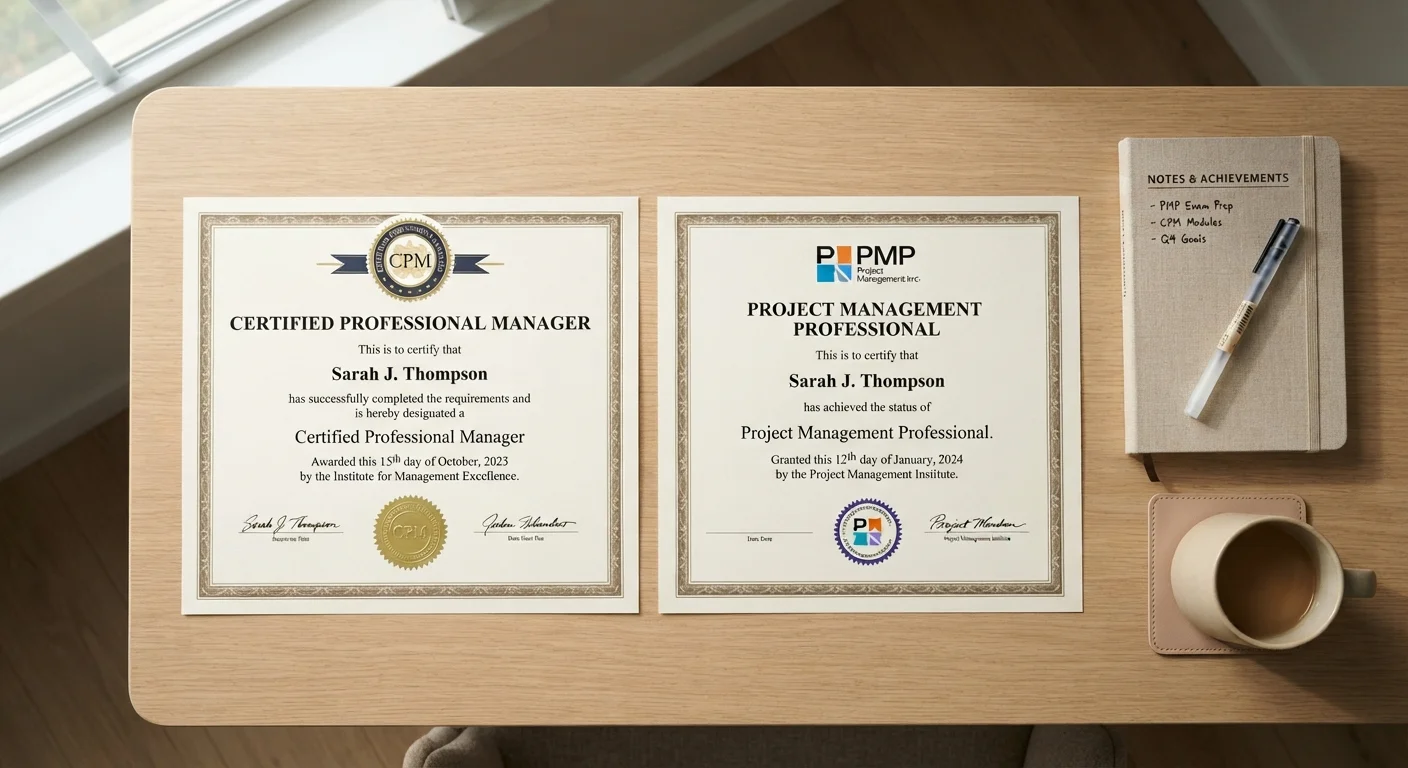
Earning a professional certification is a meaningful milestone - but the work doesn't stop at the exam. Most recognized credentials come with built-in expiration dates, and letting one lapse can quietly erase years of professional positioning. For young professionals building a career, understanding the renewal lifecycle is just as important as passing the initial test.
If you're still exploring which credentials make sense for your field, our beginner's guide to professional certifications is a solid starting point before diving into renewal mechanics.
Certification renewal exists for a practical reason: fields evolve. Practices, tools, regulations, and standards shift over time. Renewal requirements - typically fulfilled through continuing education - are designed to ensure that credential-holders remain current, not just competent at the time they first tested.
How Continuing Education Units (CEUs) Work
A continuing education unit (CEU) is a standardized measure of participation in a non-credit educational program. One CEU typically represents ten contact hours of instruction, though certifying bodies often define their own unit systems - sometimes called PDUs (professional development units), CPEs (continuing professional education hours), or CMEs (continuing medical education credits). Always confirm the terminology and requirements used by your specific certification body.
CEUs can generally be earned through a range of activities, including:
- Online courses and webinars from accredited providers
- In-person workshops, conferences, or seminars
- Employer-sponsored training programs
- Teaching or presenting in your professional field
- Passing related exams or completing advanced coursework
Not all learning activities count equally - or at all. Before enrolling in a course or workshop with the expectation it will satisfy your renewal requirements, verify that the provider is approved by your certifying body. Most organizations publish lists of pre-approved providers or have a submission process for independent activities.
Filtering for CEU-Eligible Courses Online
When searching for continuing education online, look for platforms or course listings that explicitly state approval by your certifying organization. Some platforms allow you to filter by certification type. When in doubt, contact your certifying body before enrolling - not after completing the course - to confirm the activity will be accepted.
For those navigating online learning paths, many platforms now label which of their courses are approved for specific certifications - a useful filter when you're shopping for CEU-eligible content.
What Happens When a Credential Lapses
Missing a renewal deadline doesn't always mean immediate permanent loss, but the consequences escalate quickly the longer a credential sits expired.
Verify renewal requirements directly with your certifying body at least 12 months before expiration.
Requirements change. CEU minimums, approved provider lists, and renewal fees are subject to revision. Checking early gives you time to adjust your plan without pressure.
Log CEU activities and save documentation as you complete them, not after the fact.
Audits happen, and recreating attendance records months later is difficult or impossible. Contemporaneous documentation protects your credential if your renewal is ever reviewed.
Set calendar reminders at multiple intervals well before your renewal deadline.
Certifying bodies vary in how proactively they notify holders. Relying solely on external reminders is a common reason credentials lapse unexpectedly.
Align your continuing education choices with genuine professional development goals, not just CEU minimums.
Treating CEUs as a compliance checkbox often results in low-quality learning that doesn't build real skills. Linking renewal activities to growth goals makes the process more rewarding and career-relevant.
Understand your certifying body's reinstatement policy before a lapse occurs.
Knowing the rules in advance means that if an unexpected disruption causes you to miss a deadline, you can act quickly and strategically rather than discovering the process while in crisis.
The exact policy depends on the certifying organization, but common outcomes include:
- Grace periods: Some bodies allow a short window (often 30-90 days) to complete renewal with a late fee.
- Reinstatement: After a grace period, many organizations offer a reinstatement process - typically requiring proof of completed CEUs, a reinstatement fee, and sometimes a written explanation.
- Full reapplication: If a credential lapses beyond the reinstatement window, some organizations require you to retake the full exam and meet current eligibility requirements from scratch.
The professional impact can be more immediate than the administrative one. Job listings, client contracts, and licensing requirements in regulated fields often specify that credentials must be current. A lapsed certification may disqualify you from consideration even if you're otherwise qualified.
Staying Compliant Without Last-Minute Scrambling
The most reliable credential maintenance strategy is a simple, consistent system. Here's what that looks like in practice:
Know your cycle. When you earn a certification, immediately record the expiration date and renewal window in your calendar with alerts set 12 months, 6 months, and 60 days before expiration. Don't rely on your certifying body to remind you - some do, many don't.
Distribute your CEUs. Earning all your required continuing education in the final month before renewal is stressful and limits your options. Spreading activity across your renewal cycle gives you flexibility and makes learning more meaningful and less transactional.
Keep documentation organized. Most certifying bodies require proof of completed activities - certificates of completion, attendance records, or provider confirmation. Store these digitally in a dedicated folder. If your credential is ever audited, having organized records is far easier than reconstructing them after the fact.
If you hold - or are considering - multiple credentials in overlapping areas, our guide on choosing between certifications in the same field can help you assess whether maintaining multiple renewals is worth the investment.
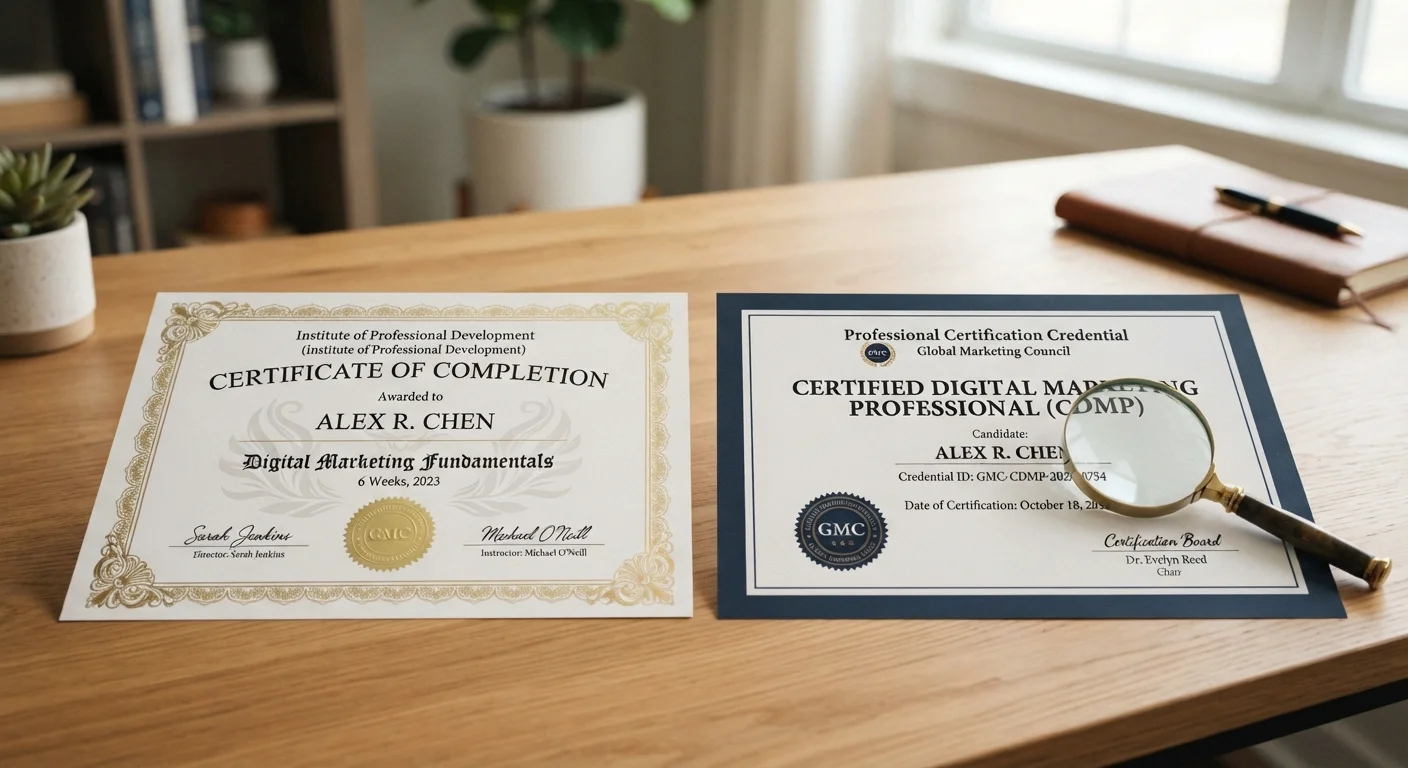
It's also worth understanding the difference between credential types before committing to a renewal cycle. See our explainer on online certificates vs. accredited certifications to make sure you're spending renewal energy on credentials that carry real professional weight.