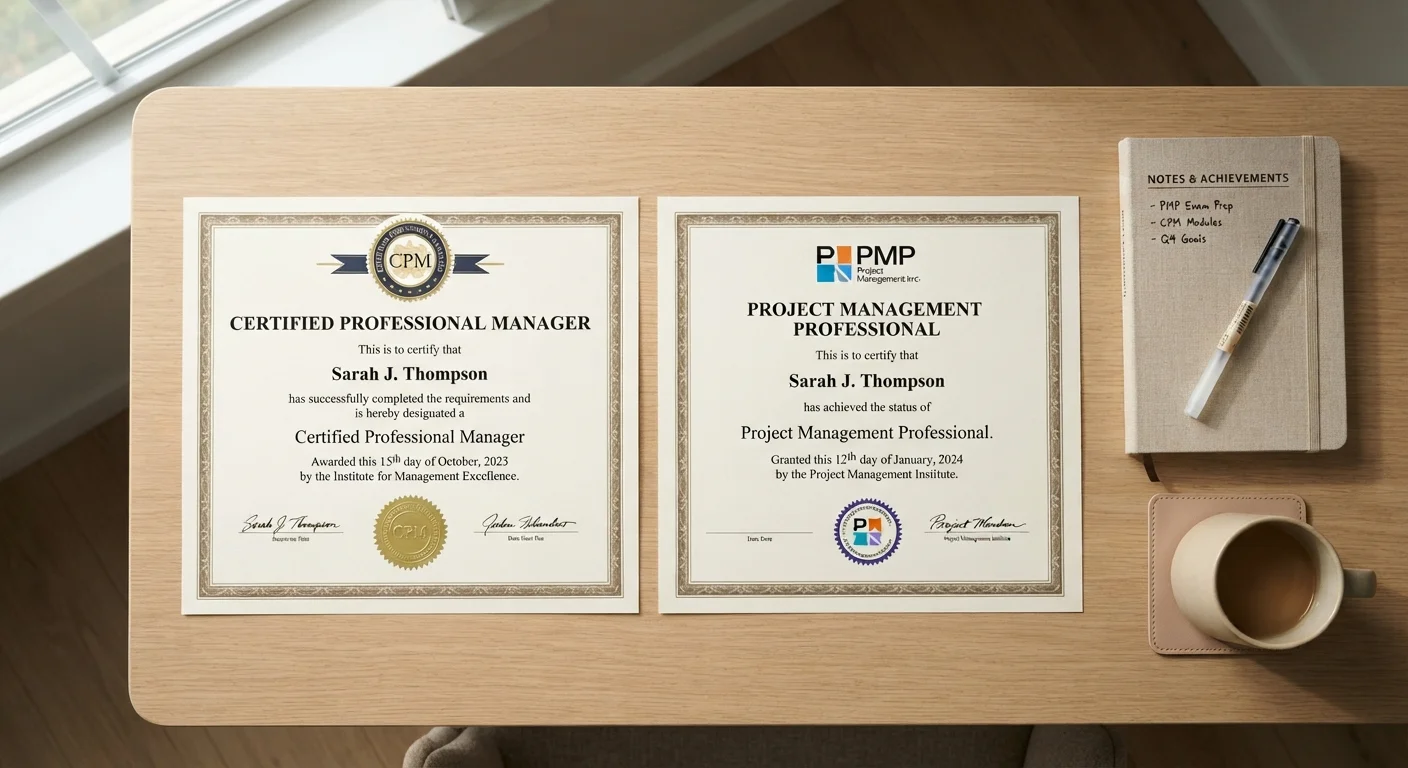

Why Field-Specific Credentials Matter
Not all certifications carry the same weight, and the ones that move the needle are usually governed by recognized professional bodies with standardized exams and documented eligibility requirements. If you're unsure how certifications differ structurally from degrees or online course badges, the overview of how industry certifications work is a useful starting point.
The six fields below - technology, finance, healthcare, project management, skilled trades, and marketing - each have distinct credentialing ecosystems. Understanding which certifications signal genuine competence within your target field helps you invest study time and exam fees where they'll produce real returns. And if you're deciding between two credentials that overlap, a framework for comparing certifications in the same field can sharpen your decision.
Technology: CompTIA Security+
The CompTIA Security+ is a vendor-neutral certification widely recognized across both private-sector IT departments and federal government agencies. It validates foundational cybersecurity skills - threat identification, network security, cryptography basics, and risk management - without tying candidates to a specific platform or vendor ecosystem.
It's often the baseline credential for entry-level security analyst roles and is approved under the U.S. Department of Defense Directive 8570, making it one of the few civilian certifications with explicit government adoption. Candidates typically need some IT background before sitting for the exam, though no formal prerequisite is mandated.
Security+ is one of the few civilian certifications explicitly adopted by U.S. federal agencies.
Finance: Chartered Financial Analyst (CFA)
The CFA designation, administered by the CFA Institute, is regarded as a rigorous benchmark in investment analysis, portfolio management, and financial research. The program spans three exam levels covering ethics, economics, equity analysis, fixed income, derivatives, and alternative investments.
Candidates typically need a bachelor's degree and four years of relevant professional experience to become charterholders, and the multi-year commitment reflects how seriously the credential is regarded within asset management and institutional finance. Note: This article provides general educational information about professional certifications and is not personalized financial or career advice.
The CFA's multi-level structure reflects the depth of expertise it signals to investment employers.
Healthcare: Certified Medical Assistant (CMA)
The Certified Medical Assistant credential, offered by the American Association of Medical Assistants (AAMA), validates competency across both administrative and clinical tasks - patient intake, vital signs, phlebotomy, medical coding, and appointment scheduling. It's one of the most broadly applicable credentials for those entering clinical support roles in outpatient settings.
Eligibility requires graduation from an accredited medical assisting program, and the credential requires recertification every 60 months through continuing education or re-examination. This content is general educational information and is not medical or career advice. Always consult qualified professionals for guidance specific to your situation.
The CMA credential covers both clinical and administrative skills, making it broadly applicable in outpatient settings.
Project Management: PMP (Project Management Professional)
The Project Management Professional certification, issued by the Project Management Institute (PMI), is one of the most globally recognized credentials for professionals who lead projects across industries - construction, technology, healthcare, government, and beyond. It validates knowledge of predictive, agile, and hybrid project delivery frameworks.
Eligibility requires a combination of education, documented project leadership hours, and 35 hours of project management training. Because it applies across sectors rather than a single industry, the PMP is particularly valuable for professionals who manage cross-functional teams or expect to change industries during their career.
The PMP applies across industries, giving it unusual breadth for career-changers and cross-functional leaders.
Skilled Trades: NCCER Core Curriculum Credentials
The National Center for Construction Education and Research (NCCER) offers a standardized credentialing framework for trades including electrical, pipefitting, welding, HVAC, and carpentry. Completing NCCER's Core Curriculum establishes foundational safety and technical knowledge, while craft-specific modules build toward journeyman-level recognition.
For young tradespeople, NCCER credentials provide a portable, nationally recognized record of training that follows them across employers and states - a significant advantage in an industry where licensing requirements vary considerably by jurisdiction. Always verify local licensing requirements with the relevant state licensing board for your specific trade.
NCCER credentials are portable across employers and states, addressing one of the trades' longstanding credentialing gaps.
Marketing: Google Analytics Certification and HubSpot Content Marketing
Digital marketing's credentialing landscape is less formalized than fields like finance or healthcare, but two credentials have established consistent recognition among hiring managers: Google's Analytics certification (through Skillshop) and HubSpot's Content Marketing certification. Both are free to obtain and require passing a structured assessment rather than simply completing course content.
Google Analytics certification validates the ability to set up, interpret, and act on web analytics data - a skill demanded across virtually every marketing team. HubSpot's Content Marketing credential covers strategy, SEO foundations, and content creation frameworks. Neither replaces a portfolio of real work, but both provide a verifiable, standardized signal of foundational digital literacy. See how these compare to course completion badges in our guide on online certificates vs. accredited certifications.
In digital marketing, free platform certifications carry weight when backed by a portfolio of demonstrated results.
Putting Your Certification to Work
Earning a credential is only half the equation. How you present it to hiring teams matters just as much. Translating certified skills into resume language employers recognize is a practical next step once you hold the credential.
Before you commit to an exam, it's also worth reviewing eligibility requirements, study logistics, and scheduling timelines. A pre-registration checklist can prevent costly missteps. And if you're weighing whether a shorter micro-credential might serve your goals, a realistic assessment of micro-credentials lays out where they add value and where they fall short.
Start With Your Target Job Posting
Before committing to any certification, pull five to ten job postings for roles you want within the next two years and note which credentials appear repeatedly. This ground-level research reveals what hiring managers in your specific market are actually asking for - which may differ from broader industry rankings. It's one of the most reliable ways to avoid investing in a credential that isn't valued in your local or target job market.