
What an Industry Certification Actually Is
An industry certification is a formal credential issued by a recognized professional or standards organization. To earn one, a candidate typically must pass a proctored, standardized exam - and in some cases, prove a minimum number of hours of professional experience beforehand. The issuing body sets the passing standard and ensures the exam content reflects real-world job demands.
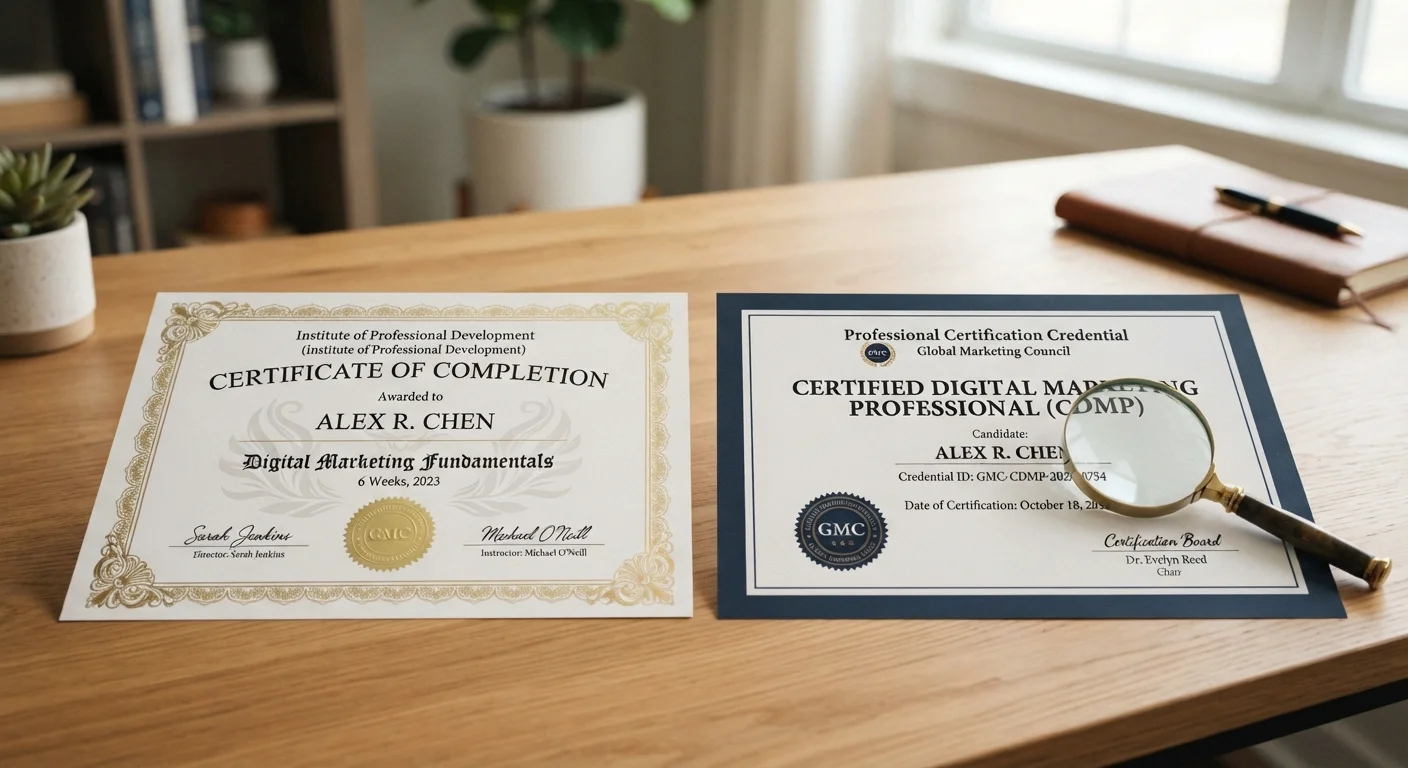
This is what separates a certification from a course completion badge. When you finish an online course, you may receive a certificate of completion. But that document reflects participation, not validated competency. A professional certification, by contrast, means an independent body has measured your knowledge against a defined standard and confirmed you meet it. For a clearer breakdown of this distinction, see our article on online certificates vs. accredited certifications.
Certifications vs. Course Completion Badges
Many online learning platforms issue a 'certificate' upon finishing a course. These are records of participation, not independently validated credentials. Professional certifications require passing a standardized assessment administered or overseen by a recognized industry body. Employers generally distinguish between the two, so it matters how you present each on your resume. For more on this, see our article on the truth about online course certificates.
How Certifications Differ From Degrees and Licenses
A college degree covers broad academic content across several years and is conferred by an accredited institution. A certification is narrower, faster to earn, and focused on a specific role or skill set - making it a practical supplement or, in some fields, a viable alternative to formal academic credentials.
Licenses are different again. A professional license is a legal requirement to practice in a regulated field - think electricians, nurses, or CPAs. A certification is generally voluntary but professionally valued. Some fields have both: a nurse might hold a required state license and an optional specialty certification. To understand how licensing works alongside certification, our explainer on professional licensing in America walks through the full picture.
“Certifications provide a common language between employers and candidates. When a credential is issued by a respected body, it removes ambiguity about what a professional actually knows.”
— Learning & Growth Editorial Team, Editorial perspective informed by workforce and credentialing research
Why Employers Pay Attention to Certifications
From a hiring manager's perspective, a relevant certification does something a resume bullet point alone cannot: it offers third-party verification. Rather than taking a candidate's word that they understand cloud infrastructure or financial risk modeling, an employer can see that a credentialed body tested those claims and the candidate passed.
Certifications also reduce training costs. A new hire who already holds a recognized credential typically requires less onboarding in that domain, which matters in industries where ramp-up time is expensive. In competitive fields like information technology, cybersecurity, and project management, certifications frequently appear as explicit requirements - not just preferences - in job postings.
91%
Of IT hiring managers value certifications in candidates
According to CompTIA's IT Industry Outlook research, a large majority of hiring managers in technology roles consider certifications meaningful evidence of candidate capability.
2-3 years
Typical renewal cycle for many professional certifications
Most leading certifying bodies require credential holders to complete continuing education or retesting within this window to keep credentials active and credible.
~$300-$500
Average cost range for a single certification exam
Exam fees vary by field and issuing body; this range reflects common mid-tier professional certifications, not including study materials or prep courses.
It's also worth noting that certifications signal a growth mindset. Pursuing and maintaining credentials requires ongoing effort, and many employers interpret that as a sign of professional seriousness.
Choosing a Certification That Actually Matters
Not all certifications carry equal weight. A credential's value depends largely on who issues it and how widely it is recognized. Certifications backed by established professional associations - such as those in project management, information technology, or financial planning - tend to have clearer employer recognition than credentials from lesser-known providers.
A practical way to gauge relevance is to read current job postings in your target field. If the same certification appears across many listings, employers in that space actively value it. If it rarely appears, the investment may not translate into a competitive advantage. For a field-by-field overview, see our guide to high-value certifications across six career fields.
If you are new to certifications entirely, it helps to understand how the process works before committing time and money. Our beginner's guide to professional certifications covers how to evaluate options and what to expect from the experience.
This article is for general informational and educational purposes only and does not constitute career, financial, or legal advice. Consult a qualified professional advisor for guidance specific to your circumstances.