What a Microchip Actually Is
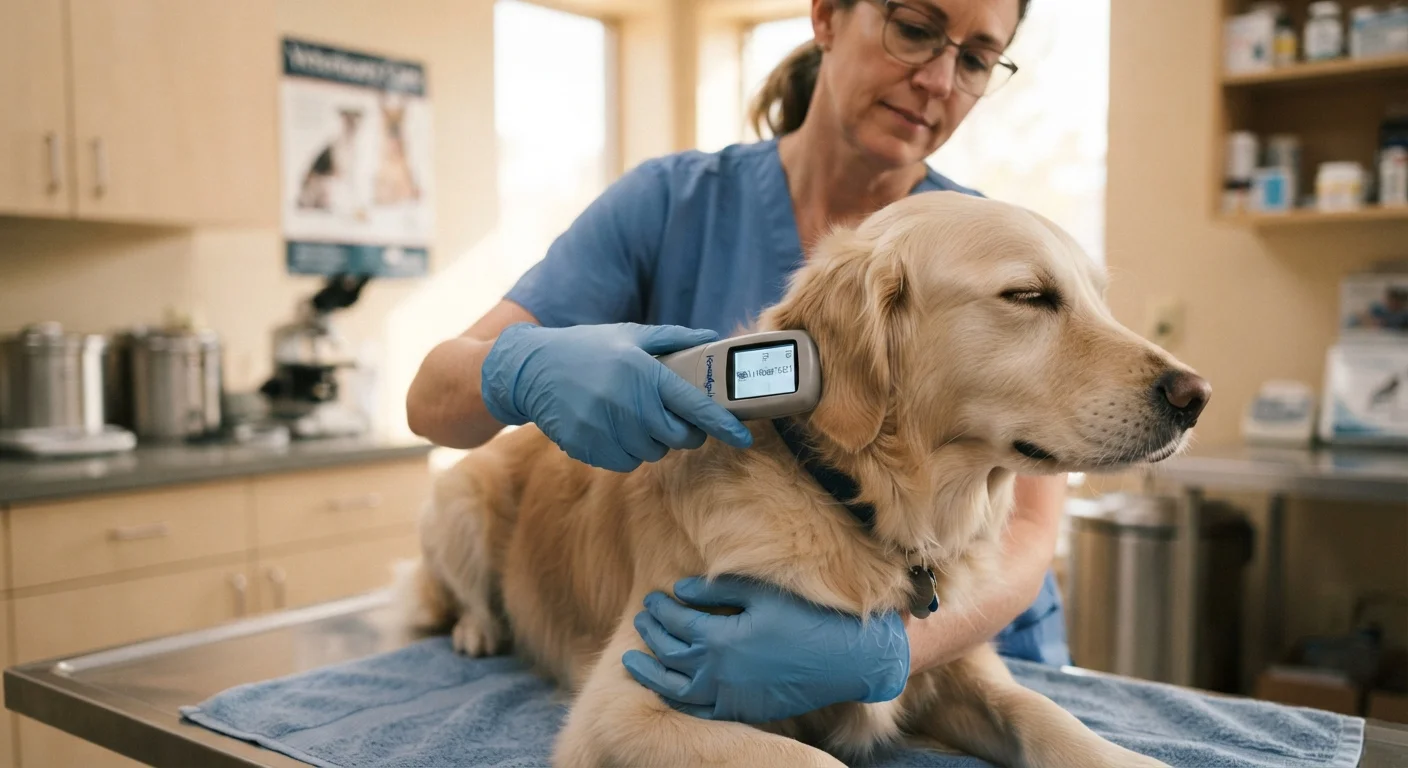
A pet microchip is a passive radio-frequency identification (RFID) device roughly the size of a grain of rice. It contains no battery and stores a single piece of data: a unique numeric code, typically 9 to 15 digits long, assigned to your pet. When a compatible scanner passes over the implant site — usually the scruff of the neck between the shoulder blades — it emits a low-frequency radio wave that powers the chip just long enough to transmit that number.
The chip itself does not transmit location data. It is not a GPS tracker and cannot be used to locate a lost pet in real time. Its sole function is to provide a permanent, tamper-proof identifier that links your animal to a database record.
| Chip size | Approximately 11–13 mm (about the size of a grain of rice) |
| Power source | None — passive RFID activated by scanner |
| Standard code length | 15 digits (ISO 11784/11785); older U.S. chips may use 9 or 10 digits |
| Implantation site | Between the shoulder blades (dorsal scruff area) |
| GPS capability | None — microchips do not track location |
| Registration requirement | Owner must register chip number with a database separately after implantation |
Implantation is a brief procedure performed with a sterile needle, comparable in sensation to a routine vaccination. Most pets require no sedation, and the chip typically remains in place for the animal's lifetime.
How the Registration System Works
Owning a microchipped pet and having a registered microchipped pet are two different things — and the difference determines whether the chip is useful at all.
After implantation, the chip number must be entered into a pet recovery database alongside your current contact information. In the United States, there is no single national registry; instead, multiple private databases operate independently. Shelters and veterinary clinics typically use universal scanners that read the chip number but must then search one or more registries to find the owner's details.
RFID (Radio-Frequency Identification)
A technology that uses radio waves to read and transmit data stored on a passive tag or chip. In pet microchipping, the scanner provides the energy needed to activate the chip momentarily.
ISO Standard
The International Organization for Standardization's specification (ISO 11784/11785) that defines the 15-digit chip format widely adopted globally. Chips meeting this standard are readable by most modern universal scanners.
Pet Recovery Database
A searchable registry that stores the link between a microchip number and an owner's contact information. Shelters and clinics query these databases when a found animal is scanned.
Universal Scanner
A handheld device capable of reading multiple chip frequencies, including both older 9-digit and newer 15-digit ISO chips, reducing the risk of a chip going undetected.
Chip Migration
The rare movement of an implanted microchip away from its original insertion site. Regular scanning during veterinary visits helps detect migration early.
This fragmented system creates a practical responsibility for owners: register with at least one major, searchable database and update your contact information every time you move or change phone numbers. A chip linked to an outdated address or a disconnected number provides almost no recovery benefit.
Some chip manufacturers operate their own registries; others are independent third-party services. When your pet is chipped, ask the implanting veterinarian which registry they submit to — and consider registering with a universal lookup service as a secondary layer.
Common Limitations Owners Should Know
Understanding where microchipping falls short helps owners use it effectively rather than relying on it as a complete solution.
- Scanner compatibility: Although ISO 11784/11785 is the international standard for 15-digit chips, older 9-digit chips still circulate in the U.S. Not all scanners read all frequencies. Universal scanners reduce but do not eliminate this gap.
- Migration: In rare cases, chips can shift from the implantation site. Annual scanner checks during wellness visits help confirm the chip is still readable and in the expected location.
- Database gaps: If your registration is in a registry that a shelter does not routinely search, the chip may go unmatched. Keeping records in multiple searchable systems improves the odds.
- No substitute for visible ID: A collar tag with current contact information remains the fastest reunification tool because it requires no equipment to read. Microchipping and ID tags work best as a combined strategy.
This article is for general informational purposes only and does not constitute veterinary advice. Consult a licensed veterinarian for guidance specific to your pet's health and care needs.