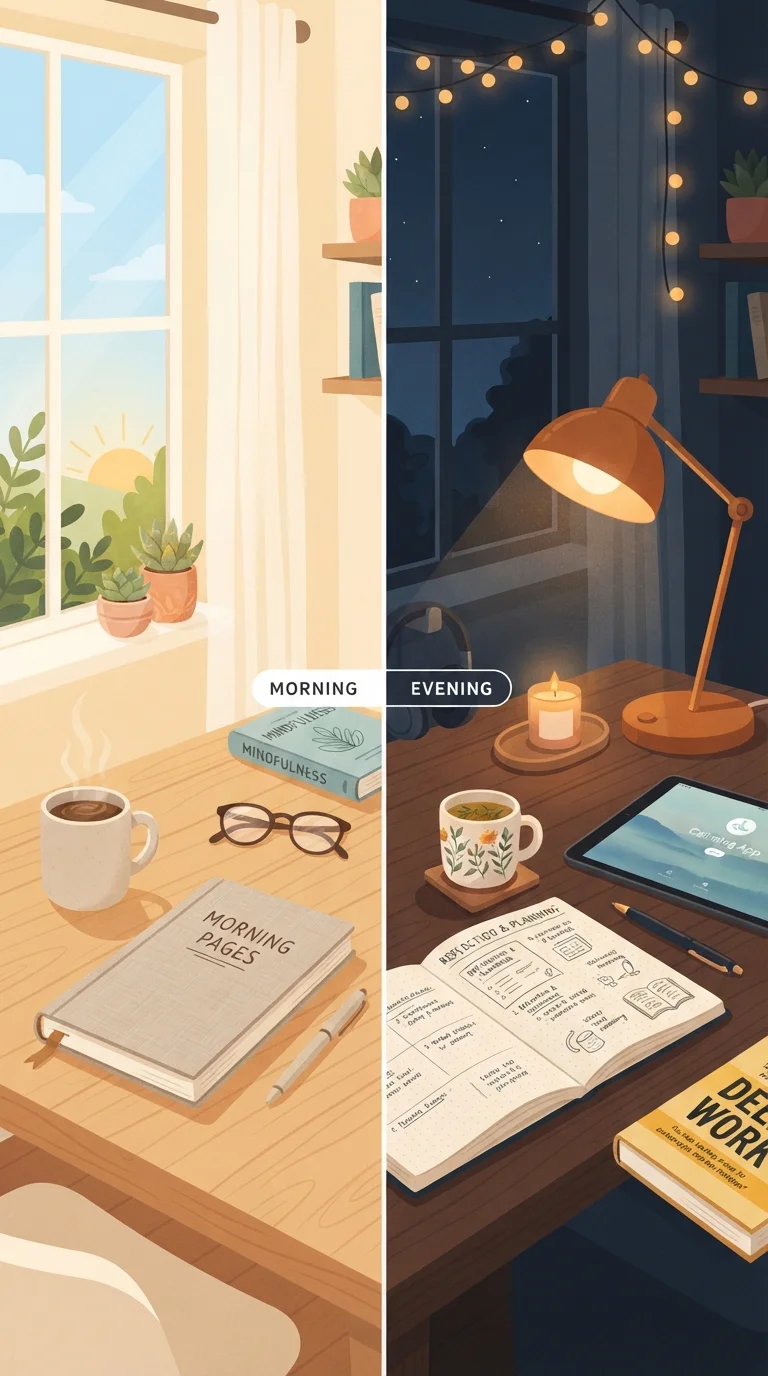

Why Evening Routines Are Hard to Sustain
Most of us have tried some version of a wind-down routine - and abandoned it within a week. The reason usually isn't laziness. It's that we design routines that are too ambitious for the end of a day when our willpower is already depleted.
The science behind evening routines is grounded in how the brain transitions between states of alertness and rest. According to sleep researchers, the body begins releasing melatonin - the hormone that promotes drowsiness - in response to reduced light and lower stimulation in the hours before bed. When we override those cues with bright screens, work tasks, or emotionally activating content, we essentially tell the brain the day isn't over.
A sustainable wind-down routine isn't about performing an elaborate ritual. It's about consistently reducing stimulation so your biology can do what it's designed to do. If you've struggled to keep one going, the framework below is built around that reality. For a broader look at how daily structure supports mental energy, see our guide on structuring your week to protect mental energy.
What you will need
How to Build Your Wind-Down Routine Step by Step
The steps below are designed to be modular - pick what fits your life, and build gradually rather than all at once. Research on habit formation consistently suggests that anchoring a new behavior to an existing one (called habit stacking) dramatically improves retention.
Set a fixed wind-down start time
Choose a time 30-60 minutes before you want to be asleep and treat it like a standing appointment. Consistency in timing helps reinforce the brain's internal clock (circadian rhythm). Even on weekends, staying within 30-45 minutes of your usual window makes the habit much easier to maintain.
Dim lights and reduce screen brightness
Lower the overhead lights or switch to a lamp. If you use a phone or tablet, enable night mode or warm-toned display settings. Bright, blue-spectrum light suppresses melatonin production, which delays the brain's shift into sleep-ready mode. This single change is one of the most well-supported steps in sleep hygiene guidance from bodies like the National Sleep Foundation.
Do one low-stimulation anchor activity
Choose a single, calming activity that signals the day is closing: light reading (fiction tends to work better than news or work-related content), gentle stretching, journaling a few lines about the day, or making a simple to-do list for tomorrow to offload mental loops. The key is consistency - do the same activity at the same point each evening so it becomes a reliable cue.
Create a sensory cue you associate only with winding down
Sensory anchors - a specific scent, a warm drink, or a particular playlist at low volume - help the brain build an association between that cue and relaxation. Over time, encountering the cue alone can begin to trigger the calm response. Choose something simple you can repeat nightly without effort.
Do a brief environment reset
Spend two to three minutes tidying the surfaces you'll wake up to - a clear kitchen counter or a set-out outfit reduces decision fatigue in the morning and psychologically closes the day. This step also creates a physical transition between "day mode" and rest, which many people find surprisingly effective.
Start Smaller Than You Think You Need To
If 30 minutes feels like too much to carve out, start with just 10. A two-step routine - dim the lights, do one calming thing - is far more sustainable than a five-step ritual you abandon after three nights. Habit research consistently shows that smaller starting points lead to better long-term retention. You can always expand once the core habit feels automatic.
If you're also thinking about how a morning practice might complement your evenings, the comparison in morning routine vs. evening routine is worth reading.
Troubleshooting When the Routine Breaks Down
Even well-designed routines get disrupted - a late work call, social plans, or simply an off night. This is normal, and missing one evening doesn't undo the habit. Research on behavior change suggests that the "never miss twice" principle is more realistic than aiming for perfection.
If your routine consistently falls apart, look at the timing first. Many people set a wind-down start time that's unrealistically early or late for their actual schedule. Adjust the anchor point - the first cue in your routine - before scrapping the whole structure.
Don't Problem-Solve in Bed
One of the most common habits that undermines sleep is using the moments before sleep to mentally rehearse tomorrow's problems. If your mind races at night, try moving your "planning" - even just jotting down tomorrow's tasks - earlier in the routine, well before you get into bed. Associating your bed with worry rather than rest reinforces the pattern.
If persistent sleep difficulties are affecting your daily functioning, that's worth discussing with a healthcare provider. General wind-down habits support healthy sleep hygiene, but they aren't a treatment for sleep disorders. For building other resilient personal habits across different life areas, our piece on self-improvement habits that hold up across life stages offers additional perspective.
This article is for general informational and educational purposes only and is not a substitute for professional medical advice. If you have concerns about your sleep or mental health, please consult a qualified healthcare professional.