
The Question Hiring Managers Are Actually Asking
When a hiring manager reviews two candidates - one with a four-year degree and one who learned through online courses and side projects - the core question isn't "how did they learn this?" It's "can they do this job?" That shift in framing changes how you should think about your own learning path.
That said, context matters enormously. A recruiter at a software startup and a compliance officer at a hospital are evaluating credentials through very different lenses. Understanding those differences lets you make smarter decisions about where to invest your time and money.
For a grounded look at how to communicate either background effectively, see how to translate skills into resume language employers recognize.
Where Formal Training Still Has a Clear Edge
In regulated professions - medicine, law, civil engineering, licensed trades - formal credentials aren't a preference; they're a legal or institutional requirement. No portfolio substitutes for a nursing license or a bar passage record. In these fields, asking whether self-teaching is an option is largely beside the point.
Beyond regulated industries, formal degrees retain influence in several areas:
- Large enterprise hiring: Some large corporations, particularly in finance, consulting, and government contracting, use degree requirements as an initial screening filter - whether or not that filter is the best predictor of job performance.
- Graduate-level pathways: Certain advanced roles explicitly require a master's or doctoral credential as a baseline.
- Structured foundational knowledge: Disciplines like statistics, electrical engineering, or organic chemistry benefit from the sequenced depth that multi-year programs provide.
Where Self-Taught Candidates Compete on Equal or Better Footing
Technology, digital marketing, UX design, data analytics, and content creation are fields where portfolio evidence routinely outweighs institutional pedigree. Many hiring teams in these areas have explicitly deprioritized degree requirements over the past decade, focusing instead on demonstrated output.
Self-taught professionals often bring advantages that structured programs can't fully replicate: the discipline to direct their own learning, comfort with ambiguity, and a project history that's immediately legible to employers. The challenge is making that history visible.
65%
Employers prioritizing skills over degrees
According to a 2023 report by the Society for Human Resource Management, a growing majority of hiring organizations are expanding screening practices to evaluate demonstrated skills alongside or instead of degree requirements.
45%
Fortune 500 companies dropping degree requirements
Analyses of job posting data from 2022-2023 found that a significant share of large U.S. employers removed four-year degree requirements from a range of roles, particularly in technology and operations.
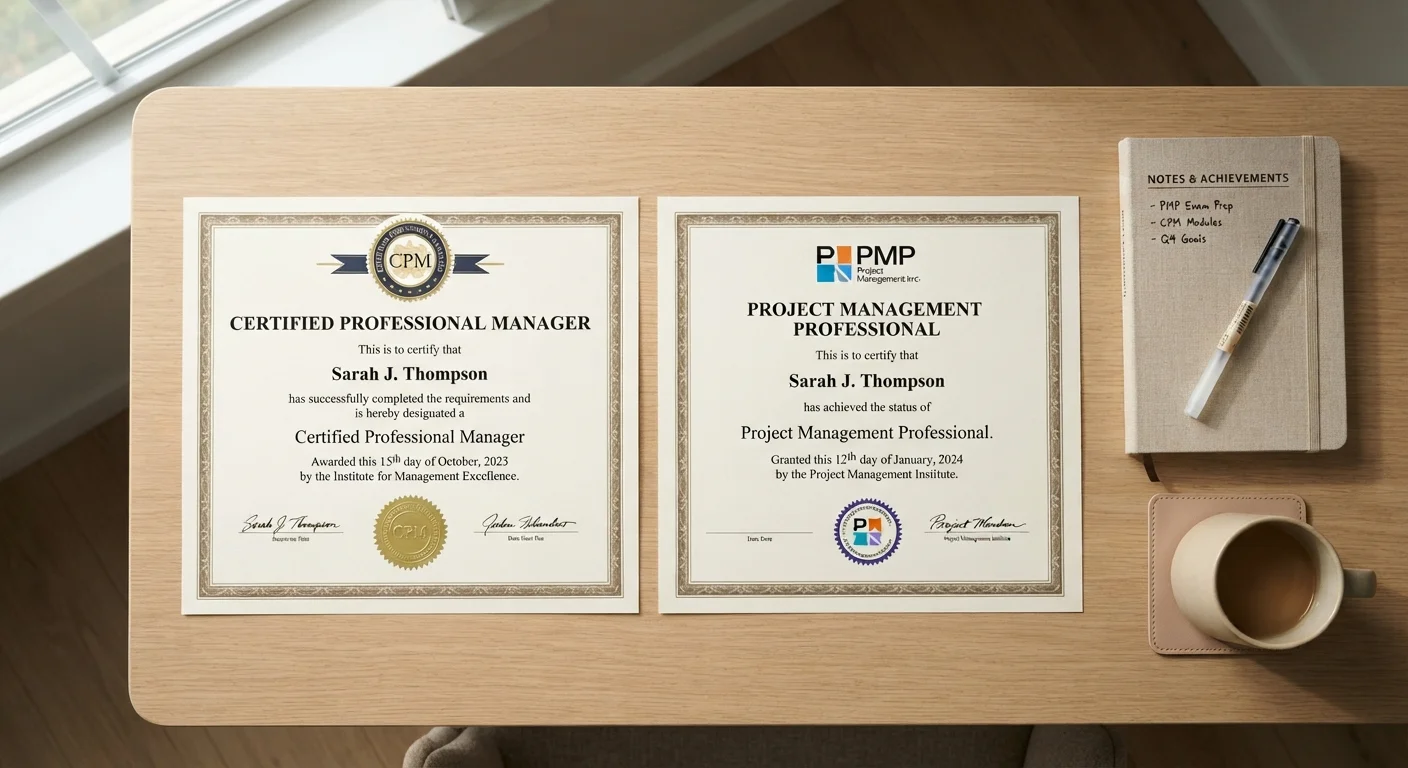
One practical bridge is pursuing recognized, industry-specific certifications alongside independent study. Certifications from established professional bodies or widely respected programs provide external validation that a self-assembled skill set is real and current. For help deciding between credentials in the same field, this guide on choosing between two certifications offers a useful framework.
Self-directed learners also benefit from tracking their own skill growth systematically. Measuring what you've actually learned covers practical methods for identifying gaps before an employer does.
What the Evidence Suggests About Learning Quality
The method of learning matters for knowledge depth, not just credentials. Research in learning science consistently shows that structured, feedback-rich practice produces more durable skill acquisition than passive consumption - regardless of whether the learner is enrolled in a program or studying independently.
Deliberate practice - focused repetition with clear goals and corrective feedback - predicts competence more reliably than hours logged. This means a self-taught professional who seeks out critique, works on real projects, and iterates may genuinely outperform a formally trained counterpart who accumulated credits passively.
Credentials Aren't the Same as Competence
A degree or certification signals that training occurred - it doesn't guarantee that deep, applicable knowledge resulted. Conversely, the absence of a credential doesn't mean a person lacks genuine expertise. Hiring managers with strong technical backgrounds often see through both credential inflation and resume gaps more readily than candidates expect. The most reliable strategy is to ensure your actual competence and your documented evidence of it are closely aligned.
What hiring managers often can't see directly is learning quality. That's why your task is to make outcomes visible: published work, measurable results, contributions to real projects, and certifications from reputable sources all serve as proxies for learning rigor.
Practical Steps for Either Background
Whichever path describes you, the same core principle applies: close the gap between what you know and what you can show.
- If you're formally trained: Don't assume your credential speaks for itself. Supplement it with hands-on projects, current certifications where relevant, and language on your resume that ties academic work to real-world application.
- If you're self-taught: Build a portfolio that demonstrates scope and quality. Pursue one or two recognized certifications that provide external credibility. Be explicit in interviews about your learning process and how you've applied it.
- For everyone: Soft skills like communication, adaptability, and critical thinking are consistently cited by hiring managers as differentiating factors. Research on soft skills confirms they have measurable career impact beyond technical ability.
Learning timelines also affect planning. If you're weighing whether self-directed study is realistic for your goals, what research says about learning timelines can help calibrate expectations.