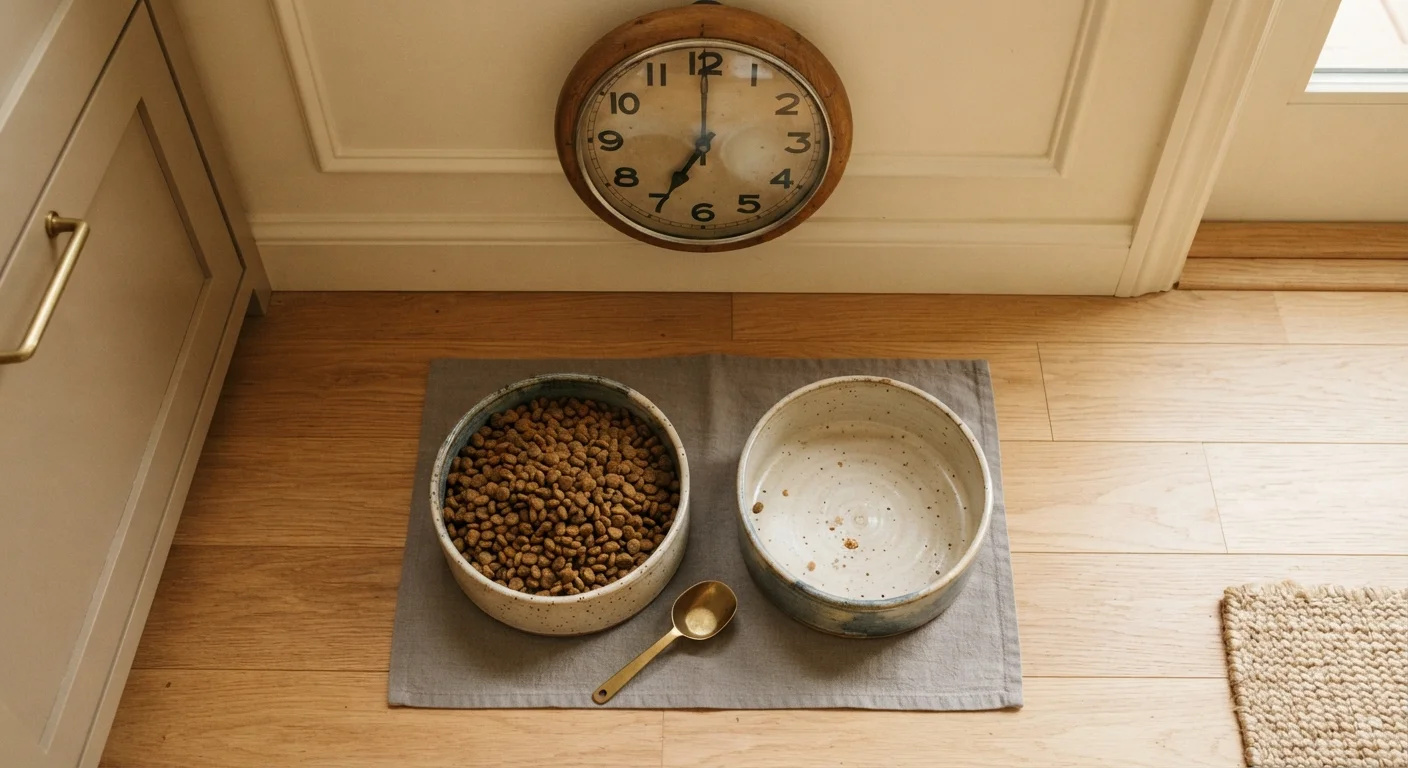

Why Meal Timing Is Worth Thinking About
New pet owners often focus on what to feed their animals and how much — both genuinely important questions. But when you feed your pet is a dimension that gets less attention than it deserves. Consistent meal timing supports digestive regularity, reinforces your pet's internal clock, and can even influence behavior and sleep patterns.
This isn't about rigid perfection. A meal that lands 30 minutes late on a busy Tuesday won't harm a healthy pet. What matters is establishing a repeatable pattern your pet can anticipate. Animals — particularly dogs and cats — are highly attuned to routine. Predictable feeding windows reduce anxiety, support healthy elimination schedules, and make it easier to notice when something is off. See our guide to recognizing when a routine is working for the behavioral cues that signal your schedule is genuinely supporting your pet.
Before diving into morning versus evening specifics, it's worth noting that most veterinary guidance favors two scheduled meals per day for adult dogs and cats rather than one large meal or continuous free access to food. If you're weighing scheduled meals against free-feeding altogether, our comparison of free-feeding and scheduled meals covers that trade-off in depth.
Morning Feeding: Pros and Practical Considerations
Feeding your pet in the morning — typically within an hour of waking — aligns nourishment with the start of the day's activity. For dogs especially, a morning meal provides energy ahead of walks, training sessions, or playtime. Many dogs are at their most alert and energetic in the first half of the day, so fueling them early makes physiological sense.
Morning feeding also means digestion largely occurs during waking hours, when your pet is upright, moving, and metabolically active. This can be particularly relevant for deep-chested large-breed dogs, where eating habits intersect with the risk of bloat (gastric dilatation-volvulus, or GDV) — a serious condition worth discussing with your veterinarian if you own a susceptible breed.
From a household management perspective, morning meals give you a clear signal of your pet's appetite at the start of each day. A dog or cat that skips breakfast is a more noticeable alert than one that skips a late-evening bowl. Early appetite changes can be an important health signal — our article on what appetite changes in pets can mean explains what different patterns may indicate.
| Criterion | Morning Feeding | Evening Feeding |
|---|---|---|
| Activity alignment | Fuels daytime walks and play | Aligns with crepuscular pets (cats) |
| Digestion timing | Occurs during active hours | Occurs during rest or sleep |
| Appetite monitoring | Easy to spot skipped meals early | Skipped meals noticed later in day |
| Overnight fast length | Shorter if paired with evening meal | Longer gap from evening to next meal |
| Routine consistency | Easier to anchor to morning alarm | Easier for owners home in evenings |
| Sleep/settle effect | Neutral to active post-meal period | Mild post-meal drowsiness may help settling |
Evening Feeding: Pros and Practical Considerations
Evening feeding works well for households where owners are absent during the day and the end-of-day routine is the primary bonding window. For cats, who are naturally crepuscular (most active at dawn and dusk), an evening meal can align well with their instinctive activity peak.
Some owners find that a meal in the evening helps their pet settle more quickly for the night. There is limited but plausible reasoning here: digestion prompts a mild, post-meal drowsiness in many animals, sometimes called the postprandial effect. However, feeding too close to bedtime — particularly large portions — can contribute to overnight restlessness or, in dogs, gassiness and discomfort.
The main practical risk with evening-only or heavily evening-weighted feeding is the long overnight fast. Puppies, kittens, and pets with certain health conditions (including diabetes or hypoglycemia risk) generally should not go many hours without food. If you favor evening meals, pairing them with a lighter morning feed typically produces a more balanced schedule.
Puppies and Kittens Need More Frequent Meals
Young animals have smaller stomachs and faster metabolisms than adults. Most veterinary guidance recommends three to four small meals per day for puppies and kittens rather than two. As they mature, you can transition to a twice-daily schedule. Always follow your veterinarian's specific recommendations for your young pet's breed, size, and development stage.
What the Evidence and Expert Guidance Suggest
Veterinary nutritionists generally emphasize that meal frequency and consistency are the most evidence-supported variables — not whether the clock reads 7 a.m. or 7 p.m. Two meals spaced roughly 8–12 hours apart is a widely cited framework for adult dogs and cats. Within that structure, the specific times are largely secondary to your ability to maintain them reliably.
2x daily
Recommended meal frequency for most adult dogs and cats
Two scheduled meals per day is a commonly cited guideline from veterinary nutrition experts for healthy adult companion animals.
8–12 hrs
Recommended gap between adult pet meals
Spacing meals 8 to 12 hours apart helps maintain digestive regularity and avoids excessively long fasting periods overnight.
~20 min
Typical time for a dog to finish a scheduled meal
Most healthy dogs consume a portioned meal within 20 minutes; uneaten food left beyond this window is a useful early signal of appetite changes.
Circadian biology does play a role in how animals metabolize food. Research in both human and animal models suggests that metabolism is somewhat more efficient during active waking periods — but translating this into firm feeding-time rules for companion animals remains an area where evidence is still developing. It is reasonable to lean toward feeding during or just before activity peaks, but this is a general principle rather than a rigid prescription.
If your pet has a specific health condition — diabetes, kidney disease, gastrointestinal issues, or obesity — your veterinarian may have more targeted timing guidance that overrides general recommendations. Always bring feeding schedule questions to a professional when a health condition is involved.
Building a Timing Routine That Actually Sticks
The best feeding schedule is the one you can maintain consistently seven days a week, including weekends. Pets do not distinguish between weekdays and rest days — irregular timing on weekends after a strict weekday schedule can cause digestive upset and behavioral confusion.
Start by anchoring meals to something you already do reliably: your own breakfast, returning from work, or a morning alarm. Tying the pet's meal to an existing habit dramatically increases the chance the routine holds over time. This mirrors the same habit-stacking principle that makes personal routines effective — and consistency is the factor that matters most regardless of the specific time you choose.
Once you have a schedule in place, watch for the cues that confirm it's working: steady appetite, regular elimination timing, calm behavior before meals rather than frantic pacing, and a pet that is at a healthy weight over time. These signals, covered more fully in our guide to effective daily routines, are your practical feedback loop.
This article provides general pet care information for educational purposes only and is not a substitute for personalized veterinary advice. Always consult a qualified veterinarian for guidance specific to your pet's health, age, and dietary needs.