
What a Calorie Actually Is
The word "calorie" gets used constantly in conversations about food and weight, yet it's often misunderstood. At its core, a calorie is simply a unit of energy - the fuel your body extracts from everything you eat and drink. Carbohydrates and protein each provide roughly 4 calories per gram, while fat provides about 9 calories per gram. Alcohol, for reference, provides around 7 calories per gram.
Your body needs this energy continuously - not just during exercise, but for every heartbeat, breath, and cellular repair process happening around the clock. That baseline energy requirement is called your basal metabolic rate (BMR). Add in your daily movement and activity, and you get your total daily energy expenditure - what your body actually burns each day.
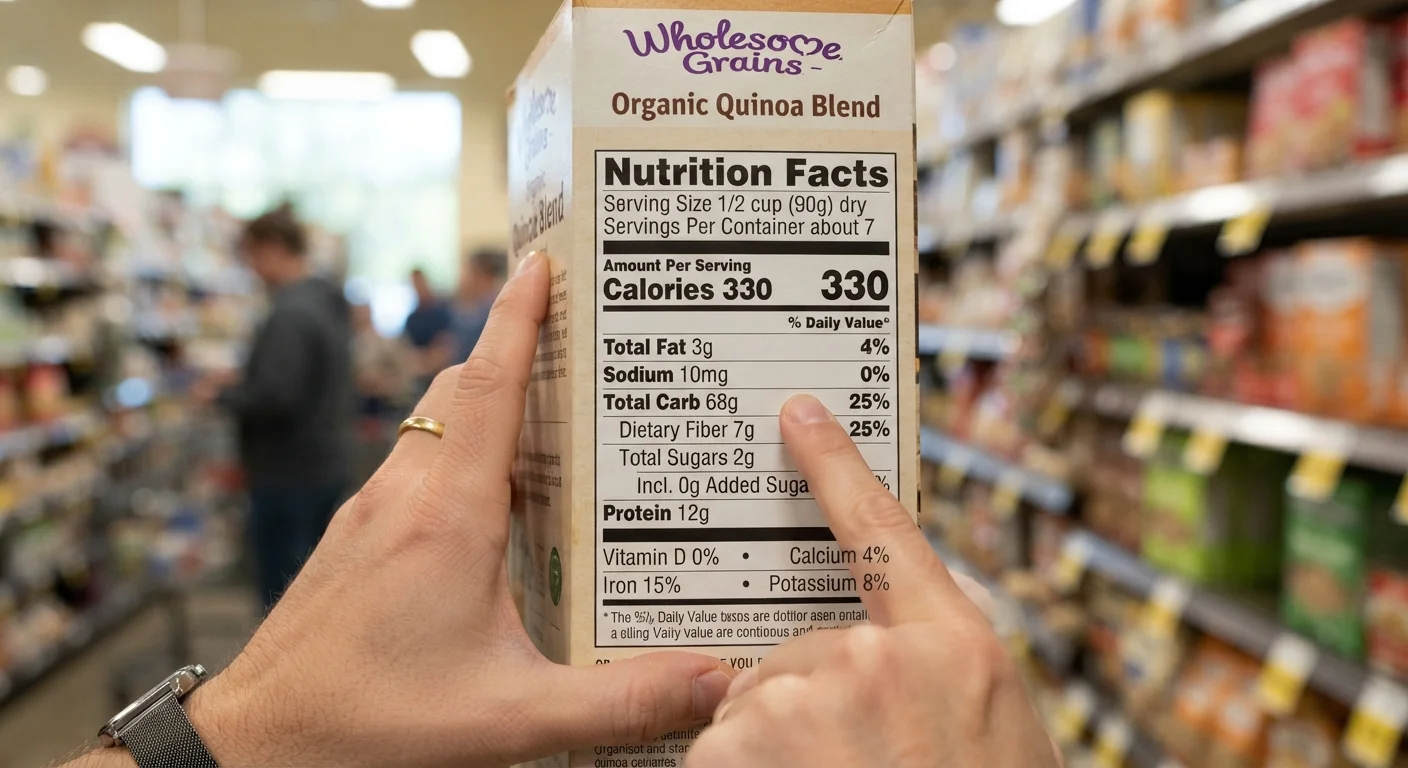
When you see calorie counts on a nutrition label, those numbers reflect the energy available in that food. Learning to read that information in context can be genuinely useful - see our guide to reading nutrition labels for a practical walkthrough.
Energy Balance: The Bigger Picture
"Energy balance" refers to the relationship between the calories you consume and the calories your body uses. When intake and expenditure are roughly equal over time, body weight tends to remain stable. When you consistently consume more energy than your body uses, it stores the surplus - primarily as body fat. When you consistently use more than you consume, the body draws on stored energy.
This framework is real and grounded in biology, but it's also incomplete on its own. The phrase "calories in, calories out" can make weight management sound like a simple math equation, when it's anything but. Your body actively adapts: when you eat less, your metabolism can adjust downward; hormones influence hunger and fullness in ways that override conscious decisions; stress and sleep quality affect how efficiently your body processes energy.
~60-75%
Of daily energy used at rest (BMR)
According to general estimates from exercise physiology research, basal metabolic rate accounts for the majority of total daily calorie expenditure for most adults.
4 kcal/g
Energy per gram of carbohydrate or protein
The Atwater system, a long-established framework used by the FDA, defines these standard energy values for the three primary macronutrients.
9 kcal/g
Energy per gram of dietary fat
Fat is the most energy-dense macronutrient, providing more than twice the calories per gram compared to carbohydrates or protein.
None of this means calorie awareness is useless - it's genuinely informative. But treating it as the only variable that matters oversimplifies a complex system.
Why Food Quality Matters Alongside Quantity
Two meals with identical calorie counts can have very different effects on your hunger, energy levels, and long-term health. A 500-calorie meal of refined carbohydrates and added sugar may leave you hungry again within an hour, while a 500-calorie meal built around fiber, protein, and healthy fats is more likely to keep you satisfied and provide steady energy.
Focus on Nutrient Density, Not Just Numbers
Instead of aiming for a specific calorie target, try prioritizing foods that deliver vitamins, minerals, fiber, and protein alongside their energy. Nutrient-dense foods - like vegetables, legumes, whole grains, and lean proteins - tend to support fullness and steady energy more effectively than highly processed alternatives with similar calorie counts.
This is partly why nutrition researchers increasingly focus on dietary patterns rather than individual nutrients or calorie targets. The Mediterranean dietary pattern, for example, has been studied extensively and is associated with positive health outcomes - not because it rigidly controls calories, but because it emphasizes whole foods that support satiety and nutrient density.
Building meals that balance vegetables, proteins, and whole grains is a practical way to support your energy needs without obsessing over numbers. Our framework for building a balanced plate offers a straightforward approach to doing exactly that.
A Healthier Way to Think About Calories
Rather than viewing calories as something to fear or meticulously track, it can help to think of them as useful context - one data point among many. Paying attention to how different foods make you feel, prioritizing mostly whole and minimally processed options, and eating in response to genuine hunger are habits that tend to support healthy energy balance without requiring a calculator at every meal.
“The idea that managing weight is simply about willpower and arithmetic ignores decades of research showing how profoundly biology, environment, and behavior interact to shape what and how much we eat.”
— Dr. David Katz, Preventive medicine physician and nutrition researcher
If you have specific health goals, a registered dietitian can provide personalized guidance based on your actual needs and circumstances. This article is general health information and is not a substitute for professional medical or nutritional advice. If you have concerns about your weight, energy levels, or diet, please consult a qualified healthcare provider.
This article is for informational purposes only and does not constitute medical or nutritional advice. Always consult a qualified healthcare professional for guidance specific to your health situation.