What Makes These Two Floors Structurally Different
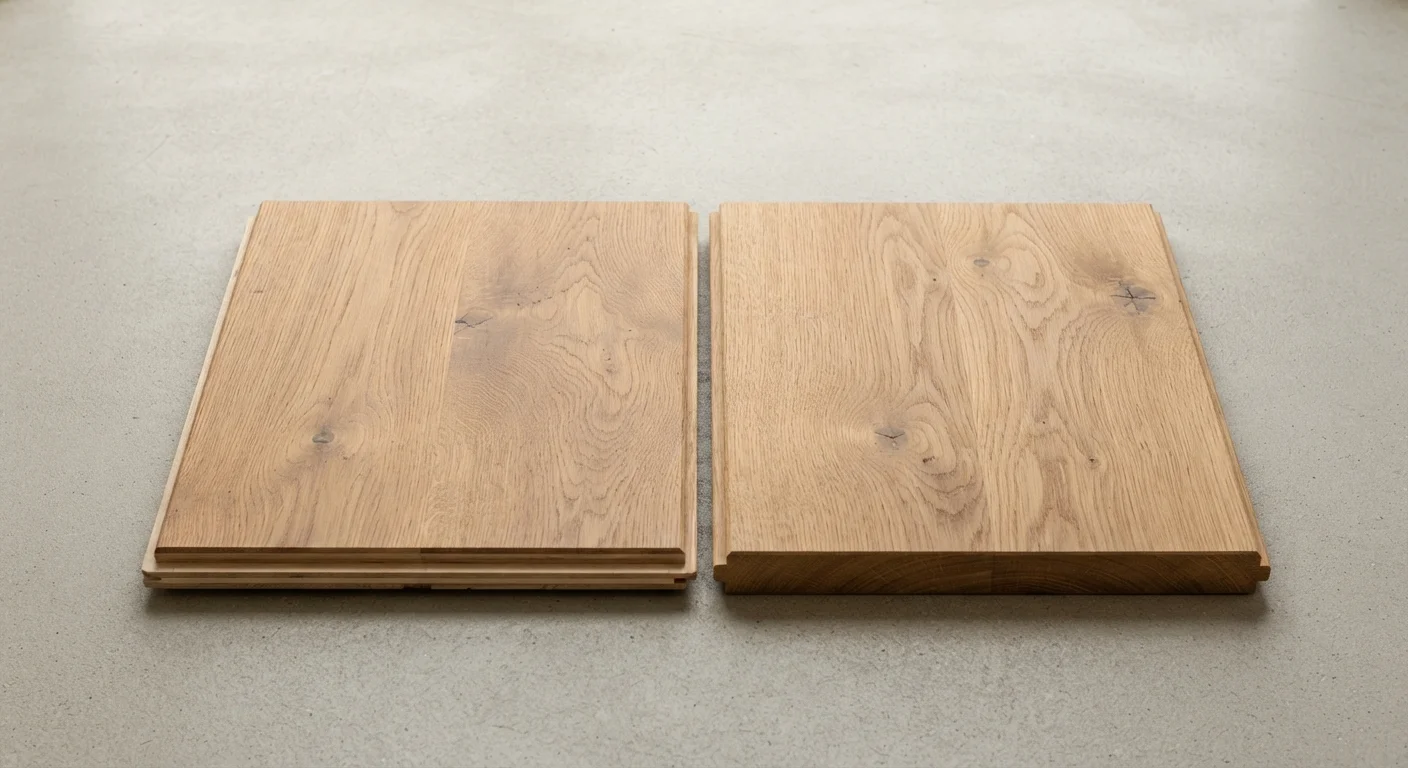
Despite looking nearly the same underfoot, engineered and solid hardwood are built very differently. Solid hardwood is exactly what it sounds like: a single plank of wood milled from top to bottom, typically ¾ inch thick. Engineered hardwood has a real hardwood veneer on top - usually 1/12 to 1/6 inch thick - bonded to multiple layers of plywood or high-density fiberboard beneath it.
That layered construction is engineered hardwood's key advantage. Wood naturally expands and contracts with changes in humidity. In a solid plank, that movement happens uniformly - which is fine above grade but problematic in damp or climate-variable spaces. Engineered hardwood's cross-grain core layers work against each other, significantly reducing overall movement. This is why building professionals routinely specify engineered hardwood for below-grade or concrete subfloor applications where solid hardwood would warp or gap over time.
| Criterion | Engineered Hardwood | Solid Hardwood |
|---|---|---|
| Construction | Real wood veneer over plywood core | Single solid wood plank |
| Moisture tolerance | Good - suitable for concrete and below-grade | Poor - above-grade only |
| Refinishing potential | 1-3 times depending on veneer thickness | 6-8 times over lifetime |
| Installation methods | Nail, glue, or float | Nail or staple only |
| DIY accessibility | High - floating option available | Moderate - requires nail-down tools |
| Typical material cost | Moderate | Moderate to high |
| Wide-plank stability | Excellent | Fair - more prone to gapping |
Durability, Refinishing, and Long-Term Performance
Surface durability between the two products is largely comparable - both are genuine wood and respond similarly to everyday foot traffic, furniture, and pet claws. The more meaningful durability distinction is refinishability.
Solid hardwood, at ¾ inch thick, can typically be sanded and refinished six to eight times over its lifetime. That means scratches, stains, or worn finishes can be addressed professionally every ten to fifteen years, effectively resetting the floor's appearance. Engineered hardwood can usually be refinished one to three times depending on veneer thickness - thinner veneers (around 1/12 inch) may only tolerate light sanding once, while thicker ones (1/6 inch) allow more passes.
¾ inch
Standard solid hardwood plank thickness
This thickness is an industry standard that allows multiple sanding cycles over the floor's lifespan.
1/12"-1/6"
Typical engineered hardwood veneer thickness range
Thicker veneers (closer to 1/6 inch) allow more refinishing passes and generally indicate higher-quality engineered products.
3/16 inch
Maximum subfloor deviation per 10 feet
This is a widely cited industry installation benchmark for both solid and engineered hardwood to prevent squeaking and joint failure.
For a room you plan to keep for decades, solid hardwood's refinishing potential is a genuine long-term advantage. In a home where you expect to sell within ten years, the difference is largely academic - the floor is unlikely to need refinishing in that window regardless of type.
Installation: What Your Subfloor and Location Decide
Your subfloor and room location narrow the options quickly. Solid hardwood must be nailed or stapled to a wood subfloor and is not suitable for installation below grade (basements) or directly over concrete. It also requires a conditioned space - meaning consistent indoor humidity - to remain stable.
Engineered hardwood offers three installation methods: nail-down (like solid), glue-down (ideal for concrete slabs), or floating (where planks click or glue together and rest on an underlayment without fastening to the subfloor). Floating installation is the most DIY-accessible approach and is often used over existing tile or vinyl in renovation projects, which can reduce labor and material removal costs significantly.
Before purchasing either product, check that your subfloor is level to within 3/16 inch over a 10-foot span - a standard industry benchmark. Uneven subfloors cause hollow spots, squeaks, and premature joint failure in both floor types. Just as choosing the right paint finish comes down to matching product to surface conditions, choosing flooring starts with an honest assessment of what's underneath.
Acclimation Matters for Both Floor Types
Both engineered and solid hardwood should be acclimated to your home's temperature and humidity before installation. Most manufacturers recommend leaving boxes open in the installation room for 48-72 hours. Skipping this step - especially in climates with extreme seasonal humidity swings - is a common cause of post-installation gapping or buckling. Always follow the specific acclimation instructions provided by your flooring manufacturer.
Cost, Appearance, and Making the Final Call
Solid hardwood typically runs higher in material cost per square foot than engineered, though the gap has narrowed as engineered manufacturing has improved. Installation labor for solid hardwood is generally higher too, since glue-down and floating options aren't available. Factor in subfloor preparation - leveling, moisture barriers, and removal of existing flooring - when budgeting either option.
Appearance-wise, both floors use real wood, and once installed, a well-finished engineered floor is visually indistinguishable from solid. Both are available in the same species, stains, and plank widths. Wide-plank formats (5 inches and wider) are actually more dimensionally stable in engineered form, which is why many modern farmhouse and open-plan designs favor engineered hardwood even in above-grade applications.
The decision ultimately comes down to three factors: where you're installing (above or below grade), how long you intend to stay in the home, and what your subfloor allows. Both are legitimate, durable flooring choices - the right one is simply the one that fits your specific room's conditions and your long-term plans.