Where to Place Smoke and CO Detectors
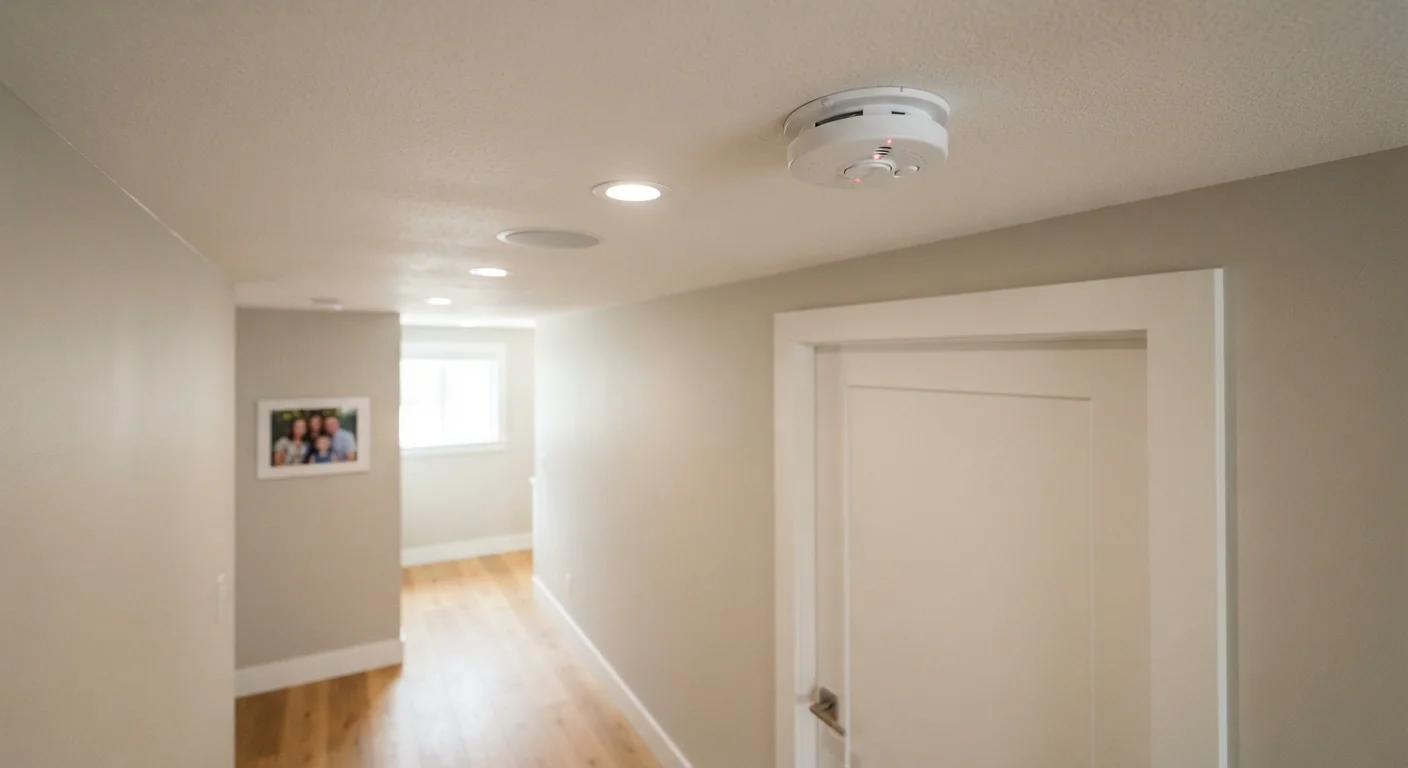
Placement is the foundation of an effective detector system. For smoke alarms, mount units on the ceiling or high on a wall - smoke rises, so ceiling placement provides the earliest warning. Keep them at least 10 feet from cooking appliances to reduce nuisance trips, and avoid placement near windows, doors, or vents where drafts can dilute smoke before it reaches the sensor.
At minimum, install a smoke detector in every sleeping room, outside each separate sleeping area, and on every level of the home including the basement. An interconnected system - where all alarms trigger together - gives every occupant maximum escape time regardless of where a fire starts.
Carbon monoxide (CO) detectors should be installed on every level and outside each sleeping area. CO is roughly the same density as air, so it distributes throughout a room rather than rising or sinking dramatically. Many manufacturers recommend positioning CO alarms at eye level or as directed in the unit's instructions. Avoid placing CO detectors in enclosed spaces or directly beside fuel-burning appliances.
Combination Units Still Need Correct Placement
A combination smoke and CO detector is convenient, but it must satisfy placement rules for both hazards at once. This can create tension: smoke detectors belong on the ceiling, while some CO detector manufacturers recommend eye-level wall placement. Always read the manufacturer's installation instructions and cross-reference your local building code to confirm the approved position for your specific model.
| Smoke detector lifespan | 10 years from manufacture date (National Fire Protection Association (NFPA)) |
| CO detector lifespan | 5-7 years (varies by model) (Underwriters Laboratories (UL)) |
| Recommended test frequency | At least once per month (NFPA 72, National Fire Alarm Code) |
| Battery replacement interval | At least once per year (non-sealed units) (U.S. Fire Administration) |
| Minimum coverage per home | One per sleeping room, each level, plus basement (NFPA 72) |
| CO alarm placement | Eye level to ceiling per manufacturer guidance (Consumer Product Safety Commission (CPSC)) |
How to Test Your Detectors Correctly
Testing is not optional - it is the only way to confirm that sensors, circuits, and batteries are all working together. The NFPA recommends testing every detector at least once per month using the built-in test button. Press and hold until the alarm sounds; a full-volume alert confirms the unit is operational. If the alarm is weak, delayed, or silent, replace the battery first and retest. If the issue persists, replace the unit.
Note that the test button checks the alarm circuit and horn but does not expose the sensor to actual smoke or CO gas. Aerosol smoke-detector test sprays simulate real combustion particles reaching the sensor and provide a more thorough annual check alongside monthly button tests.
Build testing into an existing habit - the twice-yearly clock change is a widely recommended reminder. Use that moment to swap out batteries in non-sealed units at the same time, even if they still appear to have charge remaining.
3 in 5
Home fire deaths with no working alarm
The NFPA reports that three in five home fire deaths occur in properties with no smoke alarms or alarms that failed to operate.
50,000+
Annual CO poisoning ER visits in the U.S.
The CDC estimates more than 50,000 Americans visit emergency rooms each year due to accidental, non-fire carbon monoxide poisoning.
10 years
Maximum reliable smoke detector lifespan
Sensor degradation means units older than 10 years may not alert reliably during an actual fire, according to NFPA guidance.
When to Replace Detectors - and How to Tell
Detectors do not last indefinitely. Smoke alarms should be replaced 10 years from the date of manufacture - not the installation date. That date is stamped inside the unit's cover; make a habit of checking it when you move into a home or after any major renovation. Carbon monoxide detectors typically have a shorter service life of five to seven years; consult the specific model's documentation for its rated lifespan.
Modern detectors signal end of life with a distinct chirp pattern or voice prompt that differs from a low-battery alert. If your detector continues chirping after a fresh battery is installed, or if you cannot locate a manufacture date, replace the entire unit. Sensors degrade silently and an aged detector may not respond during an actual emergency.
Tracking replacement dates is straightforward: write the manufacture date and your planned swap year directly on the unit with a permanent marker. This approach mirrors the logic behind tracking service intervals for any long-life component - similar to how knowing lifespan expectations helps in planning vehicle part replacements before something fails unexpectedly.
Ionization Detector
A smoke alarm that uses a small amount of radioactive material to detect fast-flaming fires. It responds quickly to open, rapidly spreading flames but may be slower to sense slow, smoldering fires.
Photoelectric Detector
A smoke alarm that uses a light beam and sensor to detect smoke particles. It is generally more responsive to slow, smoldering fires and tends to produce fewer nuisance alarms from cooking.
Electrochemical Sensor
The detection technology used in most carbon monoxide alarms. It identifies CO gas by measuring a chemical reaction at a sensing element and triggers an alarm when levels exceed a safe threshold.
End-of-Life Signal
A chirping pattern or voice alert that modern detectors emit when the sensor has reached the end of its usable lifespan. This is distinct from a low-battery warning and means the entire unit must be replaced.
Combination Detector
A single device containing both a smoke sensor and a carbon monoxide sensor. It simplifies installation but must satisfy placement requirements for both hazard types simultaneously.
Interconnected Alarms
A network of detectors - hardwired or wirelessly linked - where triggering one alarm causes all units throughout the home to sound together, maximizing warning time for all occupants.
This article provides general home safety information only. Always consult your local fire marshal, building code authority, or a licensed contractor for requirements specific to your home and jurisdiction.