
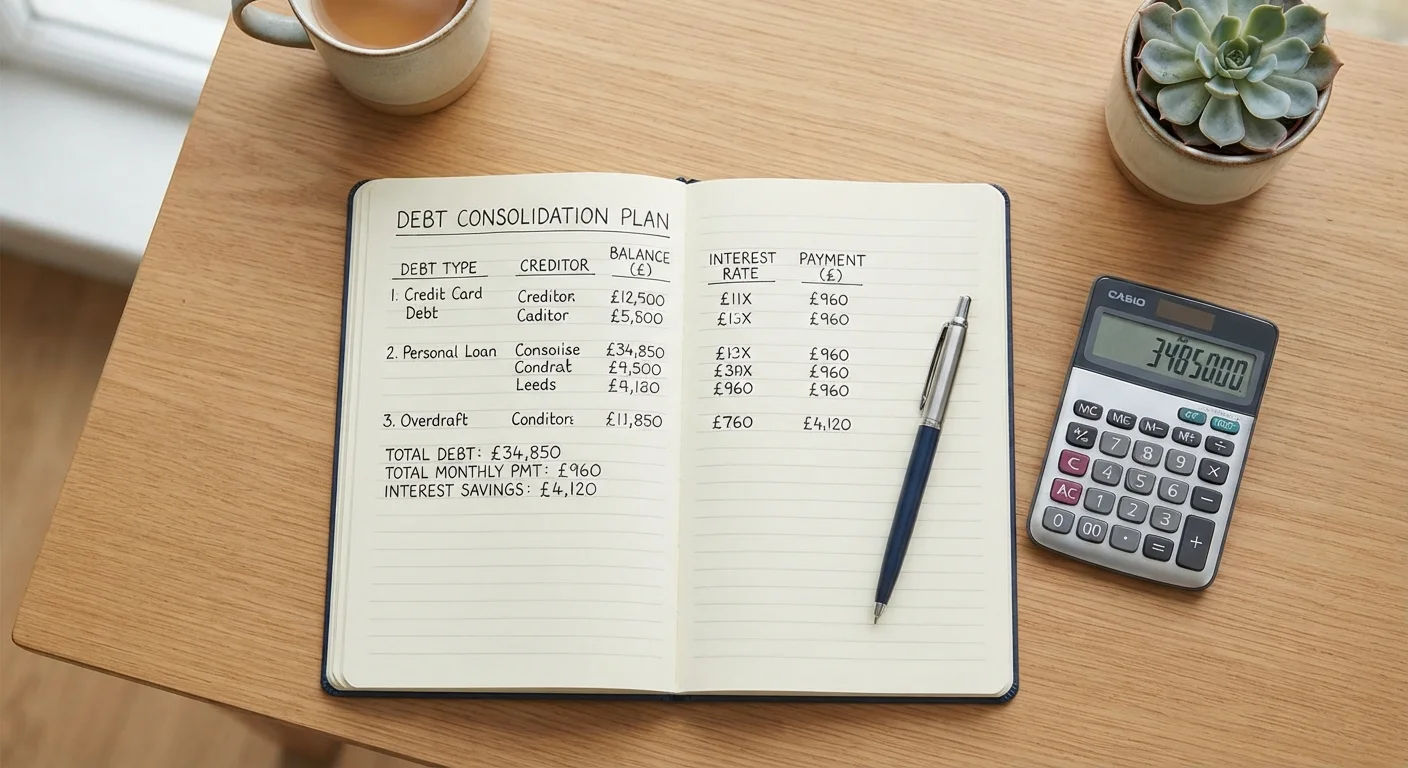
What Debt Consolidation Actually Means
Debt consolidation is the process of combining several separate debts — typically credit card balances, medical bills, or personal loans — into a single new loan or credit product. Instead of managing multiple due dates, minimum payments, and interest rates, you make one monthly payment to one lender.
Common consolidation methods include personal loans, balance-transfer credit cards, and home equity loans. Each carries different terms, eligibility requirements, and risk profiles. A personal loan, for example, gives you a fixed interest rate and a set repayment term. A balance-transfer card may offer a 0% promotional period, but that rate eventually expires. A home equity loan uses your home as collateral — meaning missed payments carry consequences beyond a credit score dip.
What consolidation does not do is erase debt. The balance follows you into the new loan. Understanding this distinction is the foundation of making the strategy work. To better understand the interest costs involved, see our guide to APR, interest rate, and finance charges.
The Real Advantages — and Their Limits
One monthly payment replaces multiple due dates
Consolidating removes the mental load of tracking several creditors. Fewer accounts to monitor means lower risk of accidentally missing a payment and incurring late fees.
Potential to reduce overall interest rate
Borrowers with good credit may qualify for a consolidation loan at a lower APR than their existing credit card rates, which can meaningfully reduce total interest paid over time.
Fixed repayment timeline creates a clear endpoint
Personal loans used for consolidation typically come with fixed terms, so you know exactly when the debt will be paid off — unlike revolving credit card balances.
Can reduce monthly payment pressure
A lower blended interest rate or extended term can bring the monthly payment down, which may ease cash-flow strain for borrowers in tight budget situations.
The most concrete benefit is simplification. Tracking one payment reduces the risk of a missed due date, which can trigger late fees and credit score damage. For borrowers with debts scattered across five or six accounts, that alone has practical value.
The financial case rests on interest rates. If your consolidated loan carries a lower annual percentage rate (APR) than your existing debts, less of each payment goes toward interest and more reduces principal. That math only works, however, if you don't dramatically extend the repayment timeline. A lower monthly payment stretched over many additional years can result in paying more total interest, not less.
The Disadvantages Worth Taking Seriously
Does not reduce the principal you owe
Consolidation reorganizes debt — it does not forgive or discount it. Every dollar borrowed must still be repaid, often with origination fees added on top.
Risk of accumulating new debt on paid-off cards
Once credit card balances are cleared by a consolidation loan, those cards have available credit again. Spending on them creates a second debt layer that compounds the original problem.
May cost more if repayment term is extended
A lower monthly payment achieved by stretching the loan term can result in paying more total interest over the life of the loan, even if the rate is lower.
Temporary negative impact on credit score
Applying for a new loan creates a hard inquiry, and the new account reduces average credit age — both of which can cause a short-term score dip.
Fees can erode savings
Origination fees on personal loans, balance-transfer fees, and prepayment penalties can offset a portion of the interest savings consolidation is meant to provide.
One risk that often goes unmentioned: consolidation can free up credit on the cards you just paid off. Spending on those accounts again creates a second layer of debt on top of the consolidation loan — a pattern sometimes called "reloading." This is one of the most common reasons consolidation fails to improve a borrower's situation.
Your credit score may also dip in the short term. Applying for a new loan triggers a hard inquiry, and opening a new account lowers your average account age — both factors that affect your score. For context on how these mechanics work, our breakdown of your credit report explains what lenders actually see.
Secured vs. Unsecured Consolidation Loans
Unsecured personal loans don't require collateral, making them lower-risk for the borrower if payments become difficult. Secured options — like home equity loans — typically offer lower rates, but your property backs the debt. Missing payments on a secured consolidation loan can put your home at risk, which is a fundamentally different stakes level than a credit card default. Weigh this tradeoff carefully and consider speaking with a licensed financial adviser.
How It Compares to Other Payoff Strategies
Consolidation isn't the only structured approach to paying down debt. The avalanche method (paying highest-interest balances first) and the snowball method (paying smallest balances first) both operate without taking on new credit — which means no hard inquiry, no new account, and no risk of reloading. Our comparison of the avalanche and snowball methods walks through how each one handles interest and motivation differently.
Consolidation tends to outperform these methods when the interest-rate gap is significant and the borrower qualifies for favorable terms. It tends to underperform when fees are high, rates are only marginally better, or the repayment term is stretched unnecessarily.
~20%
Average credit card interest rate in the US
Federal Reserve data has shown average credit card rates consistently above 20% APR in recent years, making high-interest debt a significant cost for many households.
3–5 years
Typical personal loan repayment term
Most personal loans used for consolidation carry terms between 36 and 60 months, creating a fixed payoff window that credit cards do not provide.
This article is for general informational purposes only and does not constitute personalized financial, tax, or legal advice. Consult a qualified financial professional before making decisions about your specific debt situation.