How Each Method Works
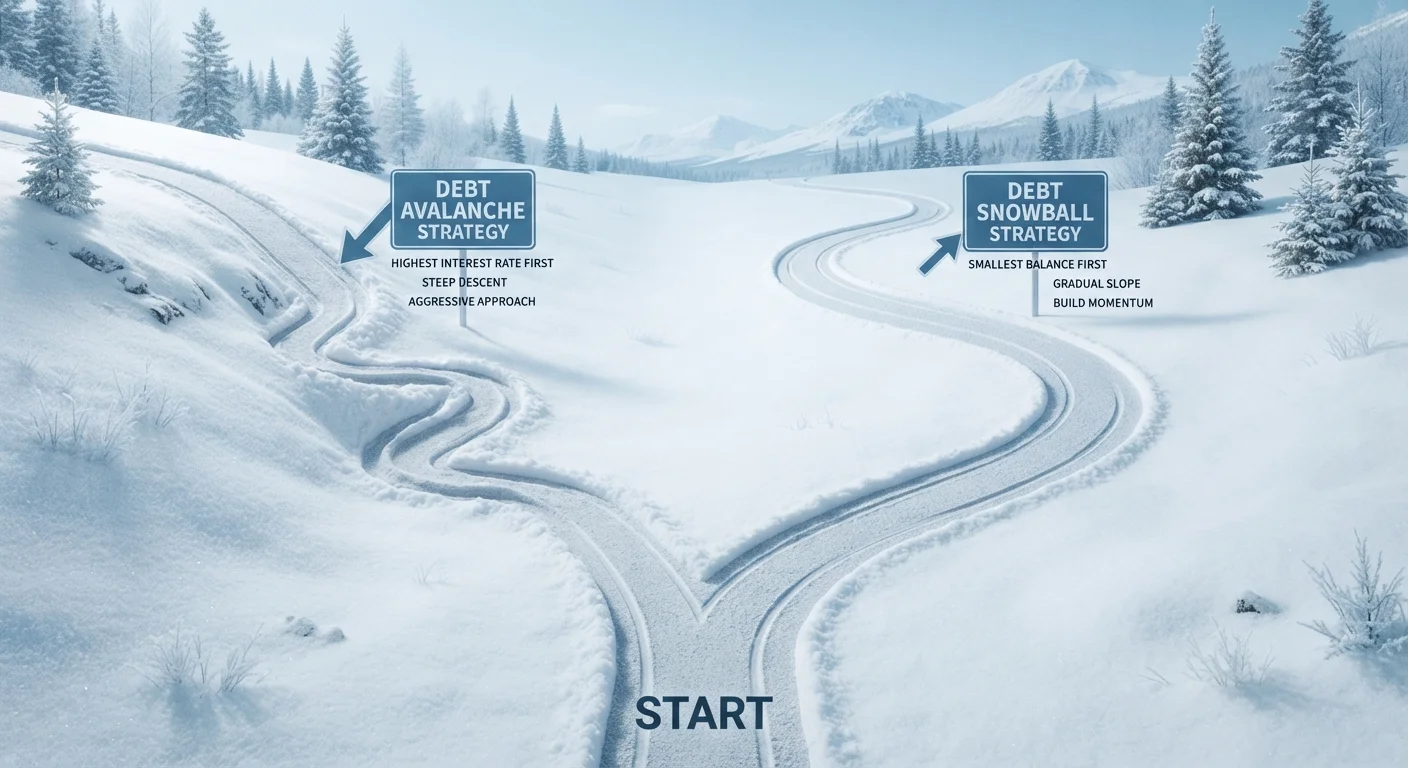
Both the avalanche and snowball methods share the same basic mechanic: you make minimum payments on all debts except one, then direct any extra money toward that priority account. The difference is how you choose which debt gets that extra attention.
With the debt avalanche, you rank debts by interest rate — highest to lowest. You attack the costliest debt first. Once it's gone, you roll that payment into the next highest-rate account, and so on. The name reflects how each eliminated payment picks up speed and adds force to the next.
With the debt snowball, you rank debts by balance — smallest to largest, regardless of interest rate. You pay off the smallest account first, then roll that freed-up payment into the next smallest. Early account closures create tangible progress markers that help sustain motivation.
Neither approach requires you to earn more money. Both work by systematically redirecting existing cash flow.
| Criterion | Debt Avalanche | Debt Snowball |
|---|---|---|
| Priority order | Highest interest rate first | Smallest balance first |
| Total interest paid | Generally lower | Generally higher |
| Time to first payoff | Potentially longer | Typically faster |
| Motivational structure | Long-term savings focus | Frequent early wins |
| Best for | Disciplined, goal-oriented payers | Motivation-driven payers |
| Flexibility on variable income | Moderate | Higher (fewer accounts sooner) |
The Math: Where the Avalanche Wins
From a purely numerical standpoint, the avalanche method costs less. Interest compounds continuously on unpaid balances, meaning high-rate debts grow faster and drain more money the longer they remain open. By targeting those accounts first, you reduce the principal on which interest accrues — shrinking your total repayment amount.
~$1,000+
Potential interest savings with avalanche vs. snowball
Consumer finance educators estimate that, on typical multi-debt scenarios with rate spreads of 10+ percentage points, the avalanche method can save over $1,000 in total interest, though actual savings vary by individual balances and rates.
33%
U.S. adults carrying credit card debt month-to-month
According to Federal Reserve survey data, roughly one-third of U.S. adults carry unpaid credit card balances from month to month, making structured payoff strategies broadly relevant.
20%+
Average credit card APR in recent years
The Federal Reserve reports that average credit card interest rates have exceeded 20% APR in recent periods, underscoring why targeting high-rate debt first can significantly reduce total cost.
The real-world gap depends on your specific rate differences and balances. If your debts carry similar interest rates, the avalanche advantage narrows considerably. But if you're carrying a 24% APR credit card alongside a 7% personal loan, the savings from prioritizing the card can be meaningful over a multi-year payoff timeline.
It's important to note: these are estimates based on general financial principles, not guarantees. Your actual savings will vary based on your balances, rates, payment amounts, and consistency. A licensed financial adviser can model your specific situation more precisely.
The Psychology: Where the Snowball Wins
Behavioral economists have long observed that people respond strongly to visible progress. Paying off an entire account — even a small one — delivers a completion signal that pure interest savings cannot replicate. This is the core argument for the snowball: a plan you actually stick to outperforms a theoretically superior plan you abandon.
Research in behavioral finance suggests that reducing the number of debts you carry can feel more manageable than reducing the total dollar amount owed. Each closed account removes a minimum payment obligation and a mental tracking burden. For many borrowers, that simplification is motivating in itself.
If you're managing debt on a variable income, the snowball also has a practical edge: fewer open accounts means fewer required minimum payments during a low-income month.
Choosing the Right Method for You
Neither method is universally superior — the right choice depends on your financial profile and your honest self-assessment of what keeps you engaged.
Ask yourself: Have I started debt payoff plans before and lost momentum? If yes, the snowball's early wins may be more valuable to you than the avalanche's interest savings. If you're the type who finds a spreadsheet motivating and can sustain effort without frequent milestones, the avalanche likely serves you better.
You can also blend the approaches. Some people use the snowball to eliminate one or two small accounts quickly, then switch to the avalanche once their number of debts is manageable. There's no rule requiring you to commit to one method permanently.
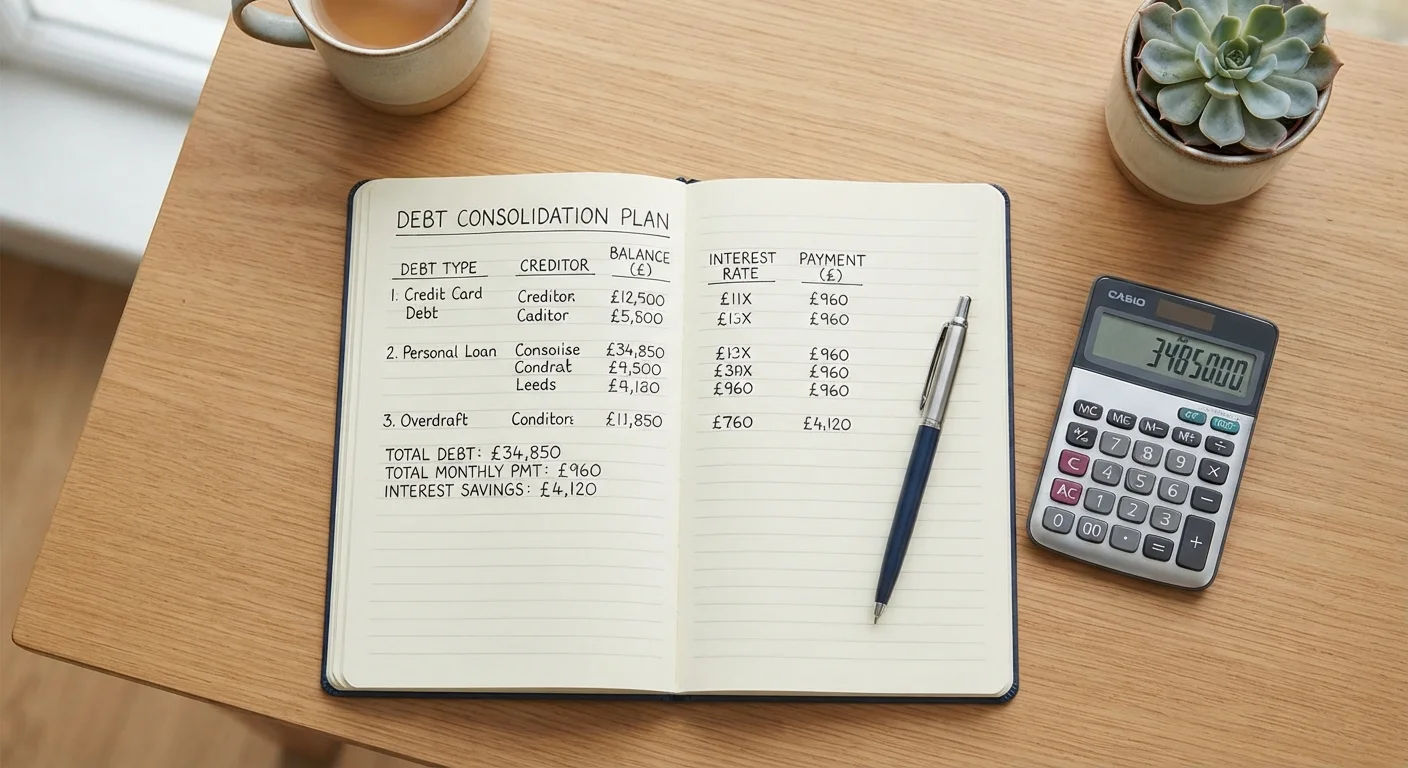
If your debts are complex — multiple accounts, mixed secured and unsecured debt, or balances that feel unmanageable — you may want to explore whether debt consolidation is worth considering before selecting a payoff sequence. And once debt is under control, building a savings plan alongside your mortgage obligations becomes the next priority — see our guide on building a savings plan when you already have a mortgage payment.
This article is for general informational purposes only and does not constitute personalized financial advice. Consult a qualified financial professional for guidance specific to your situation.