The Core Coverage Categories
Travel insurance bundles several distinct protections into a single policy. Understanding each category helps you determine what you're actually buying — and what you're not.
Trip Cancellation and Interruption
This is usually the headline benefit. Trip cancellation reimburses prepaid, non-refundable costs if you have to cancel before departure for a covered reason — a defined list that typically includes sudden illness or injury, the death of a close family member, jury duty, or a natural disaster making your destination uninhabitable. Trip interruption works similarly but applies when you must cut a trip short after it has begun.
The key phrase is "covered reason." If you cancel because you simply changed your mind or found a better deal, a standard policy will not pay out. For that level of flexibility, you'd need Cancel for Any Reason (CFAR) coverage — an optional upgrade that broadens cancellation triggers but typically reimburses only 50–75% of costs and carries a strict purchase deadline. See our full breakdown of common exclusions for more on situations that fall outside standard coverage.
Travel Medical and Emergency Evacuation
For international travelers, this is often the most consequential coverage. Your U.S. health insurance plan — including Medicare — generally provides little or no coverage outside the country. Travel medical insurance fills that gap, paying for emergency treatment, hospitalization, and in some cases, prescription medications.
Emergency medical evacuation is a separate but related benefit. If you suffer a serious injury in a remote area or a country with limited medical infrastructure, evacuation to an appropriate facility can cost tens of thousands of dollars. A policy with strong evacuation limits — often $500,000 or more — provides meaningful protection against this risk.
$50,000+
Typical cost of international air ambulance evacuation
Medical evacuation costs vary widely by distance and complexity; industry estimates commonly cite figures well above $50,000 for transatlantic or remote-area evacuations.
~10–21 days
Purchase window for pre-existing condition waivers
Most U.S. travel insurance providers require the policy to be purchased within 10 to 21 days of the first trip deposit to qualify for a pre-existing condition waiver.
50–75%
Typical reimbursement rate under CFAR upgrades
Cancel for Any Reason add-ons generally reimburse only a portion of non-refundable trip costs, with most policies falling in the 50–75% range.
Baggage and Personal Effects
Baggage coverage reimburses you for lost, stolen, or damaged luggage and personal items up to a policy limit. Policies often apply sub-limits to specific categories — electronics, jewelry, and cash commonly have lower caps than general luggage. Baggage delay coverage is a related benefit that reimburses emergency purchases (clothing, toiletries) if your bags are delayed beyond a specified number of hours.
What Policies Routinely Exclude
Knowing what isn't covered is just as important as knowing what is. Several common situations catch travelers off guard:
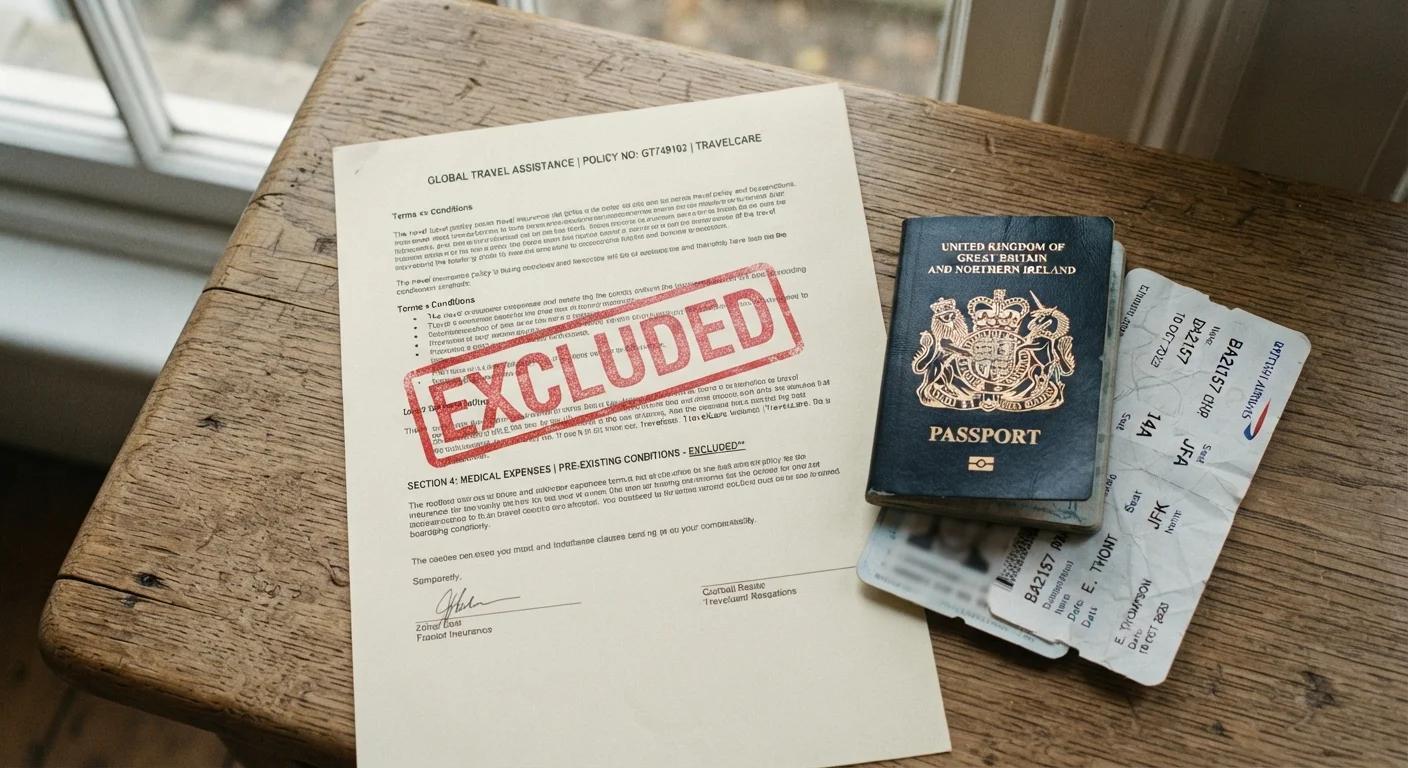
- Pre-existing medical conditions: Most policies exclude claims arising from conditions you had before purchasing the policy, unless you meet waiver requirements.
- Extreme sports and adventure activities: Standard policies often exclude injuries from activities like skydiving, backcountry skiing, or scuba diving beyond recreational depths. Separate adventure or sports riders may be available.
- Travel to high-risk destinations: Claims related to civil unrest, war, or travel to destinations under a government-issued Do Not Travel advisory may be excluded.
- Foreseeable events: If a named hurricane is already in the forecast when you buy your policy, the storm may not qualify as a covered reason for cancellation.
Buy Soon After Your First Deposit
Many of the most valuable protections — including pre-existing condition waivers and coverage for events that become 'foreseeable' — depend on purchasing your policy shortly after making your initial trip deposit. Waiting until close to departure can permanently eliminate certain benefits, regardless of price paid.
For a comprehensive look at policy boundaries, our article What Travel Insurance Won't Pay For walks through each exclusion category in detail.
How to Read a Policy Before You Buy
Travel insurance policies contain a definitions section that controls everything. Terms like "immediate family member," "covered reason," "trip cost," and "travel delay" have precise meanings that determine whether a claim is valid. Read these definitions — not just the marketing summary — before purchasing.
A few practical steps worth taking:
- Compare coverage limits, not just price. A lower-cost policy may carry much lower medical or evacuation limits, which matters most in a serious emergency.
- Check the purchase window for pre-existing condition waivers. Many insurers require you to buy within 10–21 days of your initial trip deposit to qualify.
- Verify coordination of benefits. If you have existing health coverage, understand how your travel medical policy interacts with it — which pays first, and whether you'll need to pay out of pocket and seek reimbursement later.
- Document everything at the time of an incident. Claims are paid based on documentation — medical reports, receipts, police reports, and airline confirmation letters all matter.
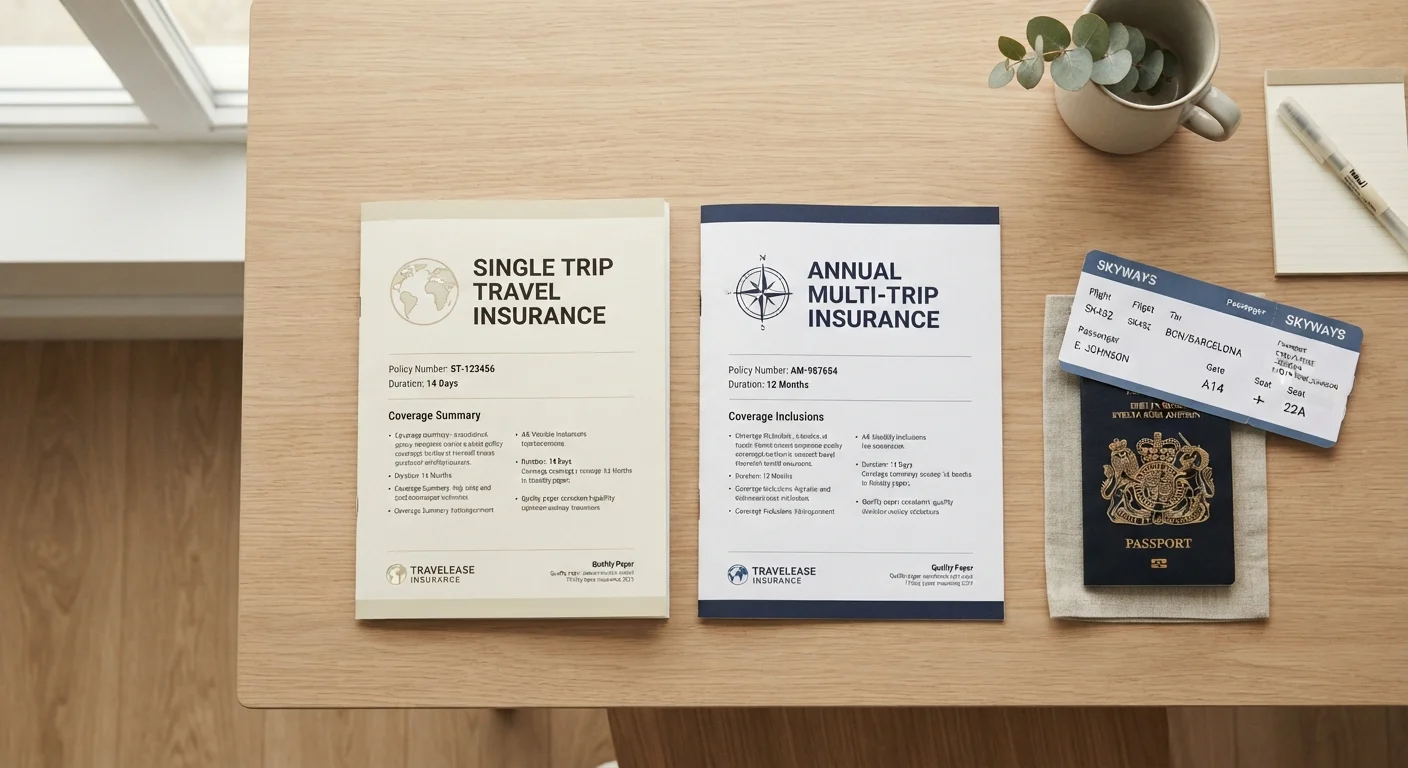
If you travel frequently, it's worth reviewing how single-trip and annual policies compare to determine which structure fits your travel habits. And if you're building a broader pre-departure financial plan, our pre-trip financial checklist covers how insurance fits alongside other money considerations before you board.
This article provides general informational content about travel insurance and is not a substitute for professional insurance advice. Policy terms, coverage limits, and exclusions vary significantly between providers and plans. Always read the full policy documents and verify current terms directly with a licensed insurer before purchasing.