The Coverage Gap Most Travelers Don't See Coming
Travel insurance feels like a safety net — until you file a claim and discover the thing that went wrong isn't covered. Most policies are more selective than their marketing suggests. Before you assume you're protected, it's worth reading the exclusions section carefully, not just the benefits summary.
This article focuses specifically on what standard travel insurance won't pay for. For a full breakdown of what policies typically do cover, see our plain-language coverage guide.
Common Exclusions Travelers Often Miss
Pre-Existing Medical Conditions
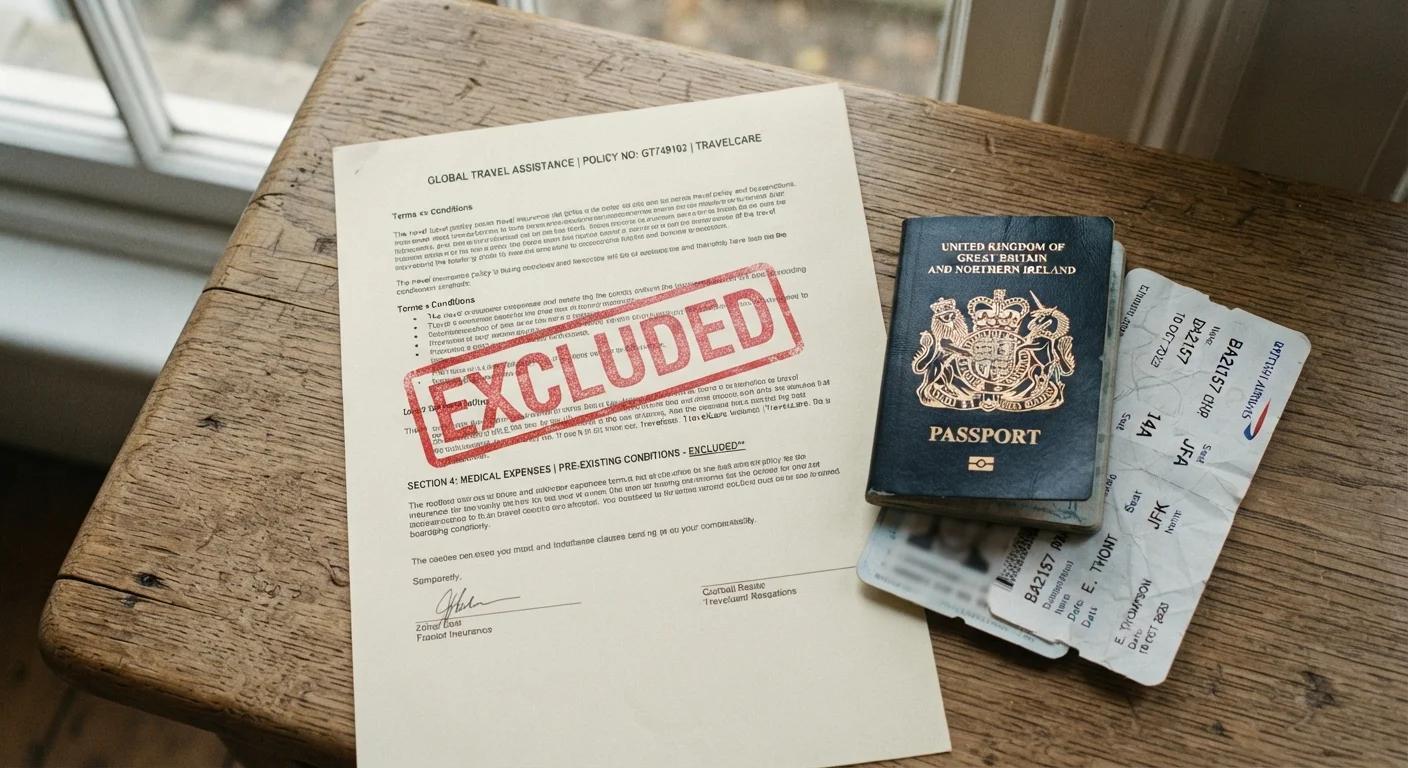
Most standard policies exclude medical claims arising from conditions you had before purchasing the policy. Insurers typically look back 60 to 180 days before the purchase date when evaluating whether a condition qualifies as pre-existing. Some policies offer a pre-existing condition waiver — but only if you buy coverage within a short window after your initial trip deposit, often 14 to 21 days. Miss that window and the waiver disappears.
Foreseeable Events
Insurance is designed to cover the unexpected. If a hurricane is already named and tracking toward your destination before you buy a policy, cancellation costs related to that storm will almost certainly be excluded. The same applies to civil unrest or political instability that was publicly known before your purchase date.
Extreme and Adventure Sports
Standard policies frequently exclude injuries sustained during activities classified as high-risk: skydiving, bungee jumping, mountaineering above a certain elevation, motorbike riding in some destinations, or off-piste skiing. If your trip includes adventure activities, look specifically for a policy with an adventure sports rider or endorsement.
Alcohol and Drug-Related Incidents
Claims that arise while you are intoxicated or under the influence of non-prescribed substances are excluded by virtually every policy. This includes medical treatment, accidents, and theft that occurs in those circumstances.
Mental Health and Pregnancy
Routine pregnancy care, childbirth, and mental health conditions are excluded from most standard travel insurance policies. Some insurers offer supplemental coverage, but it varies widely. If either applies to your situation, verify coverage terms explicitly before purchasing.
Pre-existing condition
A medical condition diagnosed, treated, or showing symptoms before the insurance policy was purchased. Insurers use a defined look-back period to determine whether a condition qualifies.
Exclusion
A specific situation, event, or circumstance that a policy explicitly does not cover. Exclusions are listed in the policy's terms and conditions.
Cancel for Any Reason (CFAR)
An optional policy upgrade that allows cancellation for reasons not covered by standard policies, typically reimbursing 50–75% of non-refundable costs under specific conditions.
Adventure sports rider
An add-on to a standard travel insurance policy that extends coverage to include higher-risk activities such as skydiving, mountaineering, or off-piste skiing.
Foreseeable event
An event that was publicly known or predictable before a policy was purchased, such as a named storm or an ongoing political crisis. Most insurers will not cover losses tied to foreseeable events.
Look-back period
The timeframe before a policy's purchase date that insurers examine when determining whether a medical condition is considered pre-existing. Periods typically range from 60 to 180 days.
What 'Cancel for Any Reason' Actually Means
Cancel for Any Reason (CFAR) coverage is often sold as the ultimate flexibility upgrade — and it does offer broader cancellation rights than standard policies. However, it typically reimburses only 50–75% of non-refundable trip costs, must be purchased within a set timeframe after booking, and requires you to cancel at least 48 hours before departure. It is not a full refund guarantee.
Understanding CFAR limitations matters especially when you're budgeting for a trip. Our pre-trip financial checklist walks through how to factor insurance costs into your overall travel budget before you commit.
How to Reduce the Risk of a Denied Claim
Reading the exclusions section of any policy before purchasing is the single most effective step you can take. Pay attention to these specific elements:
- Look-back periods for pre-existing conditions
- The definition of covered reasons for trip cancellation — this list is usually finite
- Activity exclusions and whether a rider is available
- Destination-specific exclusions, particularly for countries under travel advisories
- Deadlines for purchasing waivers and optional upgrades
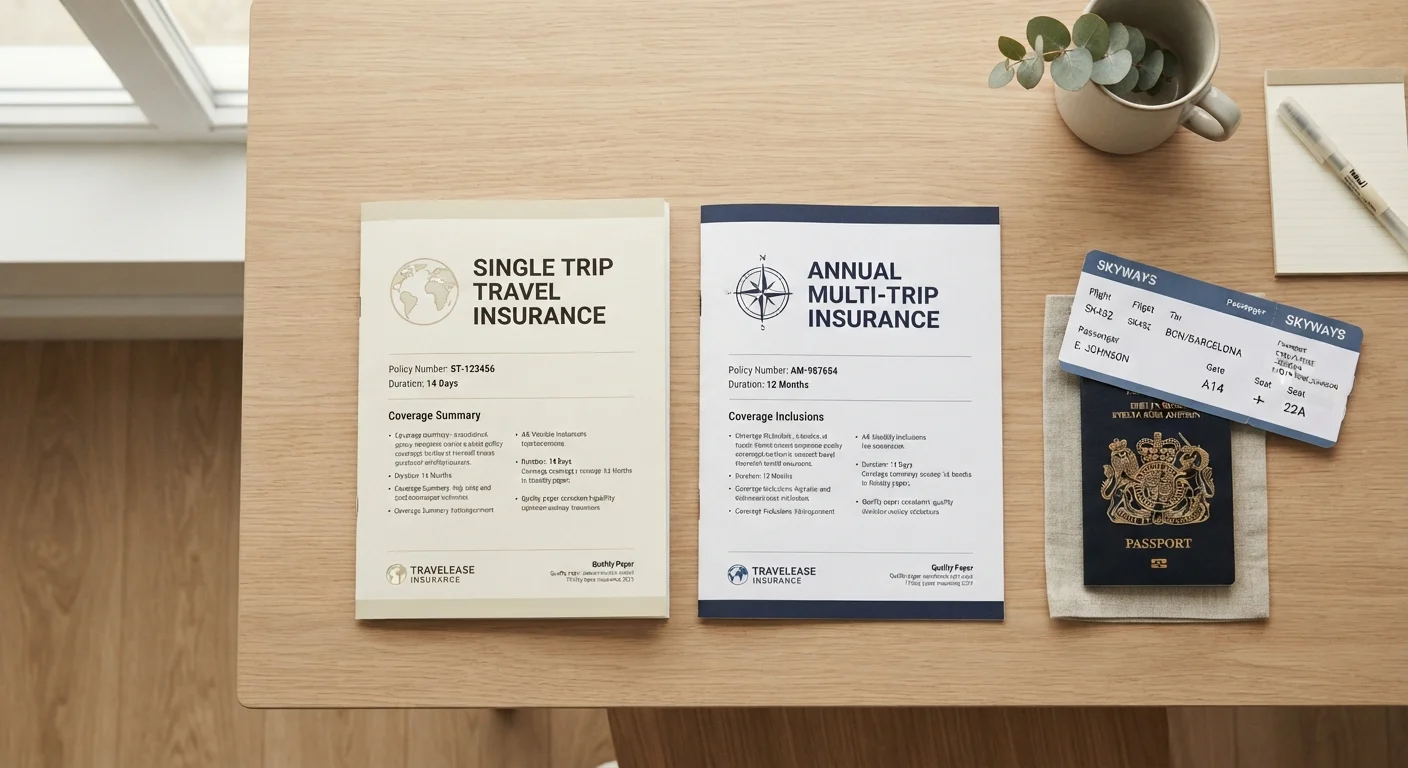
If you travel more than once a year, also consider whether a single-trip or annual policy better fits your pattern. Our comparison of single-trip vs. annual travel insurance can help clarify which structure makes sense for your situation.
This article is for general informational purposes only and does not constitute insurance or financial advice. Policy terms vary significantly between providers. Always read your policy documents carefully and consult the insurer or a licensed insurance professional with questions about your specific coverage.