From foreign transaction fees to travel insurance, run through this checklist to make sure your finances are in order before you board a single flight.
Key Takeaways
Notifying your bank before departure prevents your cards from being frozen abroad.
Foreign transaction fees can quietly add 1–3% to every purchase made overseas.
A travel emergency fund separate from your main trip budget can prevent financial crisis if plans change.
Carrying backup payment methods reduces risk if a card is lost, stolen, or declined.
Why Financial Prep Belongs on Your Pre-Trip To-Do List
Most travelers think hard about flights, hotels, and itineraries — and much less about the financial infrastructure that makes a trip actually work. The result is predictable: frozen debit cards, surprise fees, and no backup plan when something goes wrong. According to common patterns in first-time travel, money mismanagement is one of the leading causes of cut-short trips and post-vacation debt.
This checklist is designed to close those gaps. Whether you're heading abroad for the first time or just trying to travel more efficiently, running through these steps before you leave puts you in a fundamentally stronger position. For a deeper look at where trip budgets typically break down, see why trip budgets fall apart before departure.
Banking and Card Preparation
Notify your bank and credit card issuers of your travel dates and destinations so they don't flag legitimate charges as fraud and freeze your account.Must
Check whether your debit and credit cards charge foreign transaction fees, which typically run 1–3% per purchase, and identify which cards in your wallet don't charge them.Must
Confirm your cards use a widely accepted global payment network so they'll work at your destination's ATMs and merchants.Must
Locate at least one backup payment method — a second card or a small amount of local currency — in case your primary card is lost, stolen, or declined.Must
Write down your bank's international collect phone number (not the 800 number, which may not work abroad) in case you need to report a problem.Should
Cash and Currency
Research whether your destination is primarily cash-based or card-friendly, and plan your cash holdings accordingly.Must
Avoid exchanging currency at airport kiosks or tourist-area exchange counters, which typically offer the least favorable rates — plan to use an in-network ATM or your bank's exchange service instead.Should
Understand your ATM withdrawal limits and any per-transaction international fees so you can time withdrawals efficiently and minimize charges.Should
Carry a small amount of local currency for immediate arrival expenses such as transport, tips, or small vendors who don't accept cards.Nice to have
Budget and Emergency Fund
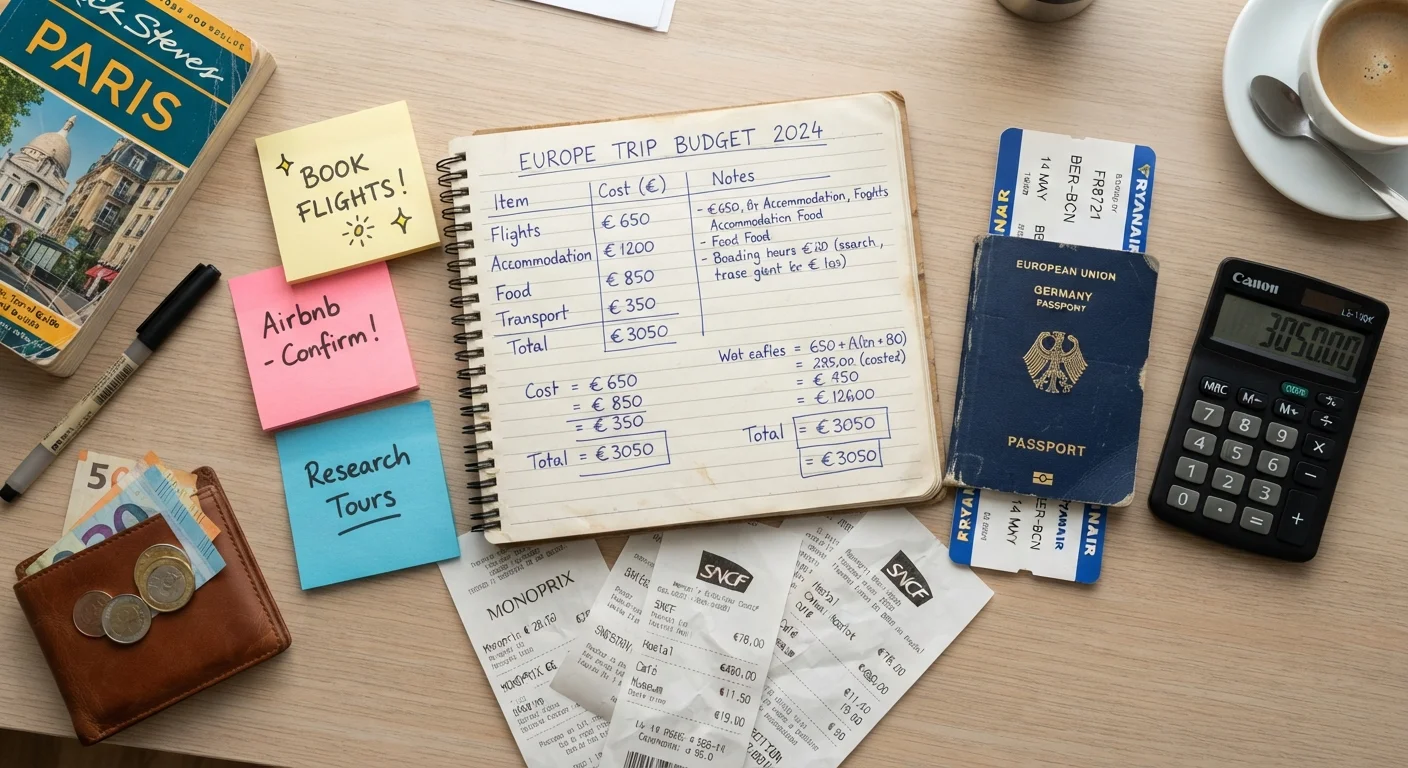
Build a written daily budget that includes accommodation, food, transport, activities, and a miscellaneous buffer of at least 10–15% for unexpected costs.Must
Set aside a dedicated travel emergency fund — separate from your spending budget — to cover scenarios such as a missed flight, medical copay, or last-minute rebooking.Must
Confirm you have a method to access emergency funds quickly if needed, such as a card linked to a savings account or a trusted contact at home who can send money.Should
Travel Insurance
Determine whether you need travel insurance by evaluating your trip cost, destination risk profile, and existing coverage through your health plan or credit card benefits.Must
Read the exclusions section of any policy carefully — common gaps include pre-existing conditions, adventure sports, and civil unrest, as outlined in what travel insurance won't pay for.Must
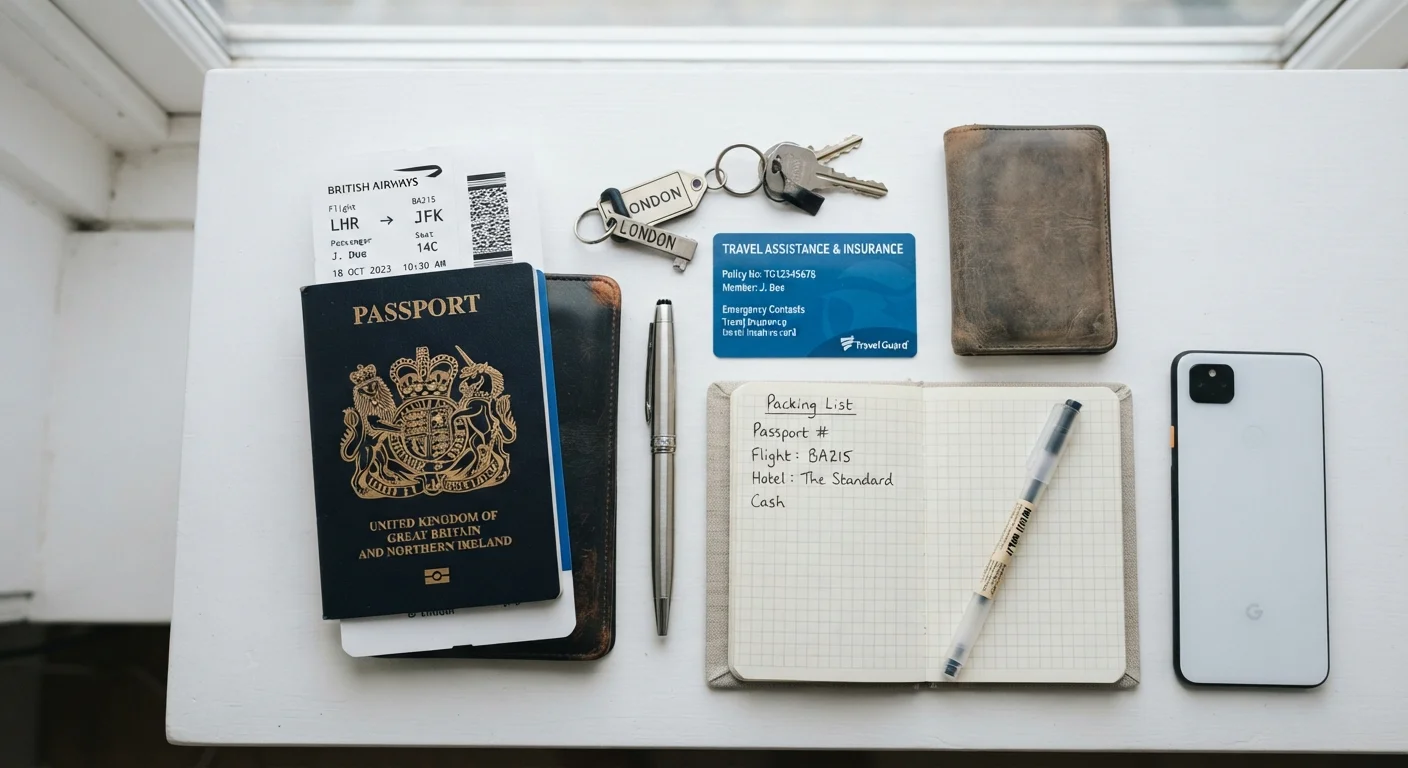
Save your policy number and the insurer's 24-hour emergency contact information somewhere accessible offline.Should
Bills and Recurring Payments
Schedule or automate any bill payments due during your trip — mortgage, utilities, subscriptions — so you don't miss them while traveling.Must
Review automatic renewals or subscriptions that could charge you unexpectedly while you're away and pause or cancel any you won't use.Nice to have
Confirm your home and renters insurance is active during your absence if you'll be leaving property unattended for an extended period.Nice to have
Tools You'll Need to Work Through This Checklist
Most of these steps require only a few accounts and documents you likely already have. Gather the following before you start so you can complete the checklist in one sitting.
Required
Bank account login credentials
Used to set travel notifications, check card limits, and verify foreign transaction fee policies.
Required
Credit and debit cards you plan to bring
Needed to identify which cards have foreign transaction fees and confirm they're active for international use.
Required
Written or digital trip budget
Provides the baseline spending plan against which you'll build your emergency fund and per-day limits.
Optional
Travel insurance policy documents
Required to verify coverage, note exclusions, and record emergency contact numbers before departure.
Required
List of recurring bills and due dates
Allows you to schedule payments in advance so nothing is missed while you're traveling.
Key Considerations Before You Begin
Opening New Credit Before Travel Carries Risk
Some travelers consider opening a no-foreign-fee credit card specifically for a trip. While this can be a practical long-term move, applying for new credit shortly before travel can affect your credit score and may not result in approval in time. Review the factors involved using our pre-application credit checklist before submitting any new application. This is general information, not personalized financial advice — consult a licensed professional for guidance tailored to your situation.
This checklist covers general financial preparation steps and is intended for informational purposes only. It is not personalized financial or legal advice. For decisions specific to your financial situation — such as opening new credit accounts or purchasing insurance products — consult a licensed financial professional.
Carrying only one card or relying entirely on mobile payments can leave you stranded if that method fails. Cards can be demagnetized, lost, or declined for technical reasons entirely unrelated to your balance. Always have at least one physical backup card and a small amount of local cash accessible in a separate location from your primary wallet.
Travel Smarter Editorial Team is the collective byline for our editorial team and contributor network. Articles published under this byline or an editorial pen name are researched, written, and reviewed according to our editorial standards for clarity, consistency, and independence before publication.
The content provided on our blog site traverses numerous categories, offering readers valuable and practical information. Readers can use the editorial team’s research and data to gain more insights into their topics of interest. However, they are requested not to treat the articles as conclusive. The website team cannot be held responsible for differences in data or inaccuracies found across other platforms. Please also note that the site might also miss out on various schemes and offers available that the readers may find more beneficial than the ones we cover.