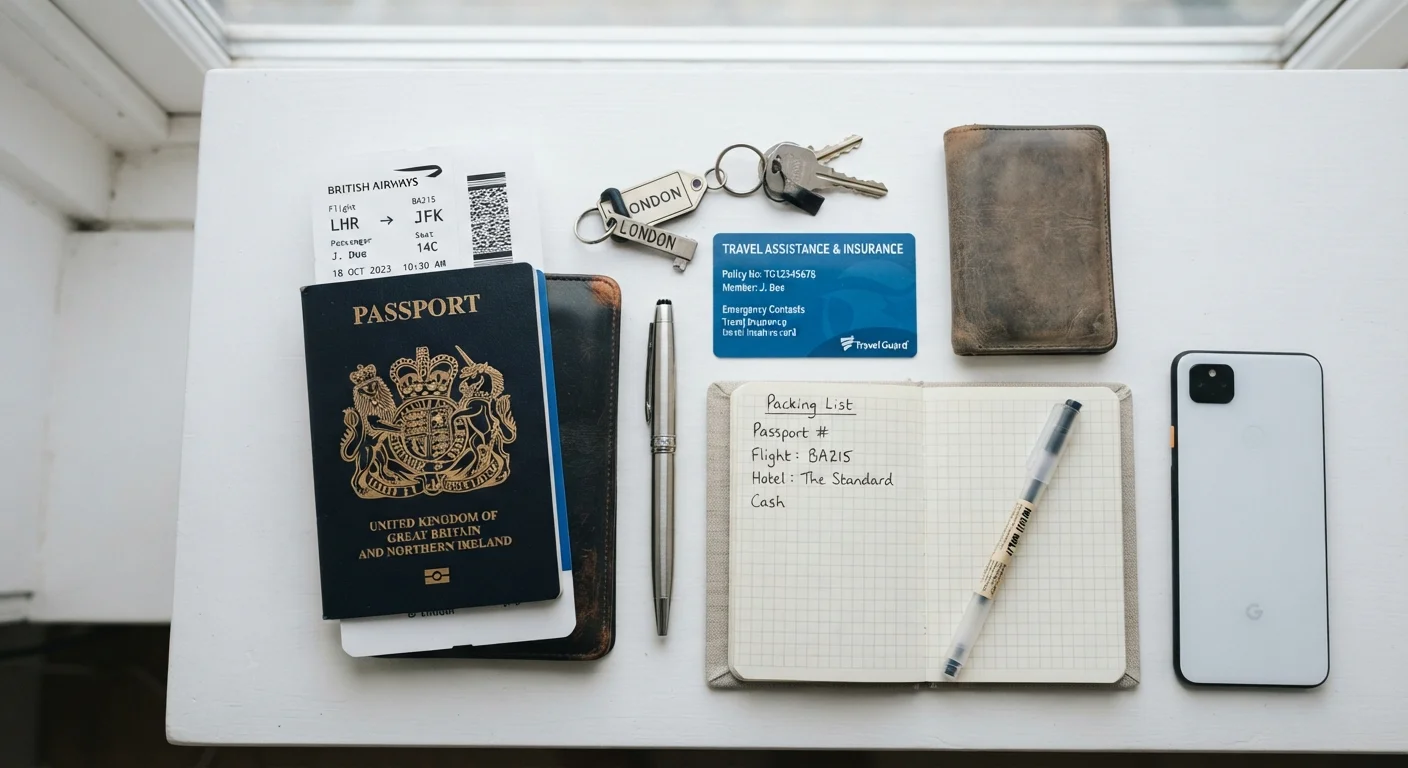
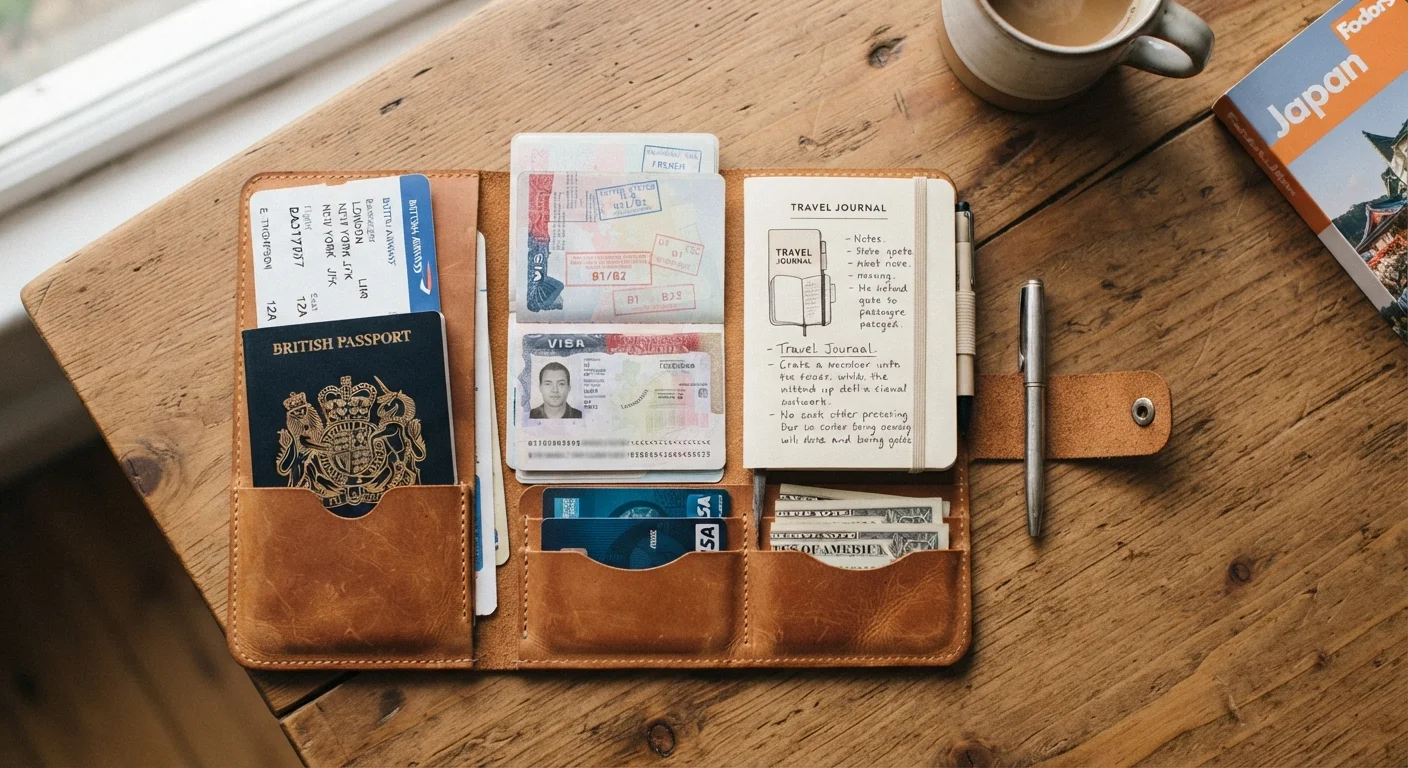
From passport to emergency contacts, this checklist covers every document you should gather, copy, and carry before flying abroad for the first time.
Key Takeaways
Your passport must be valid for at least six months beyond your travel dates for most destinations.
Carry both physical copies and secure digital backups of every critical document.
Visa requirements vary by country — verify them through official government sources well in advance.
Travel insurance documents and emergency contacts belong with your core travel papers.
Register your trip with the U.S. State Department's STEP program before you depart.
Why Documents Make or Break Your First Trip Abroad
The administrative side of international travel can feel overwhelming — but it doesn't have to be. Most first-time travelers focus on flights and hotels while underestimating how much weight a missing or expired document can carry. A passport left at home, a visa overlooked, or travel insurance details you can't locate during a medical emergency can derail an otherwise well-planned trip in minutes.
This checklist is built to eliminate those blind spots. Work through it at least four to six weeks before departure — some items, like passport applications or visa processing, can take weeks to resolve. For a broader look at everything involved in your first trip abroad, see our guide to traveling internationally for the first time.
Core Identity Documents
Confirm your U.S. passport is valid for at least six months beyond your return date — most countries enforce this rule at the border.Must
Apply for or renew your passport immediately if it doesn't meet validity requirements; standard processing can take 6–8 weeks or longer. See our passport application walkthrough for step-by-step guidance.Must
Carry a government-issued photo ID (such as a driver's license) as a secondary form of identification.Should
Visa and Entry Requirements
Research your destination country's visa requirements for U.S. passport holders using the U.S. State Department's official travel website.Must
Apply for any required visa well in advance, and carry your visa approval letter or stamp in an accessible part of your travel folder.Must
Check whether your destination participates in a visa-on-arrival or e-visa program and confirm the application process is complete before you fly.Must
Review any current entry health requirements (such as vaccination records or health declarations) through the destination country's official embassy website.Should
Flight and Accommodation Records
Print or download your complete flight itinerary, including outbound and return booking confirmation numbers.Must
Save hotel, hostel, or rental confirmation details with addresses — border agents may ask for proof of where you're staying.Must
Store all booking confirmations in both a printed folder and a cloud-accessible location you can reach without Wi-Fi.Should
Travel Insurance and Health Documents
Purchase travel insurance before departure and carry your policy summary card with the 24-hour emergency assistance phone number.Must
Bring a written list of any prescription medications you take, including the generic drug name, dosage, and your prescribing doctor's contact information.Should
Carry a copy of any required vaccination certificates — some destinations require proof of specific immunizations for entry.Should
Note your blood type and any major allergies on a small card stored with your travel documents.Nice to have
Financial Documents
Notify your bank and credit card issuers of your travel dates and destinations before you depart to prevent fraud blocks on your accounts.Must
Carry the international customer service numbers for your bank and credit cards — the number on the back of your card often doesn't work abroad.Must
Review foreign transaction fees and ATM policies for each card you plan to use. Our pre-trip financial checklist covers this in detail.Should
Emergency and Safety Records
Register your trip with the U.S. State Department's Smart Traveler Enrollment Program (STEP) at step.state.gov so the nearest embassy can reach you in an emergency.Must
Write down the address and phone number of the U.S. embassy or consulate in each country you're visiting and keep it in your travel folder.Must
Leave a copy of your full itinerary and photocopied documents with a trusted contact at home.Should
Store two or three emergency contacts (names, phone numbers, relationship) in both your phone and on paper.Must
Before you start gathering documents, make sure you have the right resources available. These aren't products to buy — they're systems and services that make the process smoother and safer.
Required
U.S. State Department Travel Website (travel.state.gov)
Verify passport validity rules, visa requirements by country, and current travel advisories for your destination.
Required
Smart Traveler Enrollment Program (STEP)
Register your trip with the nearest U.S. embassy so you can receive alerts and be contacted in an emergency.
Required
Password-protected cloud storage
Store digital copies of all critical documents in a secure location accessible from any device with internet access.
Required
Destination country's official embassy website
Confirm entry requirements, visa rules, and any health documentation needed directly from the issuing authority.
Optional
Travel document organizer or folder
Keep all physical documents — passport, itinerary, insurance, and emergency contacts — in one accessible, water-resistant sleeve.
Copies, Backups, and Smart Storage
Gathering documents is only half the job. How you store and protect them matters just as much. Experienced travelers keep one complete set of physical photocopies in a separate bag from the originals, and a second set stored digitally in a password-protected cloud folder or encrypted email to themselves.
Don't Store All Documents in One Place
Keeping your passport, cash, and all copies in a single bag means losing everything if that bag is lost or stolen. Divide your originals and copies between separate bags or pouches. If you're traveling with a companion, consider having each person carry copies of the other's key documents as an added safeguard.
At minimum, make physical copies of: your passport photo page, your visa (if applicable), your travel insurance summary, your itinerary, and your emergency contacts. For detailed strategies on keeping everything organized while you're on the road, see organizing your travel documents so nothing gets lost abroad.
This article provides general travel information for educational purposes. Entry requirements, visa rules, and travel advisories change frequently. Always verify current requirements through official U.S. government sources and the embassy or consulate of your destination country before traveling.
Travel Smarter Editorial Team is the collective byline for our editorial team and contributor network. Articles published under this byline or an editorial pen name are researched, written, and reviewed according to our editorial standards for clarity, consistency, and independence before publication.
The content provided on our blog site traverses numerous categories, offering readers valuable and practical information. Readers can use the editorial team’s research and data to gain more insights into their topics of interest. However, they are requested not to treat the articles as conclusive. The website team cannot be held responsible for differences in data or inaccuracies found across other platforms. Please also note that the site might also miss out on various schemes and offers available that the readers may find more beneficial than the ones we cover.