
Getting Your Documents in Order
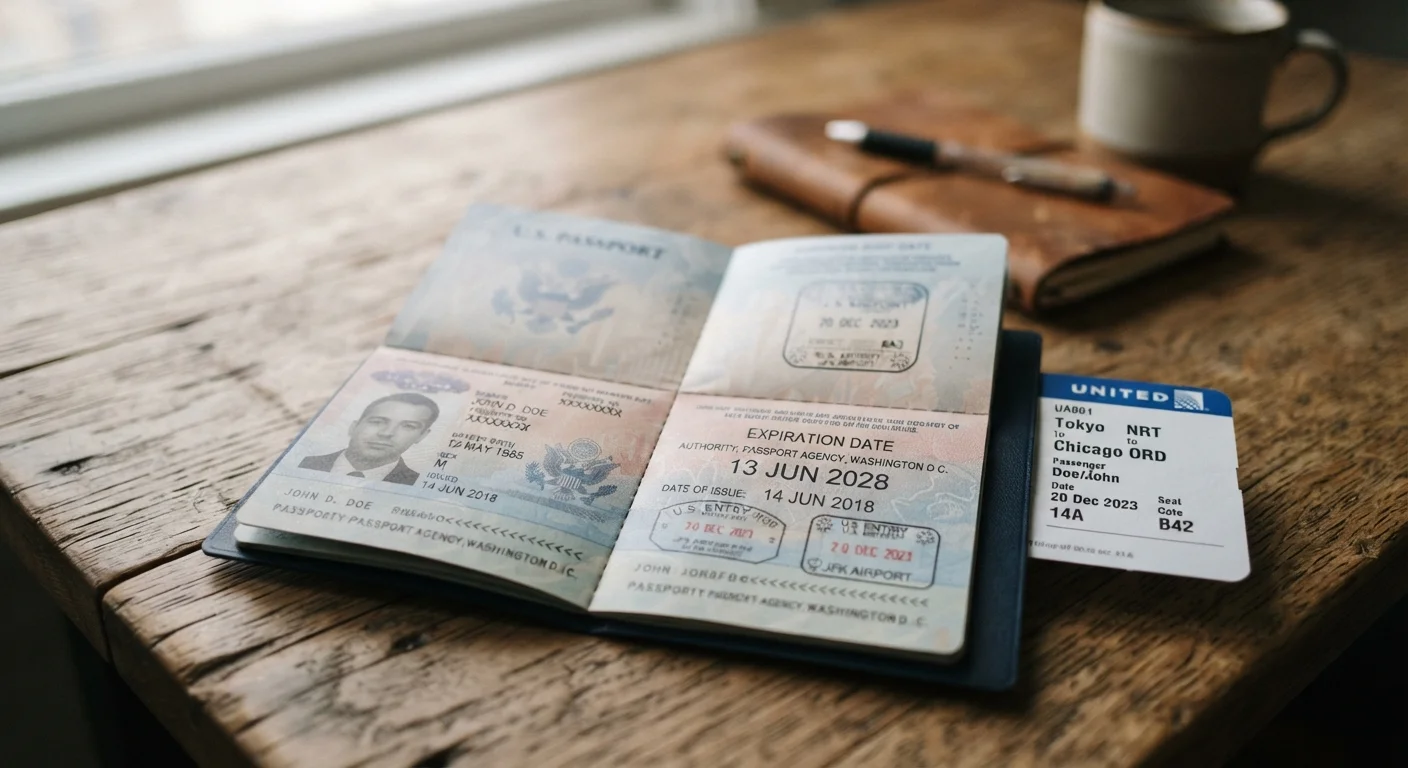
The foundation of any international trip is a valid passport. If you don't have one, apply as early as possible — the U.S. State Department can take weeks to process standard applications, and this timeline can extend during busy seasons. If your passport is expiring soon, don't assume it will be accepted. Many countries enforce a 6-month validity rule, meaning your passport must be valid for at least six months beyond your planned return date. Our guide on passport validity rules explains which destinations enforce this and what it means for your trip.
Beyond your passport, organize these before departure:
- A printed and digital copy of your passport photo page
- Travel insurance documents and emergency contact numbers
- Booking confirmations (flights, hotels, tours)
- Any required visas or entry permits
See the full checklist in our documents, cards, and contacts guide for a complete pre-departure reference.
Passport validity rule
A requirement by many countries that your passport must remain valid for a set period — often 3 to 6 months — beyond your planned departure from that country.
Visa
An official authorization, usually stamped or affixed in your passport, that allows you to enter a specific country for a defined period and purpose.
Travel medicine clinic
A specialized clinic where healthcare providers advise travelers on destination-specific health risks, required vaccinations, and preventive medications.
STEP (Smart Traveler Enrollment Program)
A free U.S. State Department service that registers your overseas trip with the nearest embassy or consulate, enabling them to reach you in a local or national emergency.
Foreign transaction fee
A fee charged by some banks or credit card companies — typically 1–3% — on purchases made in a foreign currency or through a foreign bank.
Emergency travel document
A temporary passport-like document issued by a U.S. embassy or consulate to citizens who have lost or had their passport stolen while abroad, allowing them to return home.
Understanding Entry Requirements
A valid passport is necessary but not always sufficient. Entry requirements differ meaningfully by destination and can include visas, health documentation, financial proof, and confirmed onward travel. Failing to meet any one of these can result in being denied boarding at your departure airport — not just at the border.
For visa requirements, check the official embassy or consulate website of your destination country. U.S. citizens enjoy visa-free or visa-on-arrival access to many countries, but this isn't universal. Some destinations require applications submitted weeks in advance.
Our article on understanding entry requirements covers the full range of what destinations can ask for — including health declarations and proof of sufficient funds.
Double-Check Requirements Before You Book
Entry requirements can change with little notice due to health regulations, diplomatic shifts, or policy updates. Always verify current requirements directly through the destination country's official embassy website or the U.S. State Department's travel information pages — not third-party booking sites. Do this before you purchase non-refundable tickets.
Money, Currency, and Budgeting Abroad
Managing money internationally is simpler than it sounds, but it does require a few intentional steps before you leave. First, notify your bank and credit card companies of your travel dates and destinations — failing to do so can trigger fraud alerts that freeze your card at the worst possible moment.
For currency, consider these options:
- ATMs abroad typically offer competitive exchange rates, though fees vary by bank and ATM operator.
- Currency exchange kiosks at airports are convenient but usually offer worse rates.
- Credit cards with no foreign transaction fees can reduce costs, but confirm this with your provider.
Carry a modest amount of local cash for small purchases, tipping, and places that don't accept cards. For broader trip budgeting strategies, the Travel Budgeting hub offers practical frameworks for estimating and managing spending abroad.
Health Prep Before You Fly
Health preparation for international travel goes beyond packing a first-aid kit. Depending on your destination, you may need specific vaccinations — and some countries require proof of vaccination as a condition of entry. Consult a travel medicine clinic or your primary care physician at least 6–8 weeks before departure, as some vaccine series require multiple doses spaced over time.
Common considerations include:
- Routine vaccines (ensuring you're up to date)
- Destination-specific vaccines (such as typhoid, hepatitis A, or yellow fever)
- Malaria prevention for certain regions
- Traveler's diarrhea precautions
Travel insurance with medical coverage is strongly worth considering. Overseas medical care can be expensive, and your standard U.S. health insurance may offer limited or no coverage abroad. Review any policy carefully before purchasing.
This article provides general travel health information and is not a substitute for personalized medical advice. Consult a qualified healthcare professional for guidance specific to your health history and destination.
What to Do When Things Go Wrong
Even well-planned trips encounter problems. Knowing your options in advance makes stressful situations far more manageable.
Lost or stolen passport: Report it to local police immediately, then contact the nearest U.S. embassy or consulate. They can issue an emergency travel document. This process is much faster if you have a stored copy of your passport's photo page. Our full guide on what to do if you lose your passport walks through every step.
Medical emergency: Contact your travel insurance provider's emergency line. Most policies include 24/7 assistance. If you're hospitalized, your insurer can coordinate with local providers and arrange medical evacuation if necessary.
Flight disruptions: Know your rights. Airlines operating in or out of certain countries are subject to compensation rules for delays or cancellations. Check with the airline and your travel insurance policy.
Before every trip, register with the U.S. State Department's Smart Traveler Enrollment Program (STEP) — it's free and allows the embassy to contact you in an emergency. For more pre-departure habits that reduce risk, see what experienced travelers do before every trip.
Don't Rely Solely on Word of Mouth
Entry rules, visa fees, and vaccination requirements change frequently. A friend's experience from two years ago may no longer be accurate. Always verify current requirements through official government sources — the U.S. State Department and the destination country's embassy — before you travel.