
Why Travel Pace Is Also a Financial Decision
Most travelers think of pace in terms of energy — how tired they'll be, how much they'll see. But how fast you move between destinations is also one of the most direct controls you have over your total trip cost. Every city change triggers a fresh round of expenses: transit tickets, booking fees, new local orientation costs, and often a higher nightly rate for a short stay.
Understanding this dynamic is a core part of building any honest travel budget. As we break down in our guide to travel spending categories, transportation and lodging together routinely represent 60–70% of a trip's total cost — and both are heavily shaped by how frequently you move.
This comparison focuses specifically on what each travel style actually costs, where savings appear, and where hidden expenses tend to accumulate.
Where Slow Travel Saves (and Where It Doesn't)
Slow travel — spending a week or more in a single location before moving on — generates savings in predictable places. Lodging is the clearest example: many short-term rental hosts and guesthouses offer meaningful weekly or monthly discounts compared to nightly rates. A place that costs $90 per night for a two-day stay might run $65 per night for a ten-day booking.
Inter-city transport costs collapse almost entirely. Instead of buying five or six train or bus tickets across a two-week trip, a slow traveler might purchase one or two. That difference can easily represent $150–$400 in savings on a European or Southeast Asian itinerary.
Daily food costs also tend to fall. Once you're settled into a neighborhood, you find the affordable local spots, visit markets, and cook occasionally — behaviors that are impractical when you're constantly checking in and out. The trade-offs behind budget travel decisions piece notes this pattern well: familiarity with a place is itself a cost-reduction tool.
The genuine cost risk with slow travel is psychological: more unstructured time can lead to more spending. Without a packed schedule, it's easy to fill days with paid activities, extra dining out, or spontaneous day trips that weren't budgeted.
| Criterion | Slow Travel | Packed Itineraries |
|---|---|---|
| Nightly lodging rate | Lower (long-stay discounts common) | Higher (short-stay rates apply) |
| Inter-city transit costs | Minimal (1–2 moves) | High (multiple tickets per trip) |
| Daily food spend | Lower (local market familiarity) | Higher (convenience spending) |
| Booking flexibility | Easier to extend or adjust | Locked in across multiple legs |
| Risk of impulse spending | Moderate (unstructured time) | Lower (schedule fills the day) |
| Total trip length needed | Longer (minimum 1–2 weeks) | Works in shorter windows |
Where Packed Itineraries Quietly Add Up
A packed itinerary — visiting four or five cities in ten days, say — concentrates costs in ways that aren't always obvious when planning. Each additional destination typically requires a new transit purchase, a fresh set of booking fees, and sometimes airport or station transfers that cost more than expected.
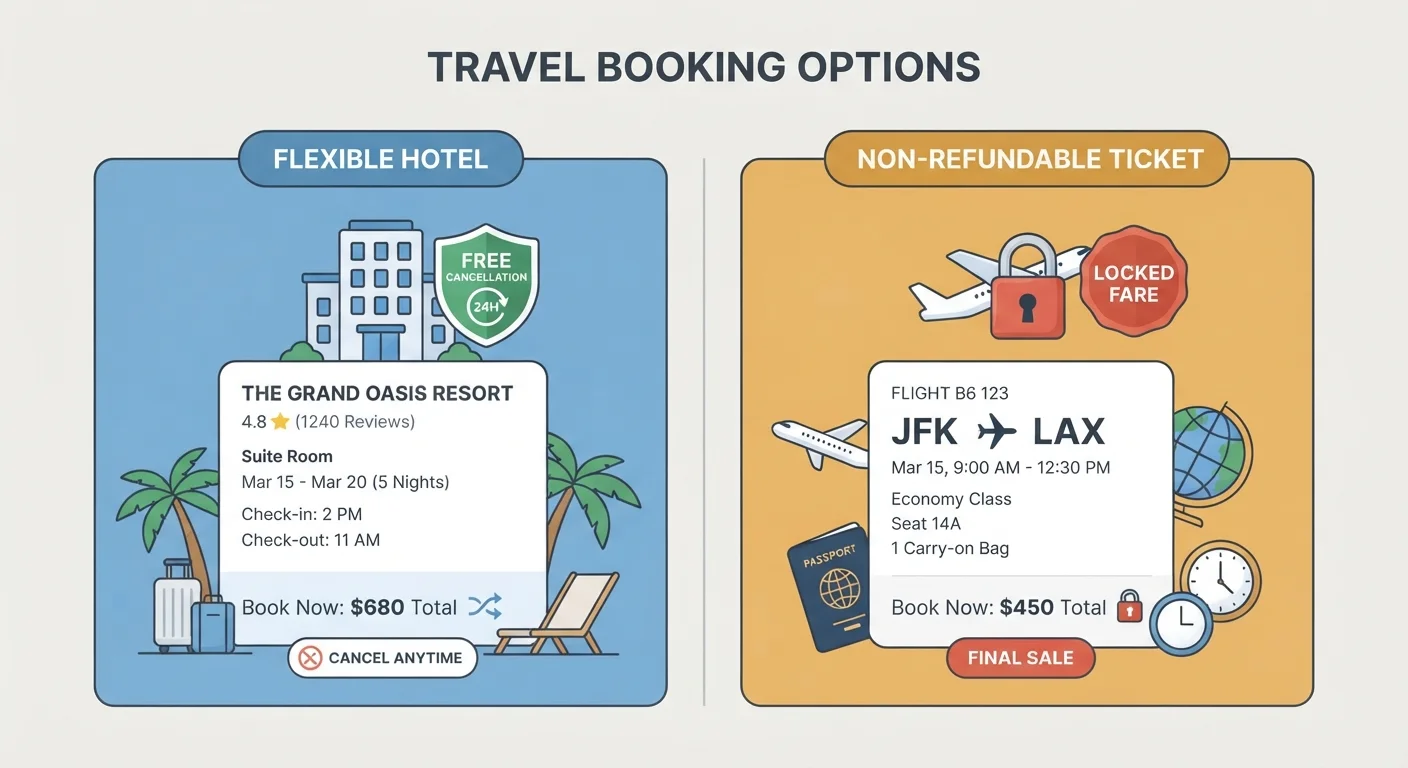
Short lodging stays rarely qualify for discounted rates, and last-minute flexibility to extend a stay is limited when the next booking is already confirmed. As we explain in our comparison of flexible vs. non-refundable bookings, locking in multiple non-refundable segments back-to-back also concentrates your financial risk if plans change.
That said, packed itineraries are not inherently wasteful. If your time is genuinely constrained — a 7-day vacation window with specific destinations to cover — optimizing within that structure is more realistic than forcing a slow-travel model that doesn't fit your schedule. The key is accounting for every transit cost up front rather than discovering them mid-trip.
60–70%
Share of travel budget spent on lodging and transport
Industry travel budget breakdowns consistently show accommodation and transportation dominate trip costs, making pace a primary financial lever.
15–30%
Typical long-stay lodging discount vs. nightly rate
Many short-term rental platforms and guesthouses offer weekly or monthly rate reductions in this range compared to standard nightly pricing.
The Variables That Shift the Math
Three factors determine which style actually costs less for any given traveler:
- Destination cost tier: In high-cost destinations like Scandinavia or Japan's major cities, slow travel's lodging discounts are more valuable because base prices are higher. In lower-cost regions, the savings gap narrows. See our overview of destination cost tiers for a fuller breakdown.
- Group size: Larger groups can share accommodation costs in ways that change the per-person math significantly. Our solo vs. group trip planning comparison covers how group dynamics affect budget decisions.
- Personal spending behavior: A disciplined planner can keep a packed itinerary lean. An impulsive spender will find more opportunities to overspend in slow travel's unstructured days. Neither style automatically controls the person inside it.
The guide to building an itinerary that doesn't exhaust you is worth reading alongside this comparison — exhaustion itself is a spending trigger, and overpacked schedules often produce expensive recovery meals, taxis instead of transit, and impulsive splurges.
This article is for general informational purposes only and does not constitute personalized financial or travel advice. Costs, availability, and conditions vary by destination and change over time — always verify current pricing and entry requirements through official sources before traveling.