
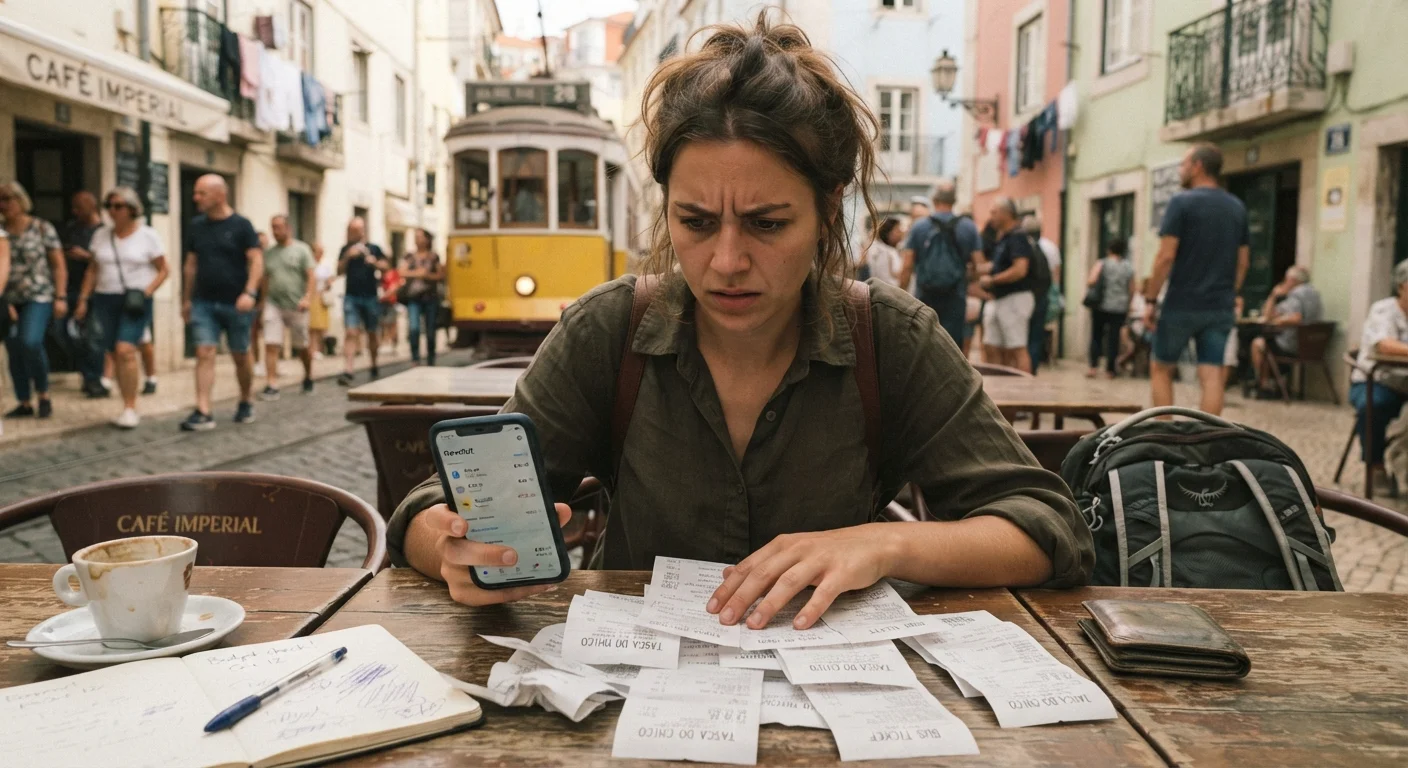
The Pattern Behind Mid-Trip Overspending
Travel budgets rarely collapse all at once. They erode gradually — a pricier dinner here, an unplanned taxi there, a souvenir that seemed reasonable in the moment. By the time most travelers notice the damage, they're already in their final days scrambling to cut back.
The frustrating part is that this pattern is predictable. If you've ever returned from a trip wondering where your money went, you're not bad at math — you're experiencing a set of very common behavioral and planning failures that affect nearly every budget traveler at some point.
Understanding why overspending happens mid-trip is the first step to stopping it. If you haven't yet built your spending plan, start with the core budgeting concepts before departure — what happens on the road reflects what was (or wasn't) planned at home.
Tracking spending only at the end of the trip rather than daily.
Why it happens: Travelers are in vacation mode and don't want to think about money in real time. Reviewing finances feels like something to handle later.
Underestimating how much food and drink actually cost at the destination.
Why it happens: Pre-trip research often focuses on headline costs like flights and hotels. Meal costs — especially in tourist-heavy areas or cities with high prices — are frequently guessed rather than researched.
Treating the credit card as a separate resource from the travel budget.
Why it happens: When cash runs low, a credit card feels like a reset button. The psychological separation between swiping and spending makes it easy to forget that card charges still count against your budget.
Skipping the contingency fund and assuming the original budget will be exact.
Why it happens: Travelers either forget to include a buffer or cut it intentionally to make the trip seem more affordable on paper. A tight budget feels manageable until the first unexpected cost arrives.
Letting itinerary gaps fill with unplanned (and often expensive) activities.
Why it happens: Boredom and spontaneity are powerful on vacation. Without planned low-cost options ready, the path of least resistance tends to be pricier tourist experiences or retail browsing.
Ignoring small, frequent charges like convenience fees, resort fees, and transaction costs.
Why it happens: These charges are individually small and easy to dismiss, but they compound quickly across a multi-day trip. A $3 ATM fee five times, a $15 resort fee nightly, and a $5 luggage storage charge add up to real money.
How to Stay on Track When You're Actually Traveling
Knowing the mistakes is half the battle. The other half is building simple systems that work when you're tired, distracted, and genuinely enjoying yourself.
~$600
Average vacation overspend per traveler
Surveys by multiple U.S. financial education organizations have found that a significant share of American travelers spend several hundred dollars more than planned on a typical vacation.
3 in 5
Travelers who don't track spending daily
Travel industry and personal finance surveys consistently show that the majority of leisure travelers do not monitor their spending against a budget while on the road.
Check your spending daily, not weekly
A two-minute daily check — comparing what you spent against your daily allowance — catches drift before it compounds. Spreadsheet apps, note apps, or dedicated travel-budget tools all work; consistency matters more than the tool you choose.
Separate your budget by category, not just total
A lump-sum daily budget hides imbalances. If you know you have $60/day for food and $30/day for transport, you'll make better trade-offs than if you're watching one undifferentiated number. The standard spending categories — transport, lodging, food, activities, and buffer — give you a reliable structure to start from.
Build your buffer before you need it
A contingency of roughly 10–15% of your total trip budget, set aside before departure, is your first line of defense against unplanned costs. Without it, every unexpected expense comes directly out of money already allocated elsewhere. This is especially important if you're traveling internationally, where exchange-rate fluctuations and unfamiliar pricing can catch you off guard.
Overspending on vacation shares a lot of DNA with everyday budget failures. The small spending leaks that derail a household budget — convenience charges, impulsive add-ons, rounding up — work exactly the same way on the road. Recognizing that overlap makes both problems easier to manage.
A well-planned itinerary also helps contain costs indirectly. When your days have structure, you're less likely to fill gaps with expensive impulse decisions. The itinerary-building guide walks through how to structure days without overpacking them — a balance that protects both your energy and your wallet.
This article is for general informational purposes only and does not constitute financial advice. For guidance tailored to your personal financial situation, consult a qualified financial professional.