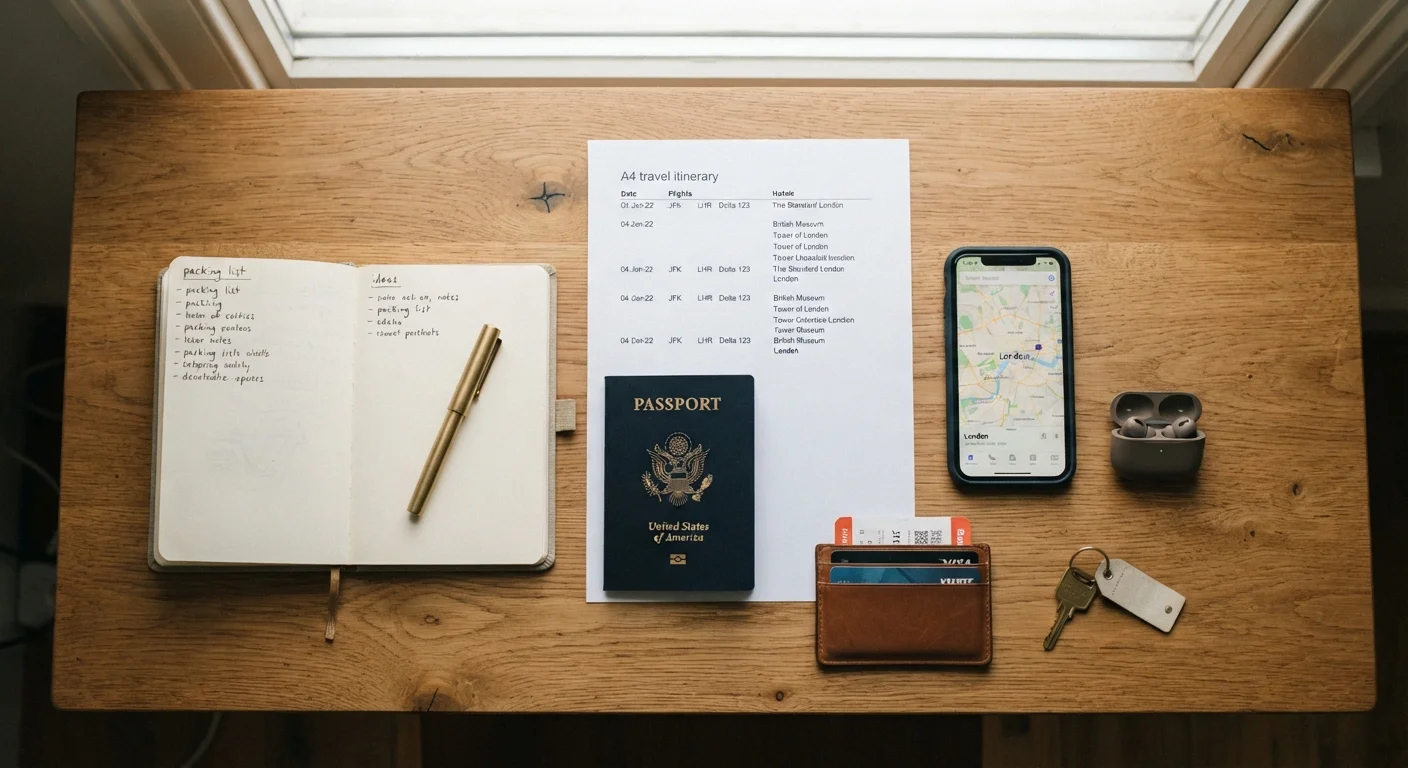

Why Most Trip Stress Is a Planning Problem
The majority of travel frustrations — overspending, missed experiences, exhausting itineraries — trace back not to bad luck but to skipped or misordered planning steps. People tend to jump straight to booking once excitement kicks in, bypassing the foundational decisions that make every later choice easier.
A well-planned trip isn't necessarily an elaborate one. Even a simple weekend getaway benefits from working through the same core stages in the same order. What changes is the depth at which you engage each stage — not whether you engage it at all.
Think of trip planning as a funnel. At the top: broad choices (destination, timeframe, budget). At the bottom: granular logistics (daily schedule, packing list, contingency plans). Decisions made at the top of the funnel constrain and inform everything below. Skipping ahead creates contradictions you'll have to untangle under pressure.
Entry Requirements Change — Always Verify Officially
Visa rules, vaccination requirements, and entry conditions can change on short notice. No article, travel blog, or third-party site should be your final source on these details. Always check the official government websites of both your home country and your destination country before making any commitments. The U.S. State Department's travel portal is a reliable starting point for Americans traveling abroad.
The Five Core Stages of Any Trip
Regardless of destination or duration, every successful trip moves through five stages. Understanding what belongs in each one prevents overlap, gaps, and rushed decisions.
1. Research
This stage is about gathering information before committing to anything. Explore visa requirements, entry conditions, typical costs, and seasonal considerations for your destination. Understand what kind of trip you're planning — city-focused, outdoor, cultural, relaxing — so later decisions align with your actual goals. Always verify entry and safety requirements directly with official government sources, as conditions change.
2. Budgeting
Before booking a single thing, establish what you can spend and how it breaks down across categories: transportation, accommodation, food, activities, and a contingency buffer. This stage determines the shape of everything that follows. See the travel budgeting framework for a detailed approach to estimating and tracking costs. If you're newer to managing money intentionally, budgeting basics offers foundational frameworks that apply directly to travel saving.
3. Booking
Only after research and budgeting should you start confirming reservations. Work from the hardest-to-change items outward: flights and long-distance transport first, then accommodation, then activities. Flexibility is valuable — understand cancellation policies before you pay. For a sequenced walkthrough of what to book and when, your pre-trip roadmap covers the full order of operations.
4. Preparation
Preparation is everything between booking and departure. It includes building your itinerary, handling documentation (passport validity, travel insurance, any required vaccinations), packing, and confirming reservations. This is also when experienced travelers register with their embassy and set up international payment options. The pre-departure habits of experienced travelers outlines what often gets skipped here.
5. Post-Trip Debrief
Most travelers skip this stage entirely. A 30-minute review after returning — comparing actual spending to budget, noting what worked, documenting what to do differently — compounds in value over time. Each trip becomes the foundation for a smarter next one.
Sequence Your Decisions, Don't Just List Them
A planning checklist only works if items are completed in the right order. Before you open a booking site, make sure your destination, rough dates, and total budget are confirmed. Everything downstream — accommodation type, activity choices, packing needs — follows from those three anchors. Reversing the order typically costs money and creates stress.
Putting the Stages Into Practice
The staged model isn't a rigid checklist — it's a sequence that keeps decisions appropriately ordered. Within each stage, you have significant flexibility. The key constraint is that you shouldn't move to stage three (booking) without completing stage two (budgeting), and you shouldn't start stage two without enough information from stage one to make realistic estimates.
For first-time international travelers, stages one and two often take longer than expected — and that's appropriate. Rushing through research to get to the booking stage is where expensive mistakes happen.
Once you have a destination confirmed and a budget in place, building a balanced itinerary becomes the next practical challenge. Overpacked schedules are among the most common trip regrets, and they're entirely preventable with deliberate day-by-day planning.
For a comprehensive, stage-by-stage planning guide that applies this anatomy to a real trip from first idea through departure, see From Idea to Departure.
40%
Travelers who report overspending on a trip
Surveys by travel industry researchers consistently find that roughly four in ten leisure travelers exceed their intended trip budget, most commonly due to under-planning in the budgeting stage.
6–8 weeks
Average time needed for domestic trip planning
Travel planning guides from major tourism organizations suggest six to eight weeks as a practical minimum for domestic trips to allow for booking flexibility and preparation.
3–6 months
Recommended lead time for international travel
U.S. State Department and travel advisors generally recommend beginning international trip planning three to six months ahead to accommodate passport, visa, and vaccination timelines.