
Why the Purchase Price Is Only Part of the Story
Buying a car feels like crossing a finish line. You've compared models, negotiated the price, and signed the paperwork - but the financial commitments are just getting started. For young homeowners already managing a mortgage, utility bills, and everyday expenses, car costs that weren't clearly spelled out at the dealership can land hard.
The expenses below don't show up on the window sticker, and several of them are recurring - meaning they quietly drain your budget month after month or year after year. Understanding them in advance is the difference between owning a car confidently and being constantly caught off guard. For a broader view of what vehicle ownership actually costs annually, see The True Cost of Owning a Car Beyond the Monthly Payment.
State registration fees and annual renewals
Most buyers anticipate paying sales tax on a vehicle, but the full stack of title fees, registration costs, and documentary charges can add several hundred dollars to your closing costs - and then come back every year. Registration renewal fees are tied to your state's formula, which may factor in vehicle weight, age, or value. In some states, annual renewals cost under $50; in others, they exceed $200 for newer vehicles.
For a detailed breakdown of what to expect by location, see Vehicle Registration Fees, Taxes, and Title Costs. The key point: budget for this as a recurring annual expense, not a one-time closing cost.
Registration renewals hit every year - and in some states, they cost more than $200.
Gap insurance - and whether you actually need it
Gap insurance (Guaranteed Asset Protection) covers the difference between what you owe on your auto loan and what your car is actually worth if it's totaled or stolen. Because new vehicles depreciate quickly - often losing a significant portion of value in the first year - this coverage can be genuinely valuable if you financed with a small down payment or a long loan term.
The catch: dealerships often sell gap coverage at a significant markup. Your auto insurer may offer the same protection for considerably less, and some lenders bundle it into the loan terms. Before agreeing to a gap policy at the dealer, check whether your existing insurer offers it and compare the total cost over your loan term, not just the monthly add-on.
Gap insurance can be worth having - but buying it through your own insurer is often cheaper than the dealer's offer.
Roadside assistance plans
Roadside assistance plans are routinely offered at the dealership, through insurance add-ons, and as standalone subscriptions. Before you pay for one, check what you already have. Many auto insurance policies include basic roadside coverage. Some credit cards offer it as a cardholder benefit. If your vehicle is new, the manufacturer warranty may include it for a set number of years.
Paying for multiple overlapping roadside plans is one of the most common small spending leaks for new car owners. Audit what you have, pick the coverage that fits your driving patterns, and cancel duplicates.
Many drivers unknowingly pay for roadside assistance two or three times through overlapping plans.
Fuel costs based on real-world driving
EPA fuel economy ratings are measured under controlled test conditions that rarely match everyday driving. City traffic, highway speeds, cargo weight, air conditioning use, and seasonal temperature changes all affect how far a gallon actually takes you. If you're budgeting based on the window sticker's MPG figure, you may be underestimating your monthly fuel spend by a meaningful margin.
A practical approach: track your actual fuel consumption over your first two or three fill-ups, then calculate a realistic monthly fuel budget based on your typical driving distance and local gas prices. This number will shift with your commute and gas prices, so revisit it seasonally.
Real-world fuel economy often falls noticeably short of the EPA-rated figure on the window sticker.
Routine maintenance you can't defer indefinitely
Oil changes, tire rotations, air filter replacements, and brake inspections are predictable costs - but they catch many first-time owners off guard simply because they aren't tied to a monthly bill. The timing varies by vehicle and driving conditions, but ignoring scheduled maintenance doesn't eliminate the cost; it defers it and often amplifies it. A missed timing belt service, for instance, can turn a scheduled expense into an engine repair.
The Car Maintenance hub covers the essential upkeep tasks worth understanding and scheduling. Building these costs into your annual budget - rather than treating them as surprises - is one of the most straightforward ways to protect both your vehicle and your finances.
Deferred maintenance doesn't eliminate costs - it multiplies them.
Parking permits, tolls, and urban fees
If you've moved into a city, dense suburb, or a neighborhood with permit-only parking, these costs can add up in ways that feel invisible until you're paying them every month. Residential parking permits, monthly garage fees, toll roads on your daily commute, and congestion charges in some metro areas are all real recurring expenses that don't appear in most car ownership estimates.
Before assuming your new car fits neatly into your housing budget, map out where you'll actually park - both at home and at work - and factor those costs in. In some urban areas, monthly parking alone rivals a car payment.
In dense urban areas, monthly parking costs can rival a car loan payment.
Depreciation as a real financial cost
Depreciation is the one expense that requires no invoice and issues no bill - but it's typically the largest single cost of vehicle ownership. A new car can lose a substantial portion of its market value in the first few years, meaning the gap between what you paid and what the car is worth grows steadily. This matters when you eventually sell or trade in, and it affects how much equity you're actually building - or losing - over time.
First-time buyers who understand depreciation make better decisions about loan terms, down payments, and whether to buy new versus used. For a direct comparison, Owning an Older Car vs. a Newer One breaks down where the real cost differences lie.
Depreciation issues no invoice, but it's typically the single largest cost of owning a new vehicle.
Build a Budget Before the Bills Arrive
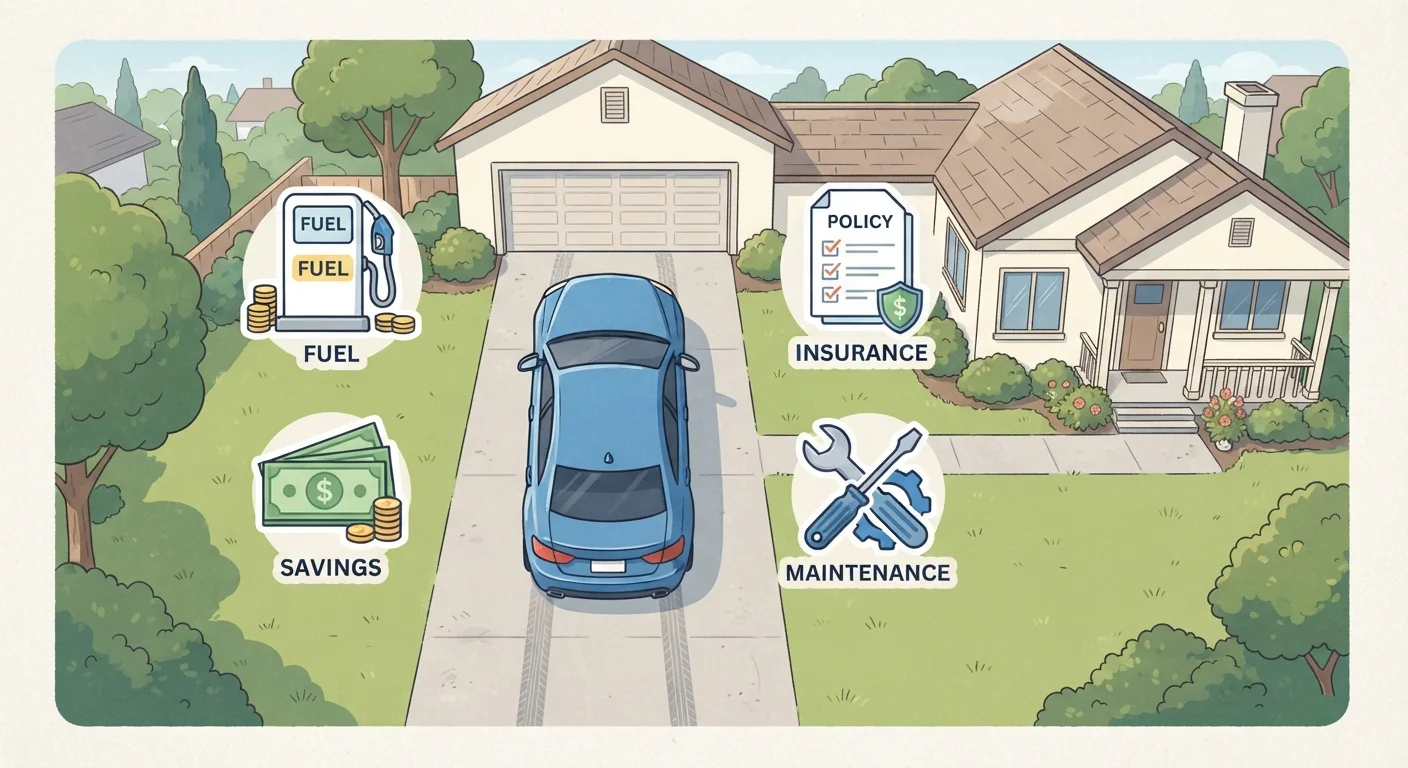
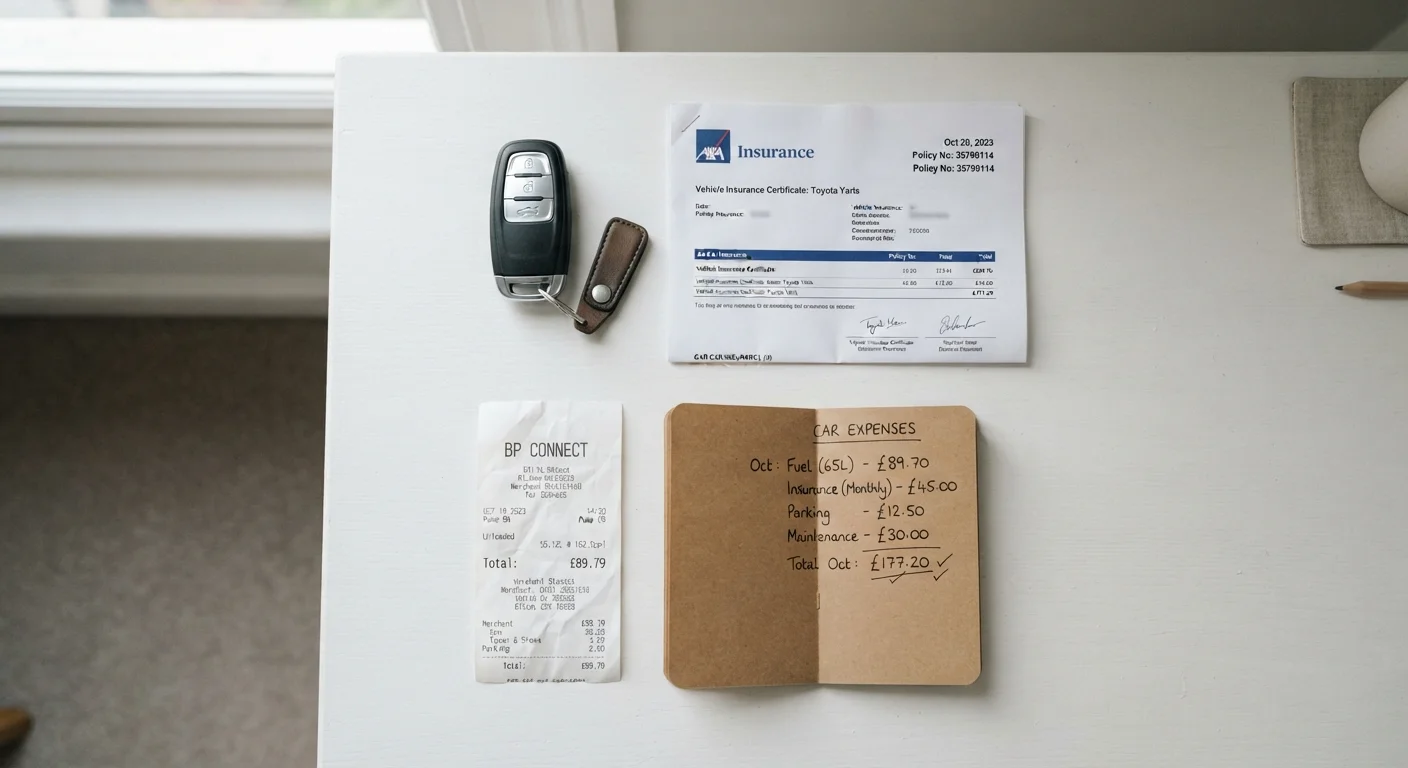
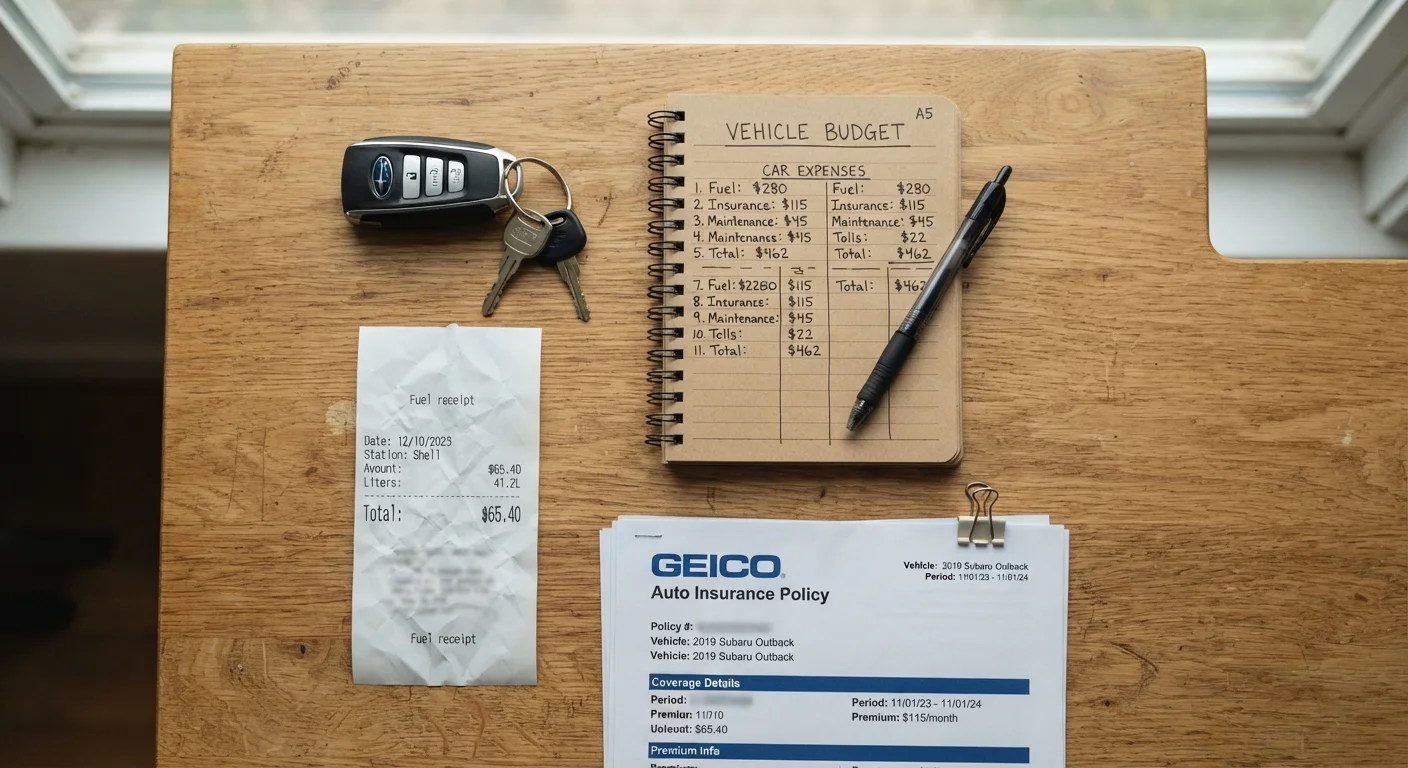
The most effective protection against car-related financial surprises is a realistic, itemized budget - built before you need it. Treat your vehicle as a recurring cost center, not a one-time purchase. Set aside a monthly amount earmarked specifically for registration renewals, maintenance, tolls, and the occasional unexpected repair. Even a modest dedicated fund can keep a tire blowout or a registration surprise from becoming a credit card problem.
Start a Dedicated Car Expense Fund
Open a separate savings account specifically for vehicle costs - registration renewals, maintenance, tires, and unexpected repairs. Contributing a fixed amount each month means you're never scrambling when a bill arrives. Even $50-$75 monthly adds up to a meaningful buffer over a year, and it keeps car costs from bleeding into your general emergency fund.
If some of the terms above - like gap insurance, depreciation, or cost-per-mile - feel unfamiliar, the Car Ownership Cost Glossary is a plain-language reference worth bookmarking. And when you're ready to map out every line item, the Annual Car Ownership Budget Checklist walks through both recurring and one-off vehicle expenses in one place.
This article is for general informational purposes only and does not constitute financial or legal advice. Costs, fees, and insurance requirements vary by state and individual circumstance. Consult a licensed professional for guidance specific to your situation.