Why You Need an Annual Car Budget - Not Just a Monthly One
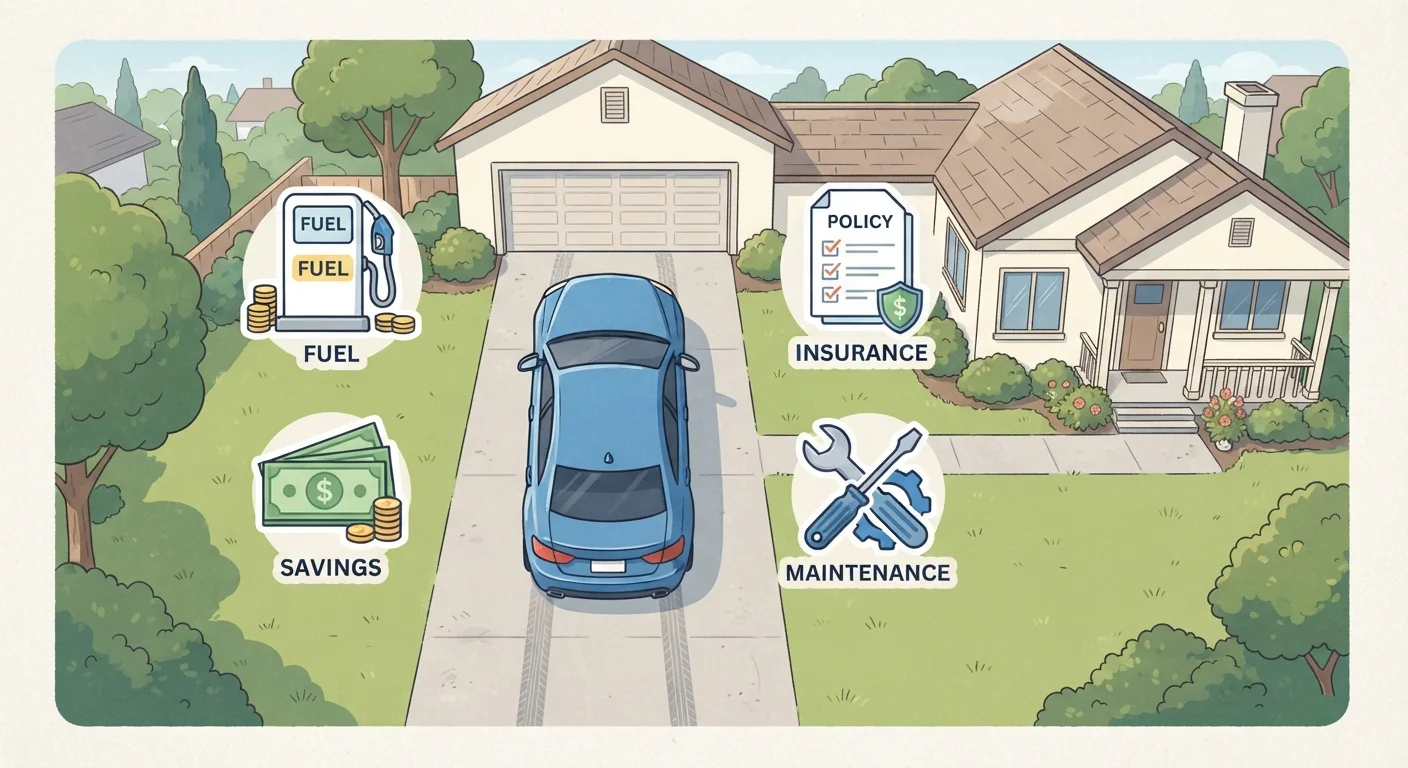
Most drivers know their car payment to the dollar. Far fewer know what their vehicle actually costs per year. Registration fees, insurance renewals, seasonal maintenance, and the occasional unexpected repair arrive on their own schedule - rarely aligned with your monthly cash flow. The result: expenses that feel like surprises even though they were entirely predictable.
This checklist treats your vehicle as what it really is: a recurring financial commitment with both fixed and variable costs. Work through it once at the start of each year (or whenever you take on a new vehicle), and you'll have a complete picture that you can fold into your broader household spending plan. For context on how all these layers stack up, see the full breakdown of what car ownership really costs.
Insurance
Registration and Government Fees
Fuel
Scheduled Maintenance
Emergency and Unplanned Repairs
Parking, Tolls, and Commuting Costs
Tools to Have Ready Before You Start
You don't need specialized software to complete this checklist - but having the right documents and references in front of you will make your estimates accurate rather than guesswork.
Current insurance declarations page
Shows your premium, coverage levels, and renewal date - essential for the insurance section of the checklist.
Vehicle owner's manual
Lists manufacturer-recommended maintenance intervals so you can project scheduled service costs accurately.
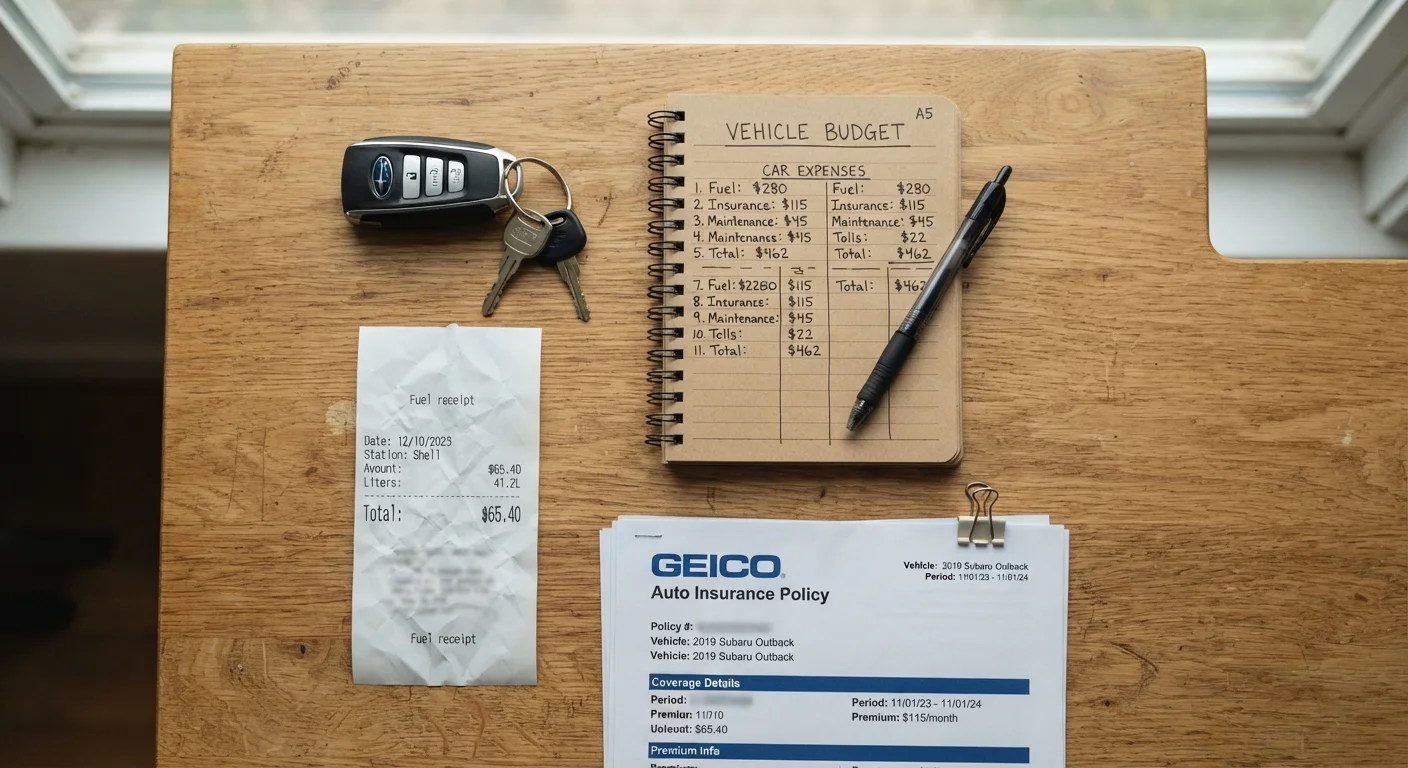
Recent fuel and repair receipts (last 3-6 months)
Provides a real spending baseline for fuel and maintenance rather than rough estimates.
Spreadsheet or budgeting app
Organizes each expense category and automatically calculates monthly equivalents from annual totals.
State DMV website
Confirms your exact registration renewal fee, due date, and any applicable local taxes or inspection requirements.
Toll transponder account or payment history
Gives you an accurate monthly toll average to annualize rather than estimating from memory.
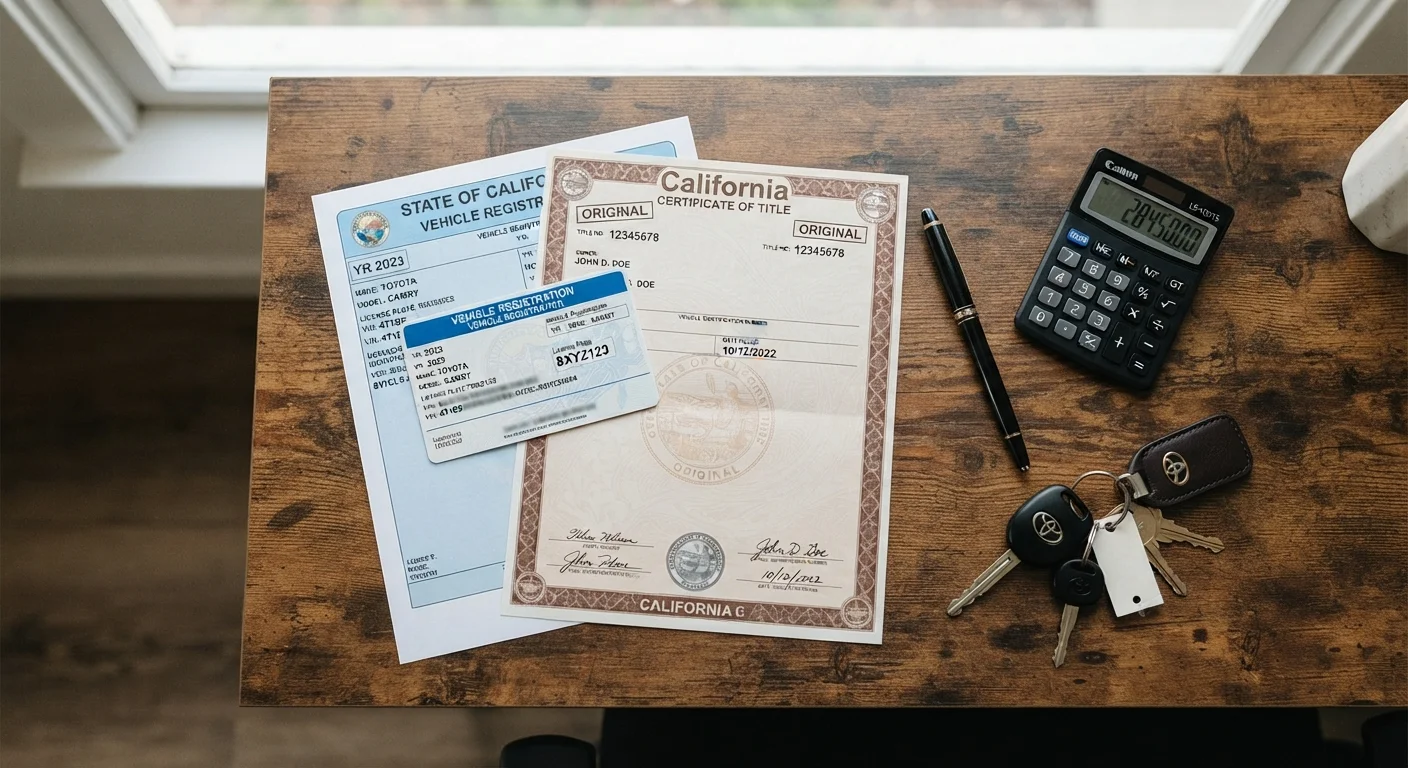
Registration and title fees vary significantly from state to state. Before estimating those line items, review what registration and title costs look like in your state so your numbers reflect your actual obligation.
What to Do With Your Completed Budget
Once you've estimated totals for each category, divide annual figures by 12 and treat them as fixed monthly transfers into a dedicated car savings account. This technique - sometimes called a sinking fund - ensures that a $400 registration bill or a $600 set of tires never lands as a shock.
Don't Rely on Last Year's Numbers Without Updating Them
Insurance premiums, fuel prices, registration fees, and shop labor rates all change from year to year. Copying last year's figures without verifying current amounts can leave your budget meaningfully short. Revisit each category with fresh data every time you run this checklist. Pay particular attention to insurance at renewal - rate increases can be substantial even with a clean driving record.
Review your insurance premium before every renewal period. Rates shift based on your driving record, credit profile, location, and even the insurer's own claims data. Understanding what factors shape your car insurance premium gives you leverage during that review. Separately, commit to a dedicated vehicle emergency fund sized to your car's age and mileage - this is the safety net your sinking fund alone cannot cover. Finally, log every service and expense in a maintenance record; a well-documented history helps you spot cost patterns and supports resale value down the line. See how to build and maintain a vehicle maintenance log for a simple approach.
This article is for general informational and educational purposes only. It does not constitute personalized financial or legal advice. Consult a qualified financial professional for guidance specific to your situation.