Why a Maintenance Log Pays Off
Most drivers rely on dashboard warning lights or vague memories of when they last had an oil change. That approach works - until it doesn't. A maintenance log closes the gap between what you think has been done and what's actually been done.
The practical benefits are straightforward. You'll know precisely when each service is due, which means fewer missed intervals and less guesswork at the shop. A well-documented log also carries real financial weight: buyers and dealers treat vehicles with complete service records as lower-risk, which can support a stronger resale price. And if a warranty or insurance dispute arises, documented proof of upkeep can make a significant difference in how the claim is resolved.
As skipping small maintenance tasks leads to big repair bills, the log's greatest value may simply be keeping you honest about what's overdue before a minor issue compounds into an expensive one.
Your Log Is a Budgeting Tool Too
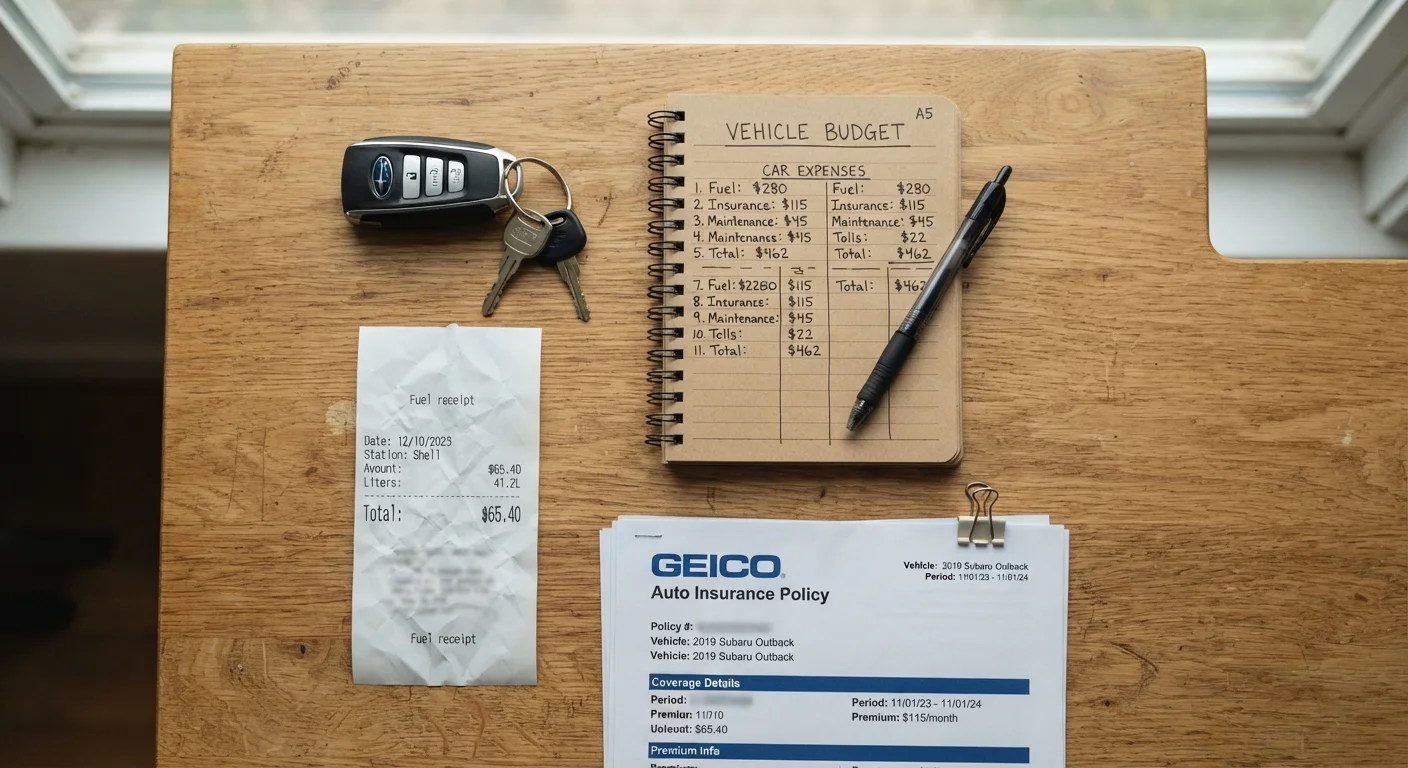
Totaling your annual maintenance costs from the log gives you a real spending baseline. Pair this with the annual car ownership budget checklist to make sure you're accounting for every vehicle expense before it catches you off guard.
How to Build and Maintain Your Log
Building a maintenance log takes less than an hour to set up properly, and only a few minutes to update each time. The process below walks you through everything from gathering your baseline records to establishing an update habit that actually sticks.
What you will need
Vehicle Owner's Manual
Provides the manufacturer's recommended maintenance intervals that your log should be built around.
Notebook or Binder
A dedicated physical log for recording each service entry by hand.
Spreadsheet App (e.g., Google Sheets or Excel)
Lets you create a searchable, sortable digital log you can access from any device.
Vehicle Maintenance App
Purpose-built apps can send service reminders and store receipts alongside log entries.
Gather your existing service history
Before creating a new log, compile whatever records you already have - dealership invoices, oil-change stickers, receipts from independent shops, and any notes from previous owners. These give you a baseline and prevent you from duplicating work you've already paid for.
If records are scarce, your current mileage and a quick visual inspection (checking fluid colors, tire tread depth, and brake pad thickness) can help you estimate where each system stands.
Choose your log format
Pick a format that fits your habits. A small spiral notebook kept in the glovebox works well for drivers who prefer pen and paper. A shared spreadsheet is better if you want to access records from a phone or computer, or share them with a co-owner or mechanic. Dedicated apps can add reminder functionality on top of basic logging.
What matters most is consistency. A simple format you update every time beats a sophisticated system you abandon after two entries.
Set up your log fields
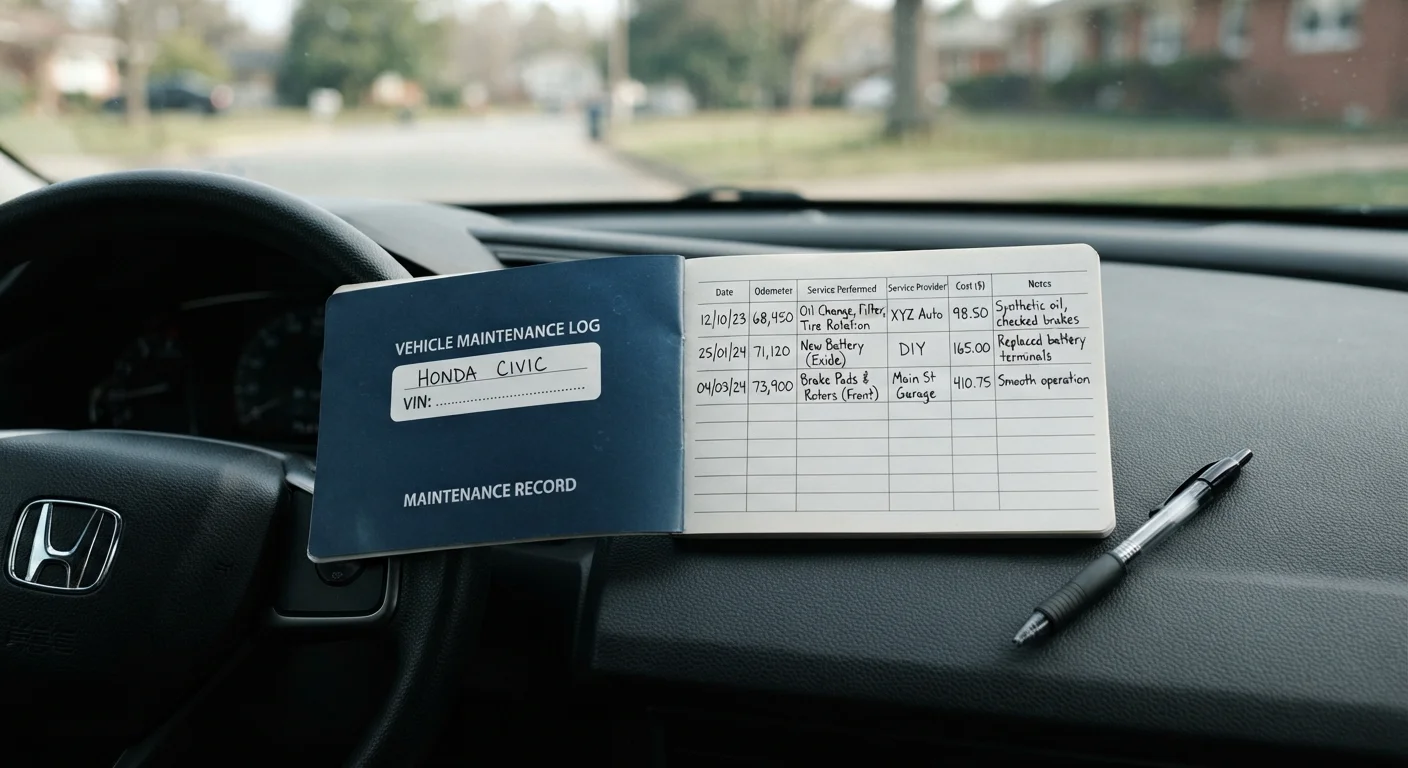
Each entry in your log should capture at minimum:
- Date of service
- Odometer reading at time of service
- Service performed (e.g., oil change, tire rotation, brake inspection)
- Parts or fluids used, if applicable
- Cost (labor + parts)
- Shop or technician who performed the work, or "DIY" if self-done
- Next service due - by mileage or date, whichever comes first
You can add fields for warranty notes or part numbers, but start simple and expand only when you find a real need.
Enter your baseline records
Log every service you gathered in Step 1, working chronologically. Even incomplete records are worth entering - partial history is more useful than none at all. Note any gaps explicitly so you can flag those systems for inspection.
Once your historical entries are in place, add your current vehicle state: present mileage, any known issues, and the next scheduled service for each major system (engine oil, transmission fluid, coolant, brake fluid, air filter, tires, and timing belt or chain if applicable).
Update the log after every service
The log is only as useful as it is current. Make updating it part of your post-service routine - ideally the same day, before you lose the receipt. If a shop performed the work, take a photo of the invoice before filing it. If you did it yourself, note the product specifications and quantities used.
Set a recurring reminder (monthly, or tied to refueling if you prefer) to review upcoming due dates so nothing slips past unnoticed. This habit is one of the most practical ways to keep long-term car costs under control.
Don't Skip Unfamiliar or Complex Repairs
A maintenance log helps you track what's been done, but it doesn't replace a qualified mechanic's judgment. If your log reveals a service that's significantly overdue - especially for brakes, timing belts, or suspension components - have a licensed technician inspect the vehicle before driving it further. Some deferred tasks carry real safety consequences.
Getting the Most Out of Your Records
Once your log has a few months of entries, start reviewing it with a broader lens. Look at total annual spend, which systems are consuming the most maintenance budget, and whether any component seems to need attention more frequently than the manufacturer's schedule suggests - that pattern can indicate an underlying issue worth flagging to a mechanic.
Your log pairs naturally with seasonal preparation. Before each season change, cross-reference your records against the items covered in a seasonal car maintenance checklist to make sure temperature-sensitive systems - coolant, battery, tires - are in good shape before conditions get demanding.
Finally, treat the log as a living document. A vehicle's needs shift as it ages and accumulates mileage. If your car crosses a significant mileage threshold, revisit your owner's manual for any updated service recommendations that apply at higher intervals, and add those to your upcoming due-date entries.
Incomplete Records Can Mislead Buyers
If you sell your vehicle, present your log accurately. Omitting gaps or unclear entries misleads the buyer and could expose you to disputes. A straightforward log with noted gaps is more credible than one that appears fabricated or suspiciously complete.