Drawing the Line: What Actually Separates DIY from Pro Work
The decision to handle a car repair yourself or hand it to a mechanic isn't really about confidence - it's about accurately assessing two things: the complexity of the task and the consequences of getting it wrong. A botched oil change is messy and inconvenient. A poorly bled brake system is genuinely dangerous.
Most maintenance falls into one of three buckets: tasks almost any careful driver can handle, tasks that require some mechanical aptitude and basic tools, and jobs that demand professional-grade equipment or specialized training. Understanding that spectrum - rather than treating all maintenance as either entirely DIY or entirely hands-off - is what separates a smart car owner from one who either overpays for simple services or takes risks they shouldn't.
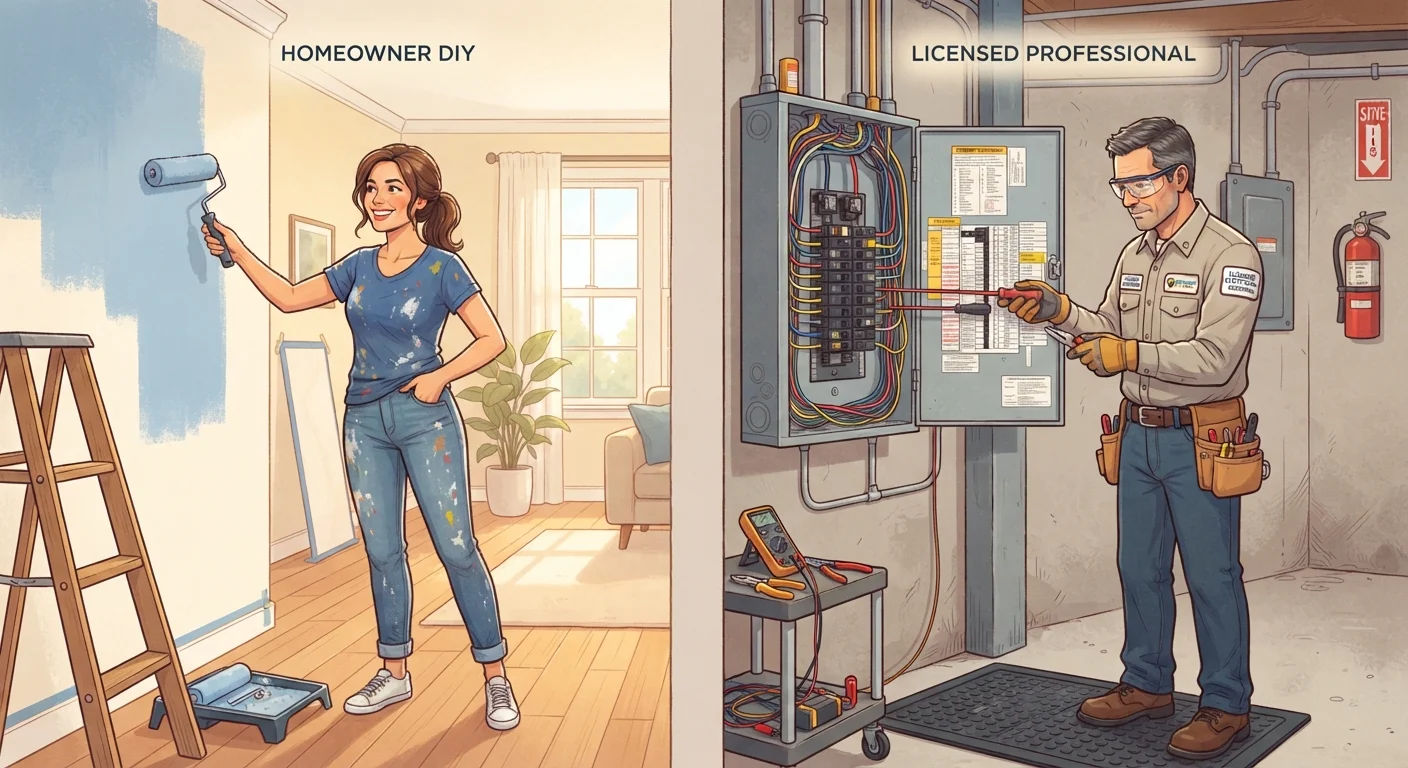
This same principle applies outside the garage, too. As explored in our guide on drawing the line on home repairs, the DIY-vs.-pro question nearly always comes down to safety stakes and skill requirements - not just cost.
| DIY Maintenance | Professional Mechanic | |
|---|---|---|
| Typical cost | Parts cost only | Parts plus labor charges |
| Skill required | Basic to moderate for routine tasks | Trained for complex or safety-critical work |
| Safety risk | Low on routine jobs; higher if overreaching | Minimized by training and proper equipment |
| Tools needed | Basic hand tools for most routine tasks | Specialized shop equipment available on-site |
| Warranty considerations | May affect dealer warranty on newer vehicles | Maintains documented service history |
| Best suited for | Filters, fluids, wipers, battery, tires | Brakes, suspension, fuel, electrical, transmission |
Tasks Most Drivers Can Handle Themselves
A handful of routine maintenance jobs are genuinely straightforward, well-documented, and low-risk when done carefully. These are worth learning.
- Engine air filter replacement: Typically a tool-free swap that takes under 10 minutes. Your owner's manual shows the location and the correct filter specification.
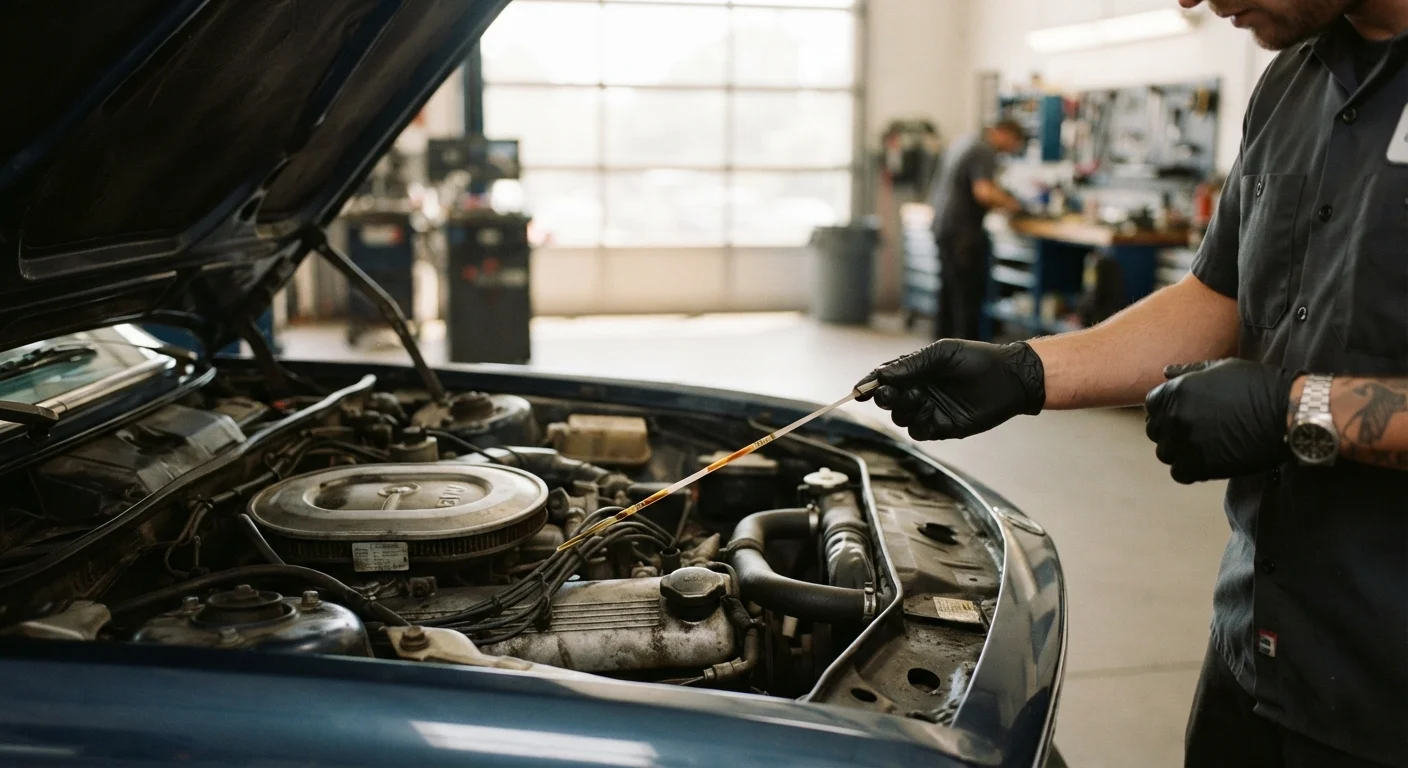
- Wiper blade replacement: Most blades click into place. Instructions are printed on the packaging.
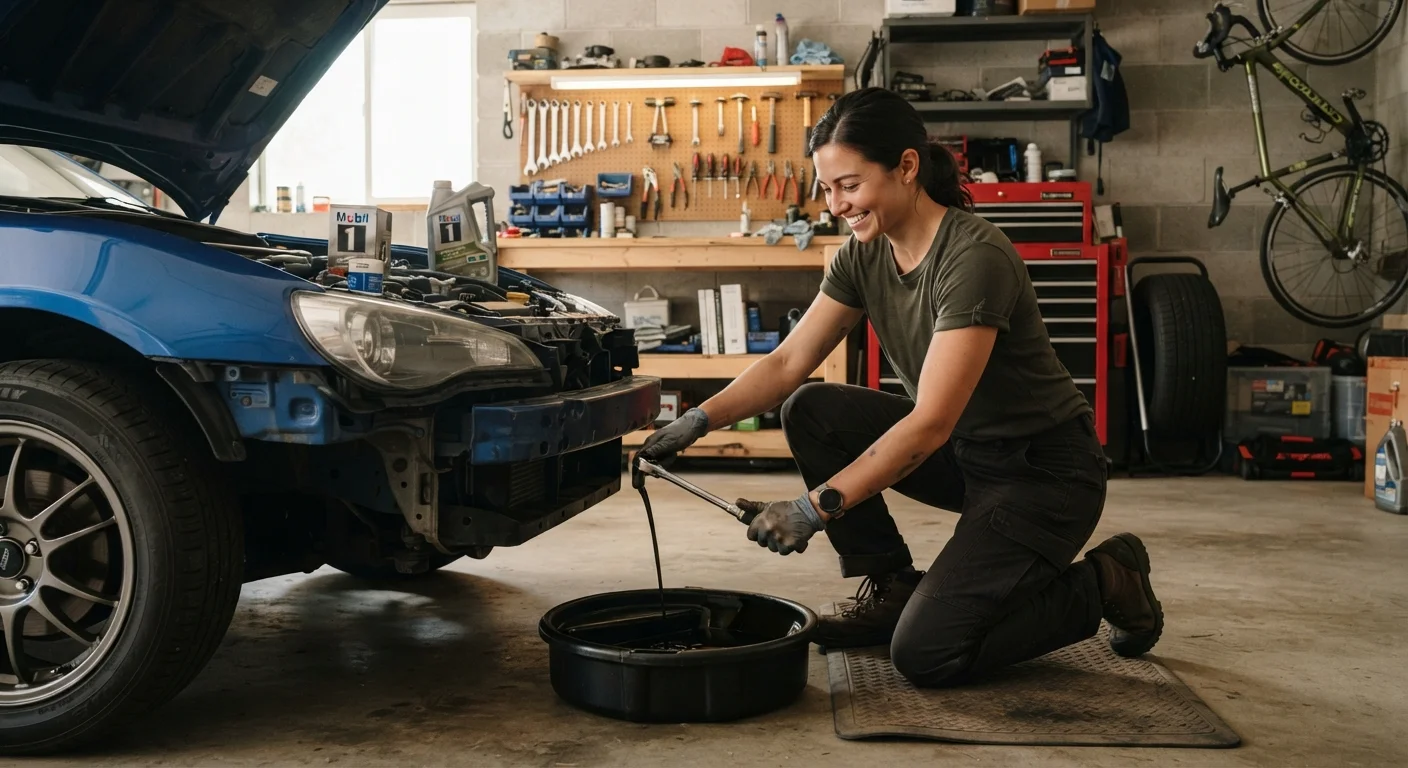
- Oil and oil filter changes: Requires basic tools, a drain pan, and knowing your vehicle's oil type and capacity. It's one of the highest-value DIY tasks because shops charge significantly for a straightforward job.
- Cabin air filter replacement: Usually behind the glove box - often no tools needed.
- Battery terminal cleaning: Disconnect, clean corrosion with a wire brush and baking soda solution, reconnect. Simple, but always disconnect the negative terminal first.
- Checking and topping off fluids: Coolant, washer fluid, and power steering fluid reservoirs are labeled under the hood. See our overview of car fluids every driver should know for what each one does.
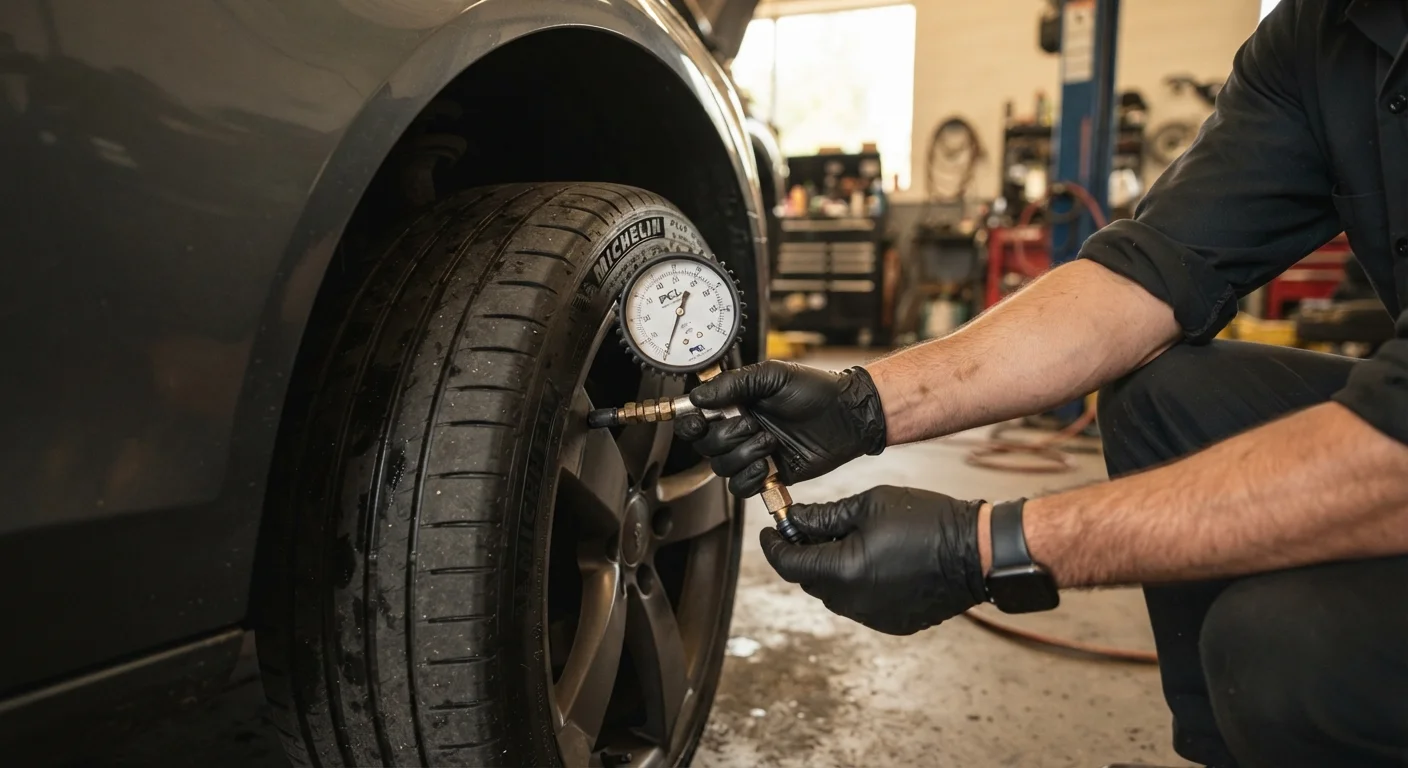
Tire inflation checks and visual tread inspections also belong here. For a full picture of keeping tires in shape, our tire care guide covers rotation intervals and wear patterns worth knowing.
Start with Your Owner's Manual
Before attempting any maintenance task, check your vehicle's owner's manual for the manufacturer's exact specifications - oil type, filter part numbers, torque values, and service intervals. This single document is more reliable than generic online guides, which may not account for your specific engine or model year. Many manuals are also available as free PDFs on the manufacturer's website.
Jobs That Belong in a Professional's Bay
Some repairs look approachable on video but involve systems where an error creates serious safety hazards or expensive secondary damage. Resist the temptation to improvise on these.
- Brake pad and rotor replacement: Technically learnable, but mistakes in brake work - incorrect torque, air in lines, misaligned calipers - can cause brake failure. Unless you have solid mechanical experience and the right tools, this is a professional job.
- Suspension and steering components: Improper alignment or incorrectly installed components affect vehicle handling in ways that may not be obvious until an emergency.
- Fuel system repairs: Fuel lines and injectors involve flammable materials and pressure. These require professional handling.
- Transmission service: Beyond a fluid drain-and-fill on some models, transmission work requires specialized knowledge and equipment.
- Timing belt or chain replacement: An incorrectly timed engine can destroy itself. This job requires precision tools and specific procedures per vehicle.
- Electrical diagnosis: Modern vehicles have complex electronics. Guessing at electrical faults can cause expensive damage to control modules.
Deferring these repairs to save money in the short term is a losing strategy. Our article on why skipping maintenance costs more in the end walks through the financial math of letting problems compound.
Never Compromise Safety-Critical Systems
Brake, steering, and suspension repairs require precise torque specifications and, in many cases, alignment equipment that home mechanics don't have access to. A failure in any of these systems while driving can result in a serious accident. If you're unsure whether a repair falls into this category, treat it as a professional job until you've confirmed otherwise with a qualified mechanic.
The Real Cost Calculation
DIY maintenance delivers genuine savings - but only when you account for the full picture. Parts at an auto parts retailer typically cost less than the same parts plus labor at a shop. On a routine oil change, a driver might save $30-$60 doing it themselves. Across multiple services per year, that adds up meaningfully toward financial goals like an emergency fund.
The calculation shifts when a job requires specialized tools you'll only use once, or when an error creates a repair bill larger than what the shop would have charged. Factor in:
- Tool costs: A torque wrench, jack stands, and oil catch pan are one-time purchases that pay off over time. Specialty tools for a single repair may not.
- Your time: A job that takes a professional 30 minutes may take a first-timer two hours. That's a legitimate trade-off, not a reason to avoid DIY - just something to plan for.
- Risk of error: Small maintenance missteps can cascade into larger problems. If you're unsure, asking a mechanic to confirm your work on a first attempt is reasonable.
For owners of older, high-mileage vehicles, DIY routine maintenance becomes especially cost-effective since the frequency of basic services increases with age and mileage.
This article provides general educational information about vehicle maintenance. Always consult your owner's manual and, where appropriate, a qualified mechanic before performing repairs. Some tasks may require professional tools, training, or certifications depending on your vehicle and local regulations.