
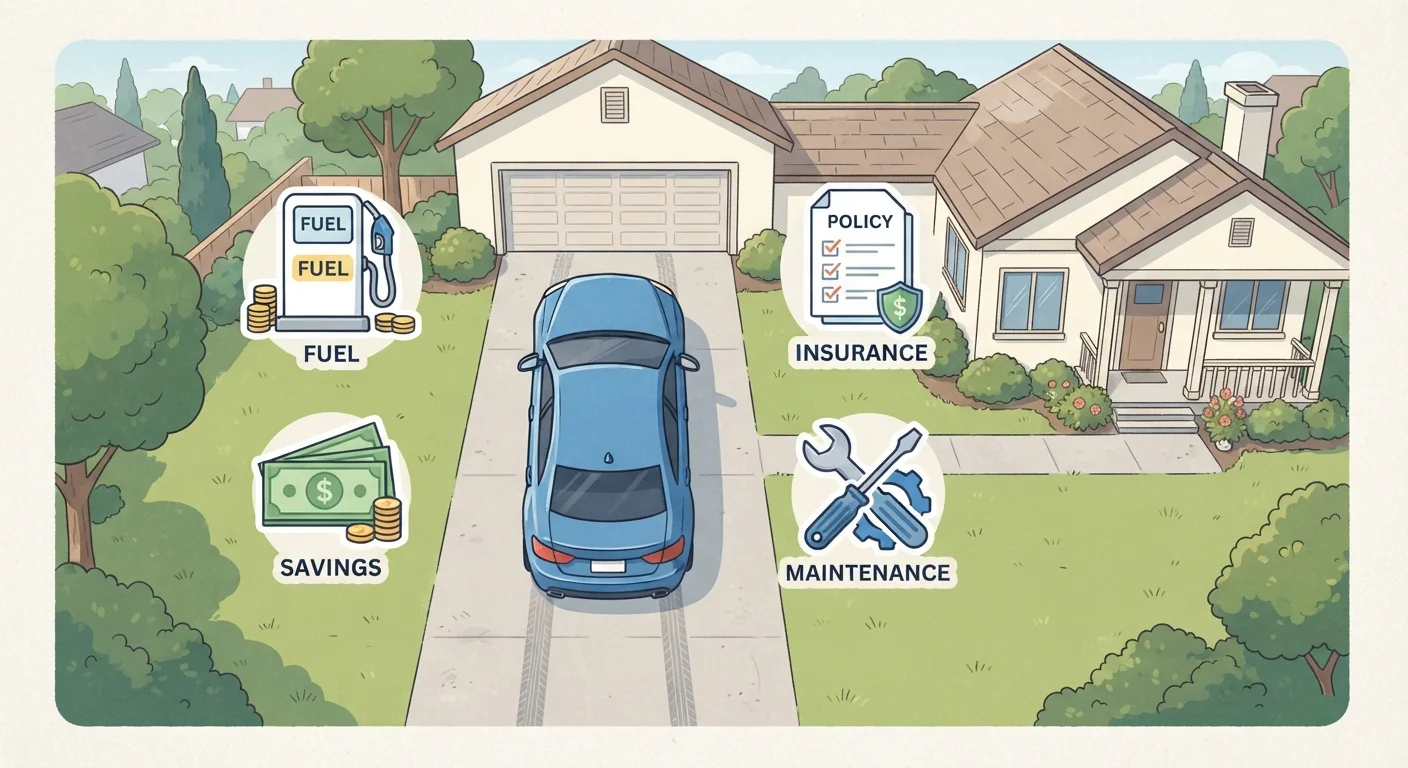
Why the Monthly Payment Is Just the Beginning
When most people shop for a car, they focus on one number: the monthly payment. It's an understandable shortcut - it fits neatly into a budget spreadsheet and feels controllable. The problem is that a monthly payment typically reflects only the cost of financing the vehicle itself. It doesn't account for the full range of expenses that follow you every single month you own and drive that car.
The total cost of ownership (TCO) is the figure that actually matters. It captures every dollar your vehicle demands - from the pump to the policy to the repair shop. For young homeowners already managing a mortgage, property taxes, and utility bills, underestimating car costs can quietly strain an otherwise solid financial plan.
$10,000+
Average annual car ownership cost
AAA's Your Driving Costs study consistently finds that new vehicle ownership - including depreciation, fuel, insurance, and maintenance - exceeds $10,000 per year for the average driver.
~50%
Ownership costs beyond the loan payment
Industry estimates suggest that for a typical financed vehicle, costs outside the loan payment - fuel, insurance, maintenance, fees - can equal or exceed the payment itself.
20-30%
Value lost in first year of new car ownership
Depreciation curves vary by brand and model, but many new vehicles lose a significant share of their purchase price within the first 12 months, according to automotive valuation data.
The Five Major Cost Categories You Need to Track
1. Depreciation
Depreciation is the gap between what you paid for your car and what it's worth today. It's invisible on a monthly statement but real - and it's typically the largest single ownership cost. New vehicles can shed a substantial portion of their value in the first few years. When you eventually sell or trade in, that lost value comes out of your pocket directly.
2. Fuel
Fuel cost is driven by two variables you can partially control: how many miles you drive and how efficient your vehicle is. Even a modest difference in fuel economy compounds significantly over tens of thousands of miles annually. Use your estimated annual mileage and the vehicle's EPA-rated fuel economy to calculate a realistic fuel budget before you buy.
3. Insurance
Insurance premiums vary based on your driving record, location, coverage level, and the vehicle's make, model, and safety rating. Required minimum coverage is rarely sufficient for most financial situations - comprehensive and collision coverage add cost but also meaningful protection. Get accurate quotes for the specific vehicle you're considering, not just an average estimate.
4. Maintenance and Repairs
Routine car maintenance - oil changes, tire rotations, brake inspections, fluid top-ups - is predictable and manageable when budgeted for. What catches drivers off guard are the periodic larger expenses: tires every 40,000-60,000 miles, brake pads and rotors, battery replacement, and unexpected repairs. Setting aside a monthly maintenance reserve, even a modest one, prevents these from becoming emergencies.
5. Registration, Taxes, and Fees
Annual registration fees, state vehicle taxes, and emissions or safety inspection fees vary significantly by state. These costs are often overlooked entirely during car shopping, but they recur every year and can range from under $100 to several hundred dollars depending on your location and vehicle value.
Build a Monthly Car Cost Estimate Before You Buy
Before committing to any vehicle, add up estimated monthly costs across all categories: loan or lease payment, insurance quote, average fuel cost, monthly maintenance reserve, and a prorated share of annual fees. This total - not just the payment - is the number to compare against your budget. It takes about 30 minutes and can prevent years of financial strain.
Putting It All Together: Building a Realistic Car Budget
A practical approach is to calculate your estimated annual cost across all five categories, then divide by 12. That monthly figure - not just the loan payment - is your real car cost. Compare it honestly against your income and other fixed expenses.
For a more granular view, the cost-per-mile method allows you to compare ownership expenses across different vehicles in a standardized way. It's especially useful when deciding between a more fuel-efficient vehicle and one with a lower purchase price.
Once you've mapped out the full picture, use the Annual Car Ownership Budget Checklist to make sure you haven't missed any recurring or one-time expenses. The goal isn't to make car ownership feel overwhelming - it's to make sure it fits your actual financial life, not just your financing approval.
This article is for general informational purposes only and does not constitute financial or legal advice. For decisions about your personal finances, consult a qualified financial professional.