
Why cost per mile is worth calculating
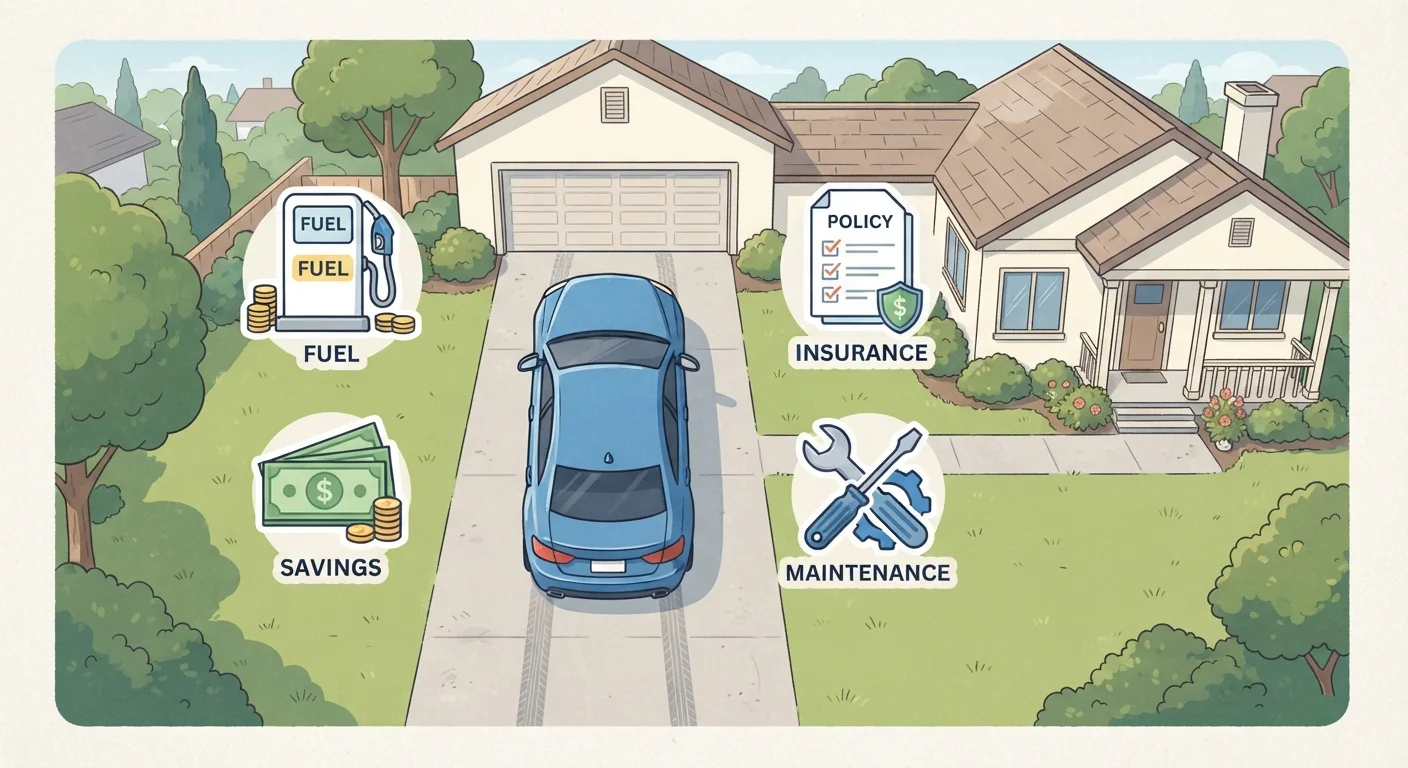
Monthly car payments get most of the attention in vehicle budgeting conversations, but they're only one slice of what you actually spend. Fuel, insurance, registration, maintenance, repairs, and depreciation all combine to form a number that's often significantly higher than most drivers realize. As we cover in depth in the true cost of owning a car, the monthly payment is just the starting line.
Cost per mile (also written as CPM) converts all of those expenses into a single, comparable unit. Once you have it, you can evaluate whether a longer commute job offer actually makes financial sense, decide whether a lower-mileage lifestyle change would meaningfully reduce your costs, or compare the full financial picture of your current car against a potential replacement. For a full definition and context alongside other ownership metrics, the car ownership cost glossary is a useful reference.
What you will need
What you'll need before you start
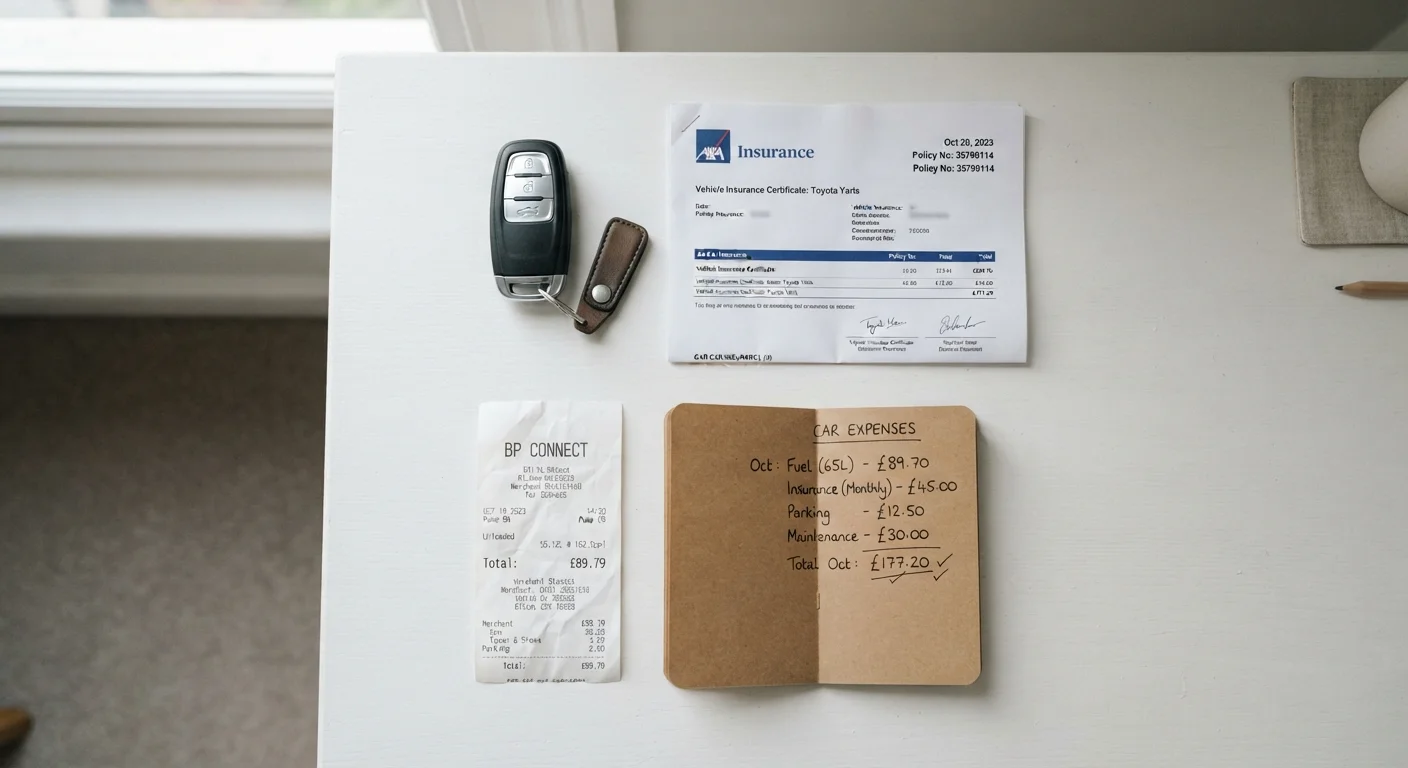
Gathering your numbers upfront makes the process fast and accurate. You don't need perfect records - reasonable estimates work for categories like fuel if you know your average MPG and roughly how far you drive. The goal is a useful approximation, not an audit-level accounting exercise.
Spreadsheet software or calculator app
Organizes and totals each cost category so you can divide by miles driven accurately.
Online vehicle valuation tool (e.g., a major appraisal service)
Helps you estimate your car's current market value to calculate annual depreciation.
Fuel tracking app or mileage log
Provides accurate fuel spending and annual mileage data if you haven't saved receipts.
Step-by-step: calculating your cost per mile
Work through each step below in order. Each builds on the previous one, so completing them in sequence produces the most accurate final figure.
Determine how many miles you drove in the past year
Check your odometer today and subtract the reading from roughly 12 months ago. If you don't have that older reading, check an old service receipt - most shops record mileage. This annual mileage figure is your denominator for every calculation that follows, so accuracy here matters.
Calculate your annual depreciation
Depreciation - the loss in your vehicle's market value over time - is almost always the biggest ownership cost, yet many drivers ignore it entirely. Use a reputable vehicle appraisal service to find your car's current market value, then find (or estimate) what it was worth 12 months ago. The difference is your annual depreciation figure.
For a newly purchased vehicle, industry data generally suggests a new car loses roughly 15-25% of its value in the first year, though this varies meaningfully by make, model, and market conditions. For a more grounded look at how depreciation works, see our guide to vehicle depreciation.
Add up your fixed annual costs
Fixed costs stay roughly the same regardless of how much you drive. Tally up:
- Insurance premiums - your total annual outlay, not just one month
- Registration and licensing fees - what you paid to renew your plates and tags
- Loan or lease payments - the full 12-month total if you're financing
- Annual depreciation - the figure calculated in Step 2
Add these together to get your total fixed cost for the year.
Add up your variable annual costs
Variable costs scale with how much you drive. Collect and total:
- Fuel - total spent over the year, or calculate it as (annual miles ÷ your vehicle's MPG) × average fuel price per gallon
- Maintenance - oil changes, tire rotations, filters, and any scheduled service
- Repairs - unplanned work like brake replacements or battery swaps
- Tires - prorate the cost if you replaced them: divide the purchase price by the expected lifespan in miles, then multiply by your annual miles
Divide total annual costs by miles driven
Combine your fixed and variable totals from Steps 3 and 4 into one grand total. Then divide by the annual mileage figure from Step 1:
Cost per mile = Total annual costs ÷ Annual miles driven
For example, if your total annual costs come to $9,000 and you drove 12,000 miles, your cost per mile is $0.75. That means every mile you drive costs you 75 cents - a useful number for budgeting trips, comparing vehicles, or deciding whether a long commute pencils out financially.
Putting your number to work
Once you have a cost-per-mile figure, it becomes a practical decision-making tool. If you're weighing whether to lease or buy your next vehicle, you can run the same calculation for each scenario - our leasing vs. buying cost comparison walks through how the full financial picture differs between both paths.
For a broader framework that ties all these figures together, understanding total cost of ownership explains how CPM fits into the complete picture of what a vehicle costs from purchase to sale. Revisit your calculation annually - or whenever a major expense like a repair or insurance change occurs - and you'll always have a grounded sense of what your vehicle is actually costing you.
This article provides general financial information for educational purposes and does not constitute personalized financial advice. Consult a qualified financial professional for guidance specific to your situation.