Why a Separate Car Emergency Fund Makes Sense
Most financial guidance focuses on a general emergency fund covering three to six months of living expenses. That fund is designed for job loss, medical events, or major life disruptions - not a blown transmission. When a $1,200 repair lands in the same pot, it either depletes savings you'll urgently need elsewhere or, more commonly, ends up on a credit card.
A dedicated vehicle fund works as a sinking fund - a separate reserve you build steadily for a known category of future costs. Because car repairs are inevitable rather than truly unpredictable, treating them as a distinct savings goal is more accurate and more protective. See our guide to sinking funds for a broader look at how this strategy works across multiple expense categories.
For young homeowners in particular, protecting your general emergency fund matters even more. Your home already competes for reserve cash. Emergency funds for homeowners carry extra weight - losing your car fund to a repair bill can create a cascade that strains mortgage payments or home maintenance budgets.
Separate Funds Protect Both Buckets
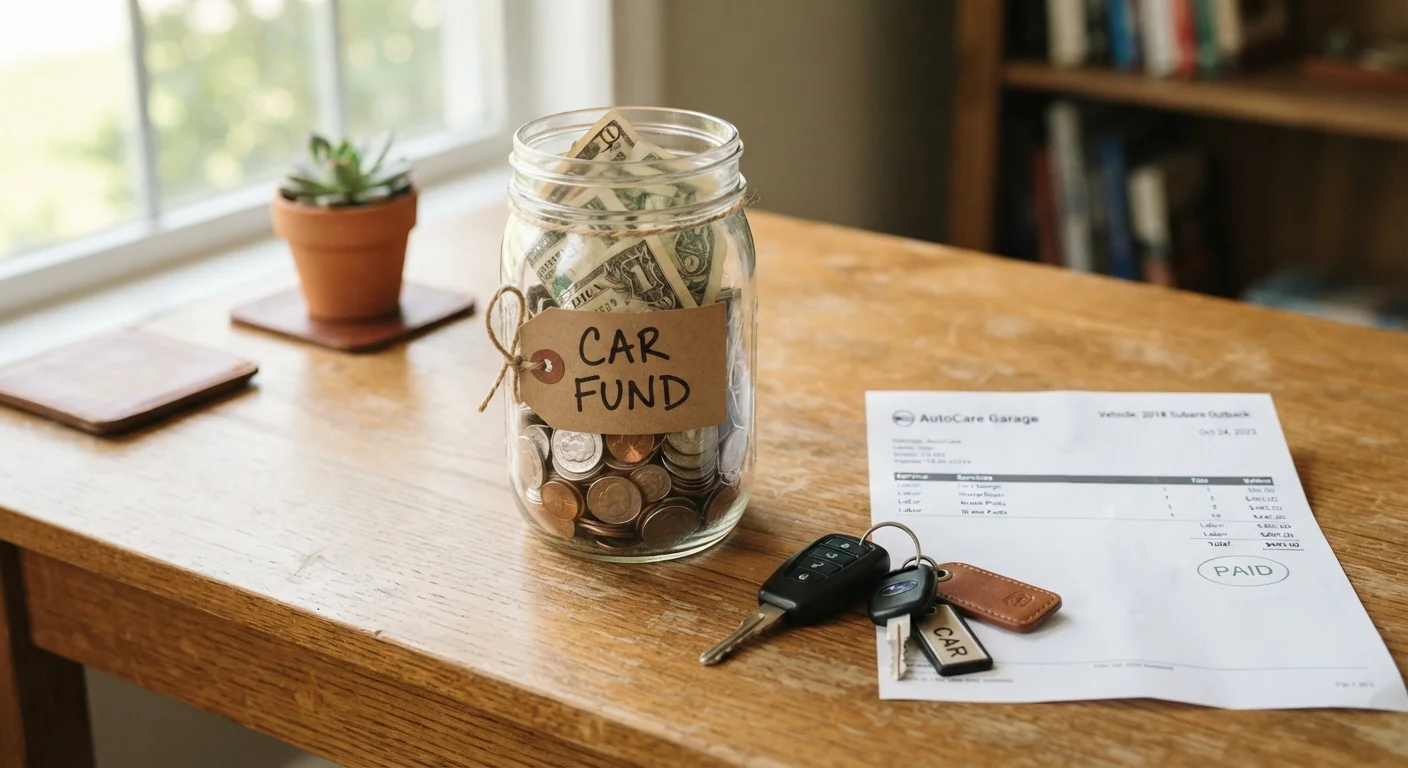
Keeping your car fund distinct from your general emergency savings means a surprise repair doesn't compromise your safety net for job loss or medical events. Think of them as two separate tools with two separate jobs. Even a modest, dedicated car fund of $500 can prevent you from reaching for a credit card when something breaks.
How to Size Your Car Emergency Fund
There is no universal number, but there are reliable benchmarks tied to vehicle age and mileage.
- New or near-new vehicles (under 50,000 miles, under 5 years old): A minimum of $500-$1,000 is a reasonable starting target. Warranty coverage reduces exposure, but not all repairs qualify, and deductibles still apply.
- Mid-age vehicles (50,000-100,000 miles, 5-10 years old): Aim for $1,000-$1,500. Components like brakes, belts, and cooling system parts begin reaching end-of-life in this range.
- Older or high-mileage vehicles (over 100,000 miles or 10+ years): Build toward $1,500-$3,000. Major repairs - transmissions, water pumps, head gaskets - become statistically more likely and cost more on older platforms.
These ranges reflect common repair costs in the U.S. market and should be adjusted for your specific vehicle, local labor rates, and whether you carry an extended warranty or roadside assistance plan. Pair this exercise with the annual car ownership budget checklist to account for every known vehicle cost alongside your emergency reserve target.
Don't Confuse Routine Maintenance With Emergencies
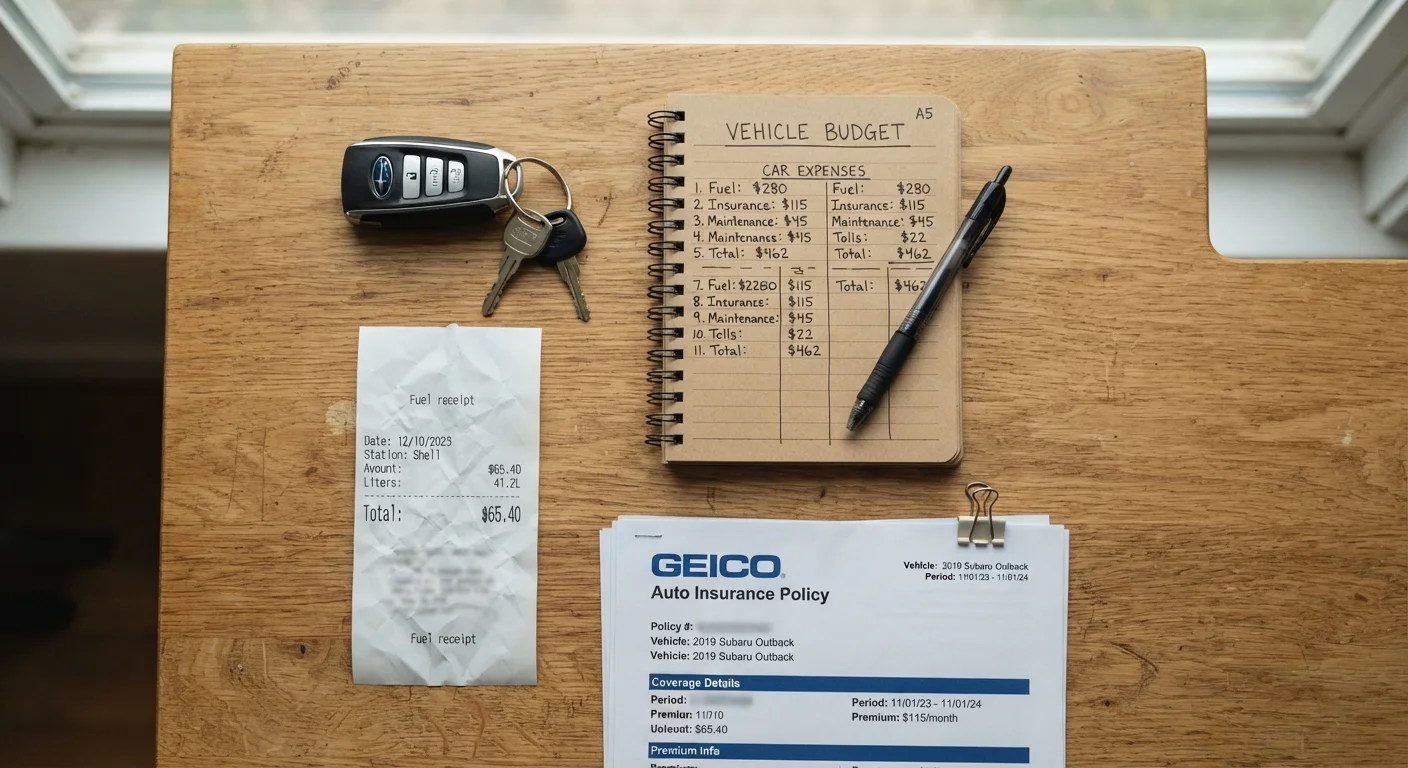
Oil changes, tire rotations, and scheduled inspections are predictable costs - budget for them separately in your monthly car expenses rather than drawing from your emergency fund. Reserve the fund for unplanned repairs that arise outside your normal maintenance schedule. Conflating the two will leave you underfunded when a genuine emergency hits.
Step-by-Step: Building and Maintaining the Fund
Use the steps below to establish your fund from scratch or recalibrate one that's underfunded. The process is straightforward - the discipline is in making it automatic.
Audit your current vehicle's risk profile
Pull your car's current mileage and model year, then look up its service history. Note any repairs done in the last two years and identify components that are approaching typical replacement intervals - timing belts, coolant flushes, brake pads. This gives you a realistic picture of what your fund may need to cover in the near term.
Set your target balance based on vehicle age and mileage
Use the benchmarks above - $500-$1,000 for newer vehicles, up to $3,000 for high-mileage ones - as your starting target. If your vehicle has a documented history of reliability issues or you rely on it for work, err toward the higher end of the range.
Open a dedicated, separate savings account
Keep your car fund in an account that is distinct from your everyday checking and your general emergency fund. This separation makes it psychologically and practically harder to spend casually. A high-yield savings account works well - it remains accessible while earning more than a standard savings account.
Calculate a monthly contribution amount
Divide your target balance by the number of months you want to reach it. If your goal is $1,500 and you want to build it over 18 months, you need to contribute approximately $83 per month. Adjust the timeline if that figure isn't realistic given your current budget.
Automate your monthly transfer
Set up an automatic transfer on payday from your checking account to your car fund. Automation removes reliance on willpower and ensures the contribution happens before the money is available to spend on something else. Most banks allow you to schedule recurring transfers at no cost.
Replenish after every withdrawal
Whenever you draw from the fund to cover a repair, restart contributions immediately. Adjust the monthly amount temporarily if needed to rebuild faster. The fund only protects you if it has a balance - an empty account offers no buffer. Also review whether the repair signals broader maintenance needs, which may mean revising your target balance upward.
Once your fund reaches its target, don't stop contributing entirely. After you make a withdrawal to cover a repair, resume contributions immediately to replenish the balance. Treat the fund as a revolving resource, not a one-time savings goal.
For a fuller picture of where your car fund fits within your overall financial plan, the relationship between emergency funds and budgets is worth understanding - especially when you're managing both home and vehicle costs simultaneously. You should also explore the car maintenance hub to anticipate the upkeep costs your fund may need to cover.
This article is for general informational and educational purposes only and does not constitute personalized financial advice. Consult a qualified financial professional for guidance tailored to your specific situation.