
What an Emergency Fund Actually Does
An emergency fund has one job: to give you options when something goes wrong financially. Without one, a single unexpected expense — a $3,000 furnace replacement, a medical copay, a week of missed work — can force you into high-interest debt or derail months of financial progress.
The fund acts as a buffer between your regular income and the unpredictable costs of life. It's not an investment account, and it's not meant to grow your wealth. It's meant to keep you stable so that a bad week doesn't become a bad year.
This is general financial education, not personalized advice. For guidance tailored to your specific situation, consult a licensed financial professional.
3–6 months
Recommended essential expenses to save
This benchmark is widely cited by financial educators and consumer financial guidance organizations as a baseline for emergency fund adequacy.
$1,000+
Typical cost of a major home repair
Common homeowner emergencies such as HVAC failure, roof damage, or plumbing issues routinely cost well over $1,000, according to home services industry data.
~40%
Americans who couldn't cover a $400 emergency from savings
Federal Reserve surveys on household economic well-being have consistently found that a significant share of U.S. adults lack sufficient liquid savings to cover a small unexpected expense.
Why Homeownership Raises the Stakes
Renters can call a landlord when the water heater fails. Homeowners get the bill. That fundamental difference is why owning a home doesn't reduce your need for an emergency fund — it amplifies it.
Roof leaks, HVAC failures, plumbing emergencies, and appliance replacements are not hypothetical risks. They are expected expenses on an unpredictable timeline. The average major home repair can range from hundreds to several thousand dollars, and multiple issues can arise in the same year.
See our savings roadmap for new homeowners for a closer look at what the first year of ownership typically costs beyond the purchase itself.
Start Small, Then Build
If a three-to-six month target feels overwhelming, set an initial goal of $1,000. That amount alone covers most small-to-medium home emergencies and provides real protection. Once you reach it, keep contributing until you hit your full target. Progress matters more than perfection.
What Doesn't Count as an Emergency Fund
A common misconception among new homeowners is that built-up home equity, a home equity line of credit (HELOC), or available credit card balance functions as a backup emergency fund. None of these are reliable substitutes.
- Home equity requires time-consuming applications to access and is illiquid when you need cash urgently.
- HELOCs can be frozen or reduced by lenders — often at the worst possible time, such as during a recession or if your home's value drops.
- Credit cards mean borrowing at high interest rates, turning a one-time crisis into an ongoing debt problem.
Liquid cash in a dedicated account remains the only form of emergency fund that is truly in your control. Keep it separate from your checking account so it doesn't get spent on everyday expenses — and separate from other savings goals, too. Mixing different savings goals in one account is a surprisingly common mistake.
How Much to Save — and How to Get There
The widely cited benchmark is three to six months of essential living expenses. For homeowners, that means including your mortgage payment, insurance, utilities, groceries, and minimum debt payments — not just rent as a renter might calculate.
If your essential monthly expenses total $4,000, your target range is $12,000 to $24,000. That number may feel large, but the goal isn't to save it all at once. Building your fund incrementally is both realistic and effective.
Practical steps to build consistently:
- Open a separate savings account labeled specifically for emergencies.
- Set an automatic transfer — even $50 or $100 per paycheck — to that account on payday.
- Direct any windfalls (tax refunds, bonuses) partially toward the fund until you hit your target.
- Revisit your target annually or after major life changes like a pay raise or a new dependent.
Automation removes the temptation to skip contributions and makes saving a default rather than a decision. For a deeper look at how savings goals and day-to-day budgeting reinforce each other, see our article on how emergency funds and budgets work together.
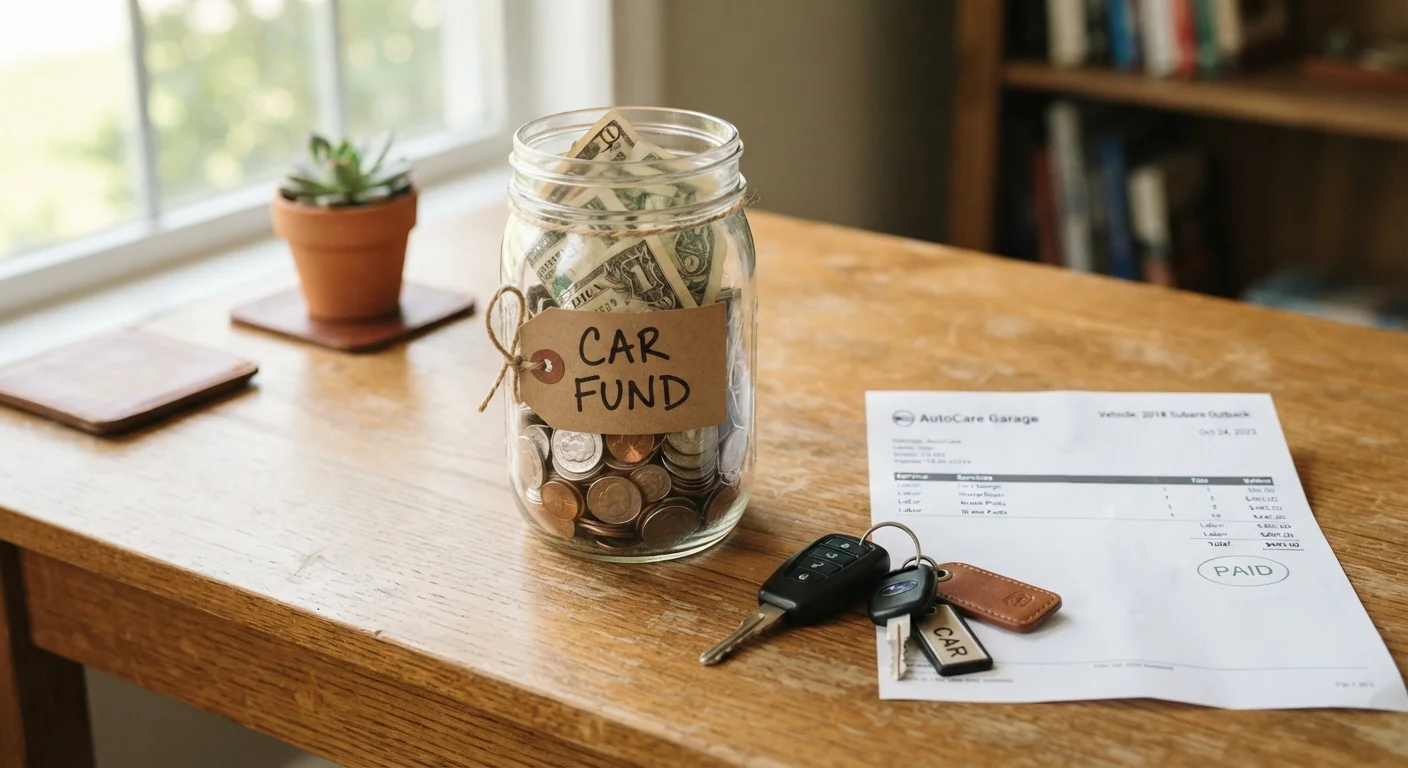
Homeowners with a vehicle should also consider a separate vehicle emergency fund for repair costs. Our guide on building a car emergency fund walks through how to size that savings bucket based on your car's age and mileage.
This article is for general informational and educational purposes only and does not constitute personalized financial advice. Consult a qualified financial professional for guidance specific to your circumstances.