Why You Don't Need a Treadmill to Get Good Cardio
Treadmills are fine tools, but they're also bulky, expensive, and for many people - genuinely boring. If you're a busy young homeowner trying to squeeze movement into a packed week, the good news is that some of the most effective cardiovascular exercise requires nothing more than your body, a bit of space, and willingness to move.
The American Heart Association recommends at least 150 minutes of moderate-intensity aerobic activity per week for most adults - and virtually none of that has to happen on a machine. Whether you prefer staying in or heading outside, there are solid, research-backed options that fit real life. This list covers the most practical ones, with notes on what makes each worth trying.
If you're looking to weave activity into an already-full schedule, our guide on building a weekly exercise routine around a homeowner's schedule offers a helpful framework for structuring your week.
Start Where You Are, Not Where You Think You Should Be
If you're new to regular exercise or returning after a break, shorter sessions done consistently are more valuable than longer ones done rarely. Even ten to fifteen minutes of sustained movement a few times a week is a genuine starting point. Build gradually and pay attention to how your body responds.
Eight Cardio Alternatives Worth Adding to Your Routine
Stair Climbing
If your home has a staircase - or you live near a building with accessible stairs - you have one of the most efficient cardio tools available. Research published in journals covering exercise physiology consistently shows stair climbing elevates heart rate quickly and engages large muscle groups in the legs and core simultaneously.
Even short bouts of stair climbing repeated throughout the day can meaningfully contribute to your weekly activity totals. This is the kind of "movement snack" that stacks up - learn more in our article on movement snacks and short activity bursts.
A household staircase is one of the most underrated pieces of cardio equipment you already own.
Jump Rope
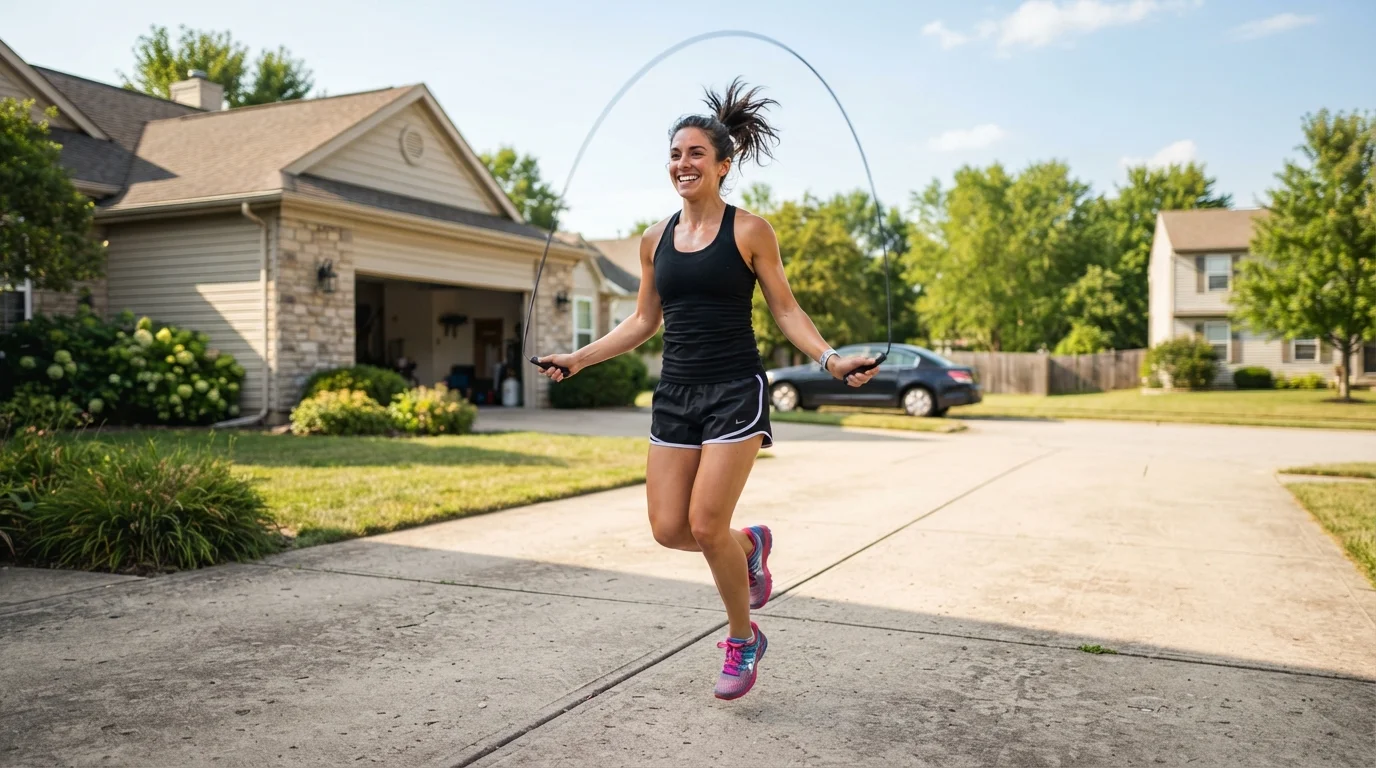
Jump rope is affordable, portable, and surprisingly intense. According to general exercise science references, jumping rope at a moderate pace can elevate your heart rate into an aerobic training zone within minutes. It also improves coordination and rhythm, which carry over to other physical activities.
You can use it in a driveway, garage, or any flat surface with overhead clearance. Even five to ten minutes of continuous jumping provides a meaningful cardiovascular stimulus for most healthy adults.
Few pieces of equipment deliver as much cardio per dollar as a simple jump rope.
Brisk Neighborhood Walks
Walking is consistently underestimated. A brisk pace - where you're breathing noticeably but can still hold a conversation - qualifies as moderate-intensity aerobic activity. The CDC cites brisk walking as one of the most broadly accessible and health-supportive forms of exercise for adults.
Your neighborhood, local park, or even a nearby school track provides enough terrain to build a solid walking habit. Adding hills or increasing duration over time naturally progresses the challenge without requiring new gear.
Brisk walking at a conversation-challenging pace is one of the most evidence-supported forms of cardio available.
Dance Workouts
Dancing - whether via a structured online video or just moving to music in your living room - is legitimate cardiovascular exercise. It raises heart rate, involves whole-body coordination, and, crucially, tends to feel less like a workout, which helps with consistency.
People who genuinely don't enjoy traditional exercise often find movement-based activities like dance much easier to sustain. For more ideas on exercising without the gym mindset, our piece on fitness for people who dislike traditional exercise is worth a read.
Dance workouts are effective cardio that feel less like exercise - making them easier to stick with long-term.
Bodyweight Circuit Training
Combining exercises like jumping jacks, high knees, mountain climbers, and burpees into short timed circuits keeps your heart rate elevated throughout. This approach, often called circuit training or metabolic conditioning, offers both cardiovascular and muscular benefits.
No equipment is required, and it can be done in a living room, garage, or backyard. Pairing this with the strength-focused moves in our article on equipment-free strength moves for small homes creates a well-rounded home fitness approach.
A circuit of basic bodyweight moves can challenge your cardiovascular system with zero equipment needed.
Cycling Outdoors
If you own a bicycle, neighborhood cycling is an excellent moderate-to-vigorous aerobic option. It's low-impact on joints compared to running, making it accessible for a wide range of fitness levels. Routes with gentle hills naturally add intensity without requiring a more structured plan.
Even short rides - around the block, to a nearby errand, or through a local park - count toward your weekly activity goals when done at a sustained, somewhat challenging pace.
Outdoor cycling is joint-friendly, flexible, and one of the most enjoyable cardio options for neighborhood exploration.
Yard-Based Activity
Yard work - mowing, raking, shoveling, digging - can reach moderate intensity levels and contributes to overall physical activity. The CDC and other public health bodies recognize household and yard activity as part of the broader picture of an active lifestyle.
If you're a homeowner with outdoor space, leaning into yard projects as intentional movement is a practical and productive way to stay active. Our guide on using your backyard as a training ground explores this approach in much more detail.
Sustained yard work can reach moderate-intensity aerobic levels - making your to-do list pull double duty.
Indoor Rowing or Skipping Without Equipment
Simulated rowing movements using resistance bands (or even no bands at all) engage the back, arms, and core while elevating heart rate. Shadowboxing - throwing punches into open air while moving your feet - is another surprisingly effective indoor option that requires zero equipment and almost no space.
Both are easy to do in short bursts throughout the day. These less obvious options are worth trying when weather, time, or space make other choices impractical.
Shadowboxing and simulated rowing are underrated indoor cardio options requiring no space or equipment at all.
Intensity Matters More Than Duration Alone
The goal of cardio is to elevate your heart rate into an aerobic training zone for a sustained period. Moderate intensity means you're breathing harder than at rest but can still speak in short sentences. Vigorous intensity means conversation is difficult. Both have health benefits - and mixing them throughout the week is a common approach recommended in general public health guidelines.
This article is for general informational and educational purposes only and is not a substitute for professional medical advice. Speak with a qualified healthcare provider before beginning any new exercise program, especially if you have an existing health condition.